
Star Wars Creature Collection Has Always Been a Secondary Objective
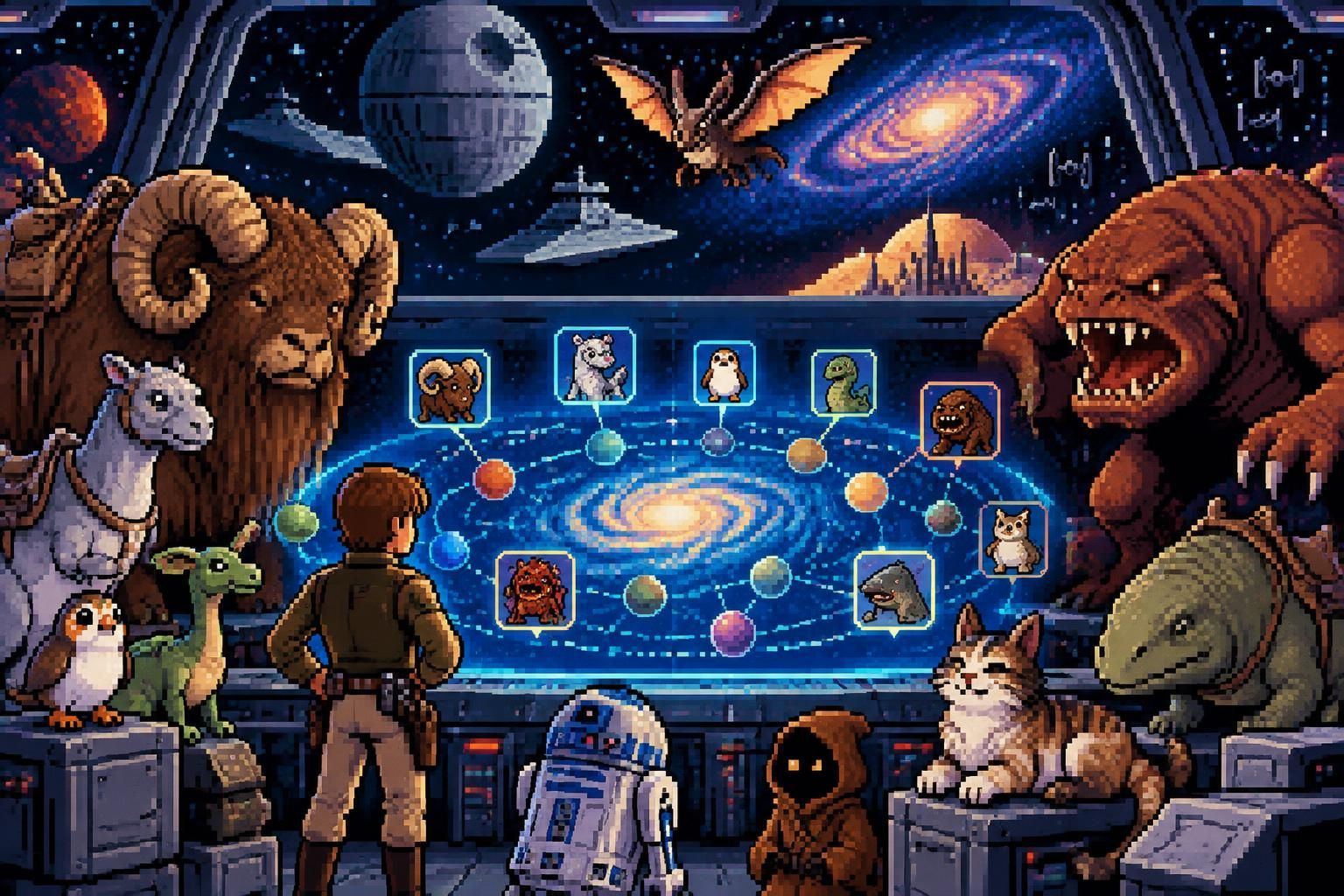
I would begin the assessment by correcting the battlefield map. Star Wars has allowed players to handle, ride, train, and fight alongside animals before; what remains missing is a major game built around a galaxy-wide creature collection as its central purpose.
You can see the distinction in Star Wars Galaxies, whose Creature Handler and later Beast Master systems gave wildlife meaningful roles. Those precedents weaken any literal claim that the franchise has never offered animal collecting, but they strengthen the argument that an established interest has never received a dedicated, modern campaign.
I distinguish between a feature and an organizing principle. A mount helps you cross a map, a companion assists you in combat, and a boss obstructs your advance; a wildlife-centered game makes understanding the animal the reason you crossed the map at all.
That difference changes every design decision. Instead of placing a rancor at the end of a corridor, developers must determine where it sleeps, what it consumes, how it responds to unfamiliar scents, and whether transporting it would endanger everything aboard your vessel.
Why Alien Wildlife Deserves More Than Enemy Placement
I read the existing bestiary as an underused intelligence archive. Banthas, tauntauns, nexu, porgs, sarlaccs, and purrgil already communicate environmental conditions, cultural relationships, and practical dangers, yet games frequently reduce that information to an animation or a health bar.
Consider the tauntaun on Hoth. Its value is not simply that it looks appropriate against snow; it demonstrates how survival depends on an animal adapted to conditions that machinery and visitors handle poorly.
A dedicated simulation could turn that relationship into decisions you must make. Shelter, exposure, fatigue, and route selection would become interconnected systems, allowing a familiar species to generate unfamiliar problems without requiring another superweapon or hidden dynasty.
I would give this proposed campaign a modest operational center: an independent survey vessel called the Surveyor. You would command its expeditions, improve its habitats, and maintain its records, while a rotating crew supplied medical, mechanical, and ecological expertise.
The vessel provides continuity without making its captain another indispensable figure in galactic history. Your work matters because settlements need reliable information, endangered populations require protection, and careless collectors create problems that blasters cannot efficiently resolve.
This is also where the opening claim requires discipline. Star Wars has produced pet mechanics, creature mounts, zoological scans, and wildlife encounters; claiming that none exist would sacrifice credibility for a stronger headline.
The actual gap is integration. No prominent release has made interplanetary fieldwork, animal relationships, habitat management, and a persistent living archive the combined foundation of its identity.
I would not solve that gap by placing familiar beasts inside another game’s capture devices. A convincing adaptation must derive its rules from this galaxy: transport permits, local customs, hostile environments, specialist equipment, and the consequences of moving organisms between worlds.
You should therefore expect a different kind of progression. Your first success might be identifying why a settlement’s working animals refuse a canyon route, not defeating an unusually large specimen.
The answer could involve a nesting predator, a contaminated water source, or machinery emitting an irritating frequency. Each explanation would reward observation, and each would lead to a different intervention.
I consider that a stronger foundation than rarity alone. If every encounter ends with acquisition, the player learns ownership; if encounters demand interpretation, the player learns the galaxy.
The distinction also creates room for recognizable Star Wars tension. A patrol can arrive during a delicate relocation, a smuggler can offer forged cargo documents, and a settlement can demand immediate action before the evidence supports it.
The missing game is not a box full of recognizable animals; it is a campaign in which knowledge of living systems becomes your principal advantage. Establishing that advantage requires examining how far the collecting genre has already developed.
Modern Creature Collection Needs Systems, Not Just Rare Spawns
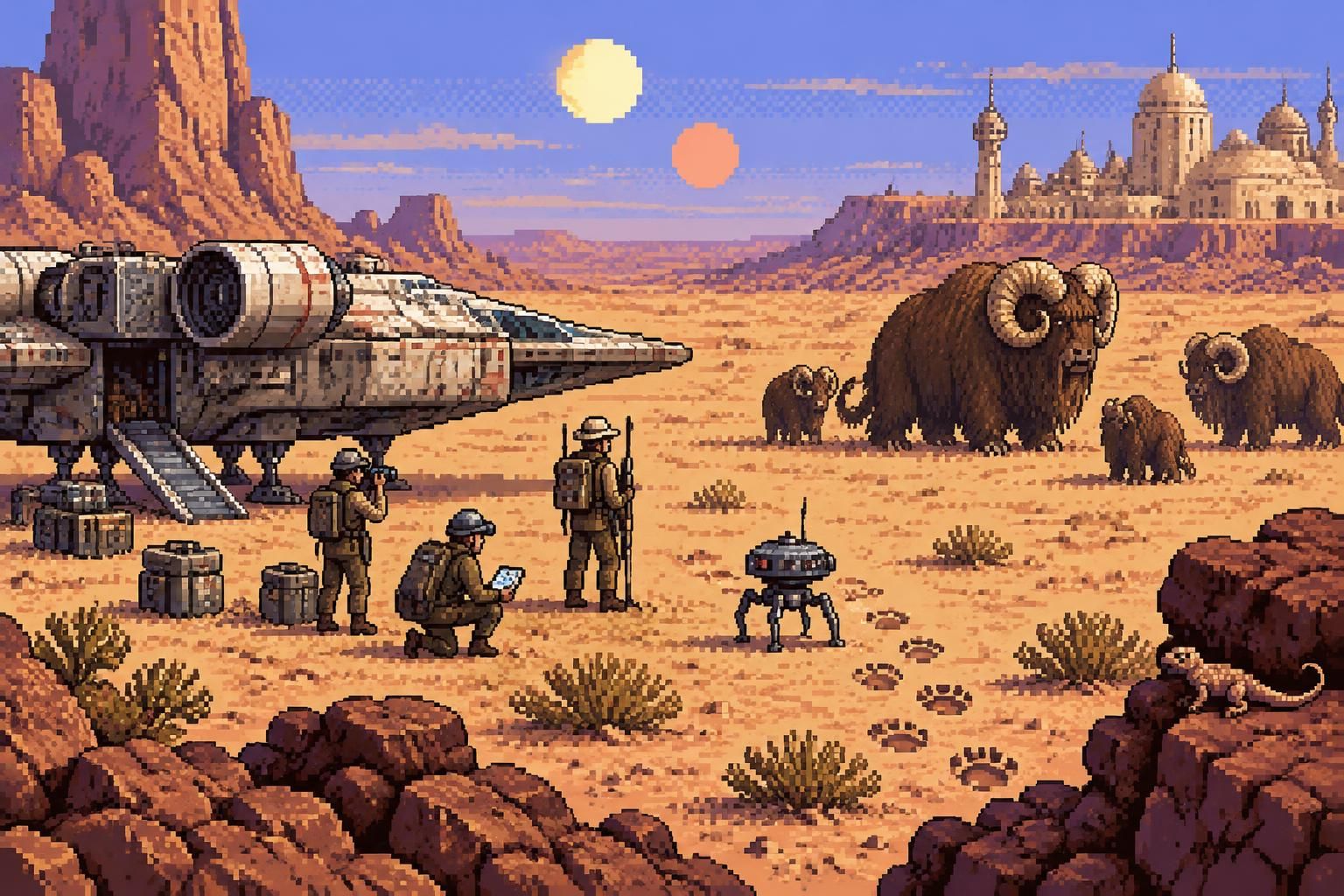
I assess a genre by the decisions its systems support, not by the apparent simplicity of its creatures. Modern collecting games combine exploration, production, inheritance, combat, navigation, and resource management; dismissing that structure as a diversion for children mistakes its presentation for its architecture.
Palworld provides a useful comparison because its animals interact with several overlapping systems. Their value depends not only on battle performance but also on work suitability, movement, environmental access, and the requirements of an expanding base.
A PalDB database snapshot cited in discussion of the game catalogs 288 creatures, approximately 1,880 items, 579 technologies, and 330 skills. Those figures describe a particular extracted dataset rather than permanent totals, since updates and counting methods can change the inventory.
The same snapshot includes roughly 43,993 map nodes and around 8,000 spawn points. I would not present those numbers as a verified live count for 2026; their relevance is that structured information supports route planning, comparison tools, and detailed community analysis.
What Star Wars Can Learn From a Structured Beast Catalog
You can observe the consequence in unofficial tools such as breeding calculators, capture estimators, crafting references, and progression planners. These are not decorative additions: they emerge because the underlying rules contain enough depth to reward investigation.
I would apply that lesson selectively. A Star Wars adaptation needs coherent data, but it does not need to reproduce every system another title uses, particularly when doing so would conflict with established biology or turn every animal into industrial equipment.
The Surveyor’s database should connect anatomy, environmental tolerance, behavior, diet, social structure, and transport requirements. Discovering one fact should alter another decision, allowing research to produce practical advantages rather than merely increasing a completion percentage.
Suppose you identify a herd’s preferred feeding ground. That observation could reveal a safer approach route, suggest where an injured individual might return, and explain why a nearby agricultural settlement has begun losing crops.
One entry would therefore support navigation, veterinary work, and negotiation. That is useful complexity: several meaningful consequences arising from a rule the player can understand.
I would reject arbitrary complexity, such as dozens of nearly identical food ingredients distinguished only by rarity. A system becomes stronger when its variables explain the world, not when they make the inventory harder to read.
Breeding requires similar restraint. Where established lore permits managed reproduction, the system could explore health, population viability, and inherited traits; where the biology is unknown, research should precede any player-controlled program.
You should never be able to produce incompatible hybrids simply because a calculator needs more combinations. Internal consistency is an asset that a licensed setting cannot afford to squander.
The interface must also make its evidence legible. Confirmed observations, local testimony, historical reports, and untested hypotheses should occupy distinct categories, allowing you to distinguish knowledge from a plausible explanation awaiting investigation.
For example, a tracker’s warning about nocturnal aggression could initially appear as testimony. Repeated observation might confirm it, narrow it to a breeding season, or reveal that the behavior followed an artificial disturbance.
I would make those corrections visible in the record. A useful field archive does not pretend its first entry was perfect; it shows how stronger evidence displaced a weaker interpretation.
Community tools could then build on stable identifiers and clearly documented rules. Players might share migration observations or expedition loadouts without needing to extract hidden information merely to understand basic mechanics.
The design should remain playable without an external spreadsheet. Advanced analysis can reward specialists, but essential husbandry, safety, and progression information belongs inside the game.
Depth comes from relationships between understandable systems, not from the size of a database. Star Wars already possesses much of the descriptive material needed to establish those relationships.
The Star Wars Beast Catalog Already Contains a Production Advantage
I would commission an archive audit before commissioning a hundred new species. The official Databank, visual guides, reference books, screen appearances, and game histories already contain an extensive supply of names, habitats, behaviors, and cultural associations.
That archive reduces one category of creative risk: the project does not need to establish an unfamiliar universe before its animals become interesting. You already recognize the silhouette of a bantha or the threat implied by a rancor’s enclosure.
Recognition, however, is not a completed design document. Reference material was written across different publishing eras, for different purposes, and under different continuity arrangements, so it requires classification before implementation.
I would separate currently established canon, Legends material, and proposed additions. A detail found in an older sourcebook should not silently become a contemporary canon fact merely because it offers a convenient gameplay mechanic.
Turning Reference Entries Into Playable Biodiversity
The development team would need a source ledger for every implemented species. That ledger should identify what is established, what remains undescribed, and which proposed behaviors require approval from the relevant franchise custodians.
You can see the practical advantage through a bantha. Its association with Tatooine and Tusken life provides a firm foundation, but a simulation still needs decisions about feeding intervals, group navigation, stress responses, and veterinary care.
Some answers can follow approved references; others require carefully developed additions. The archive supplies identity and constraints, not a finished artificial intelligence system.
I would organize the first roster around ecological and mechanical variety rather than celebrity. Several species with different movement patterns, diets, and social needs can produce more interesting fieldwork than dozens of animals that all approach bait identically.
| Species | Established identity | Proposed gameplay application |
|---|---|---|
| 🐾 Bantha | Large herd animal associated with Tatooine | Track group movement and negotiate community-led care |
| ❄️ Tauntaun | Cold-adapted mount associated with Hoth | Plan shelter, exposure limits, and safe travel |
| 🌊 Porg | Coastal bird associated with Ahch-To | Observe nesting activity without disturbing colonies |
| ⚠️ Rancor | Powerful animal often encountered in captivity | Design secure rehabilitation and transport procedures |
| 🌌 Purrgil | Spacefaring organisms linked to hyperspace travel | Conduct remote observation rather than physical collection |
I would treat the final column as a design proposal, not as a list of previously established mechanics. That distinction preserves the boundary between describing Star Wars and proposing how a new game could interpret it.
Scale offers another useful constraint. A porg can be observed from a shoreline blind; a purrgil requires instruments, a spacecraft, and an entirely different understanding of distance.
Forcing both into the same enclosure system would erase what makes them distinct. A comprehensive archive can include animals that the player never owns, transports, or approaches closely.
This is where publishing could support the project without becoming compulsory homework. Updated field guides might illustrate expedition records, regional art, veterinary equipment, and local naming traditions while leaving essential instructions inside the software.
The broader interest in large-format Star Wars storytelling offers a useful editorial connection: some subjects benefit from space for diagrams, comparative anatomy, and environmental detail. Such a companion publication would need to add understanding rather than duplicate an item list.
I would also preserve the contribution of obscure background animals. A species glimpsed briefly on screen can acquire significance through a well-designed interaction without being promoted into a galaxy-threatening mystery.
That approach creates discovery through attention. You recognize something previously overlooked, learn why it occupies a particular environment, and begin noticing its relationship to nearby inhabitants.
The roster’s greatest advantage is not its length but the accumulated context attached to it. The next task is choosing a setting that allows that context to become operational.
Outer Rim Exploration Gives a Creature-Collecting Game Its Campaign
I would place the Surveyor on an Outer Rim circuit rather than grant immediate access to every famous planet. A frontier itinerary supplies uncertain infrastructure, competing jurisdictions, local expertise, and transport problems without requiring the entire galaxy to behave like unclaimed wilderness.
The Outer Rim is not culturally empty, and “poorly charted” depends on who is holding the chart. A visiting researcher may lack information that residents have maintained through generations of work, seasonal observation, and oral tradition.
You should therefore arrive as an outsider with equipment, not as the first intelligent observer to notice the landscape. That distinction prevents exploration from becoming a disguised claim of ownership.
I would choose a specific period and enforce its political conditions consistently. Imperial inspections, local resistance, criminal interests, and travel restrictions can shape an expedition, but their presence must follow the selected timeline rather than fluctuate for convenience.
Galaxy-Wide Exploration Through Connected Expeditions
The phrase galaxy-wide exploration should describe the campaign’s reach, not promise a fully simulated map of every inhabited system. A network of substantial destinations can communicate scale more effectively than countless interchangeable landing zones.
Each region should introduce a distinct research problem. A desert route could emphasize water and herd movement, a frozen environment could test exposure planning, and a wetland could complicate visibility, equipment maintenance, and contamination control.
I would connect these destinations through the Surveyor’s range, cargo capacity, and accumulated knowledge. You gain access because your crew can operate responsibly there, not because an arbitrary character level suddenly permits landing.
Consider an early contract involving repeated losses among a settlement’s transport animals. The administrator wants the nearby predator removed; a local handler reports that the losses began only after a processing installation opened.
You inspect tracks, compare feeding patterns, and examine the route between pasture and water. The investigation could reveal that industrial noise displaced the herd toward a hunting ground it previously avoided.
The predator remains dangerous, but exterminating it would address only the most visible symptom. Relocating equipment or restoring an older route might protect both livelihoods and the surrounding food web.
I would let the player choose a faster intervention when circumstances demand it, but the consequences must remain legible. Emergency capture could prevent immediate deaths while creating a longer rehabilitation obligation aboard the vessel.
This structure supports action without making every problem a firefight. A damaged fence, approaching storm, or frightened animal can create urgency through movement and preparation rather than through another squad of disposable enemies.
Cultural evidence should inform those decisions. Tusken relationships with banthas demonstrate that an outsider’s classification of an animal as transport equipment can miss a deeper social bond.
I read art and ritual as operational evidence because they reveal what communities preserve, repeat, and regard as significant. A carved migration motif might suggest a seasonal pattern worth investigating, but it should not function as a universal cipher that instantly explains an entire people.
You would need conversation, permission, and corroboration. Treating every song as a secret map would be as reductive as ignoring it entirely.
Settlement relationships could also determine who accompanies an expedition. A trusted guide might identify warning signs your sensors overlook, while a damaged relationship could close access to a breeding ground regardless of the quality of your equipment.
I would measure campaign progress through dependable routes, completed research agreements, and healthy populations as well as discovered species. That gives travel lasting consequences beyond revealing another icon.
An open-world adventure becomes convincing when each destination changes how you operate. Once travel has that structure, the next question is what “collecting” should actually mean.
Creature Taming Should Not Mean Owning Every Animal
I would define collection broadly before designing the capture system. A verified observation, a recovered specimen, a long-term partnership, and a rescued animal are different accomplishments, and forcing them into one ownership model would impoverish the campaign.
You should be able to complete a substantial portion of the beast catalog without removing a single healthy animal from its habitat. Photography, acoustic recordings, track analysis, and repeated behavioral observations can all provide meaningful evidence.
Physical acquisition should occur when it serves a clear purpose. Rehabilitation, emergency relocation, approved breeding, and established working partnerships provide stronger reasons than the presence of an empty inventory slot.
That distinction is particularly important for creature taming. Habituation, training, and domestication are not interchangeable processes, and a game becomes more interesting when it does not pretend that one successful interaction makes every animal safe.
Building Relationships Without Erasing Animal Behavior
I would assign each suitable companion a readable set of needs and responses. Familiarity could reduce stress, but hunger, injury, environmental discomfort, or inappropriate handling would still affect its behavior.
A large predator should not become harmless because you supplied enough food. Your progress would instead appear in safer routines, improved communication, and a better understanding of situations in which cooperation will fail.
The Surveyor’s crew would support those routines. A veterinarian could identify pain behind an apparent behavioral problem, while a handler might recognize that the enclosure layout repeatedly forces the animal into an uncomfortable approach.
You would then solve a practical problem rather than fill a relationship meter. Changing a feeding station, reducing noise, or providing an appropriate retreat would produce an observable improvement.
- 🔎 Observation: establish identification and behavior without unnecessary interference.
- 🩺 Rescue: stabilize an injured individual and plan its eventual placement.
- 🤝 Partnership: develop cooperative routines with suitable animals.
- 🏞️ Restoration: improve conditions so a population can remain in its habitat.
- 📡 Remote study: document organisms that cannot responsibly enter an enclosure.
I would make each path mechanically substantial. Observation needs concealment and patience; rescue needs equipment and triage; restoration needs monitoring that proves the intervention worked rather than simply declaring success after a dialogue choice.
Predation must remain part of the world. A nexu hunting does not automatically create a moral emergency, and protecting biodiversity cannot mean preventing every visible animal death.
The more demanding question is whether a particular threat reflects ordinary ecological activity or a disturbance introduced by settlement, trafficking, confinement, or environmental damage. Your response should follow that diagnosis.
I would also reject mandatory arena combat as the primary measure of success. Captive fighting exists within Star Wars, but its presence provides material for investigation and conflict rather than an automatic justification for the player’s business model.
An illegal fighting operation could supply a rescue mission with difficult logistics. Removing the captors solves only the first problem; frightened animals still require secure transport, appropriate care, and destinations capable of supporting them.
Some players will seek darker choices, and the setting can accommodate morally compromised work. The game should nevertheless represent the consequences honestly instead of labeling exploitation as conservation because both activities use the same capture animation.
I would allow refusal to become a meaningful option. Declining a profitable contract could preserve access to a community or prevent the Surveyor from becoming dependent on clients whose demands conflict with its stated purpose.
The collectible creatures would remain desirable, but desire would not override every other rule. Their differences should establish limits as well as opportunities.
A credible relationship gives you responsibilities that possession alone cannot express. Those responsibilities become especially clear when the animals must travel between worlds.
A Mobile Sanctuary Can Make Star Wars Animal Care Playable
I would make the Surveyor’s interior a functional habitat network rather than a trophy room. Every passenger would impose requirements on space, atmosphere, temperature, food storage, waste handling, and crew attention.
You would not need to adjust every valve manually. The strategic task is allocating capacity, anticipating incompatibilities, and deciding whether the vessel can undertake another contract without compromising animals already aboard.
A desert-adapted herbivore and a cold-adapted mount should not occupy adjacent spaces separated only by a decorative barrier. Environmental zoning would give ship upgrades a purpose beyond increasing the number of creatures visible through a window.
I would begin with a small number of adaptable compartments. Specialized modules could later support veterinary isolation, larger transport, aquatic care, or temporary emergency accommodation, each consuming resources that could otherwise improve propulsion or research equipment.
Transport Logistics Create Better Decisions Than Inventory Limits
Suppose you accept a rescue contract before completing a long survey route. The mission appears profitable, but the recovered animal requires isolation and frequent treatment, leaving less capacity for the specimens already scheduled for transport.
You can shorten the itinerary, hire a specialist carrier, negotiate a local treatment arrangement, or decline the job. Each option has a visible cost, making preparation more important than collecting everything in reach.
I would communicate these constraints before departure whenever the information is available. Surprises should emerge from the expedition, not from an interface that concealed basic enclosure requirements until after capture.
Containment failures could then become fair consequences. A damaged transport crate, incompatible neighbors, or an ignored maintenance warning creates a problem the player had a reasonable opportunity to prevent.
The response should not always be combat. Emergency shutters, remote feeders, calming procedures, and controlled access routes could support a tense sequence without demanding that you injure the animal you just rescued.
I would also build biosecurity into travel. Equipment and enclosures could require cleaning between sensitive destinations, and introducing an unfamiliar organism without screening should carry risks that the campaign explains through evidence.
This need not become repetitive maintenance. Routine procedures can be automated once you invest in staff and facilities, allowing progression to reduce clerical work while preserving consequential decisions.
Economic design requires equal discipline. If rare animals are always worth more when sold, the system will reward extraction regardless of what mission dialogue claims to value.
I would diversify payment around reliable outcomes: successful rehabilitation, long-term monitoring, verified migration data, safe relocation, and assistance to communities managing conflict with local fauna. Revenue would then support expertise rather than mere accumulation.
Failure should remain possible without becoming arbitrarily punitive. An animal might need transfer to a better-equipped facility, a client might dispute findings, or an expedition might return with incomplete evidence and additional expenses.
You would learn to reserve contingency capacity. A captain who fills every compartment and spends every credit before departure has created a fragile operation, however impressive the manifest appears.
Cooperative play could give different crew members meaningful assignments. One player might guide a transport team while another operates a remote observation station, with both contributing to the same research objective.
I would avoid forced dependence on a large group. Competent non-player specialists should handle routine duties so that a solitary player can pursue the campaign without managing four roles simultaneously.
The sanctuary should also display history through practical changes. Repaired scoring on a bulkhead, a modified feeding apparatus, or an enclosure adapted after a difficult rescue can communicate past expeditions more effectively than a wall of identical achievement plaques.
Those details give the vessel identity without turning its occupants into ornaments. A successful mobile sanctuary proves its quality through the conditions it maintains, not the number of cages it contains.
Star Wars Publishing and Creator Platforms Show Room for Another Genre
I would not explain the missing game by claiming that publishers lack imagination. Licensed production involves budgets, approval processes, technology, audience expectations, and schedules; familiar heroes offer a clear marketing proposition that an unfamiliar research crew must work harder to establish.
A lightsaber communicates fantasy almost immediately. A wildlife expedition needs to demonstrate why tracking, transport, and ecological decisions generate comparable engagement, preferably through playable evidence rather than an ambitious presentation.
The commercial growth of modern collecting games makes that demonstration easier, but it does not remove production risk. Sophisticated animal behavior, reliable navigation, habitat simulation, and persistent ship interiors are expensive systems to build and test together.
I therefore reject the claim that decades of reference books have already completed the hardest work. They provide an unusually valuable foundation; they do not provide animation rigs, engineering, balancing, accessibility, or quality assurance.
Expanding the Franchise Without Claiming an Unannounced Project
The broader licensing environment does show that Star Wars can support different forms of participation. Epic’s announcement of expanded Star Wars experiences and creator tools illustrates an approach built around multiple activities rather than a single conventional campaign.
I would treat that as evidence of platform experimentation, not evidence that a wildlife simulator has entered production. Access to recognizable assets does not automatically supply permission, technical support, or suitable systems for every proposed design.
The reported long-range planning behind Star Wars: Unlimited offers a separate lesson. A franchise can sustain a specialist format when its underlying structure supports continued variation and a community understands what each addition contributes.
You should not infer that the same release model belongs in a fieldwork game. Card distribution, competitive balance, and collection-driven sales create incentives that could conflict with a campaign about patient observation and responsible stewardship.
I would specifically avoid selling superior capture equipment or exclusive high-performing animals. Monetization that makes biological rarity a purchasable advantage would undermine both competitive fairness and the expedition’s central logic.
Optional expansions could instead introduce substantial regions with new environmental challenges. Their value would come from habitats, stories, tools, and relationships, not from withholding the final entry required to make the base campaign feel complete.
The editorial argument for taking more creative risks with Star Wars becomes more useful when translated into a bounded production plan. Risk should be concentrated where the new experience needs it, not multiplied through unnecessary scale.
A sensible prototype would contain one destination, a small interconnected roster, a local conflict, and a functioning ship module. It would test whether observation changes decisions and whether those decisions remain interesting after the first encounter.
I would ask testers to complete the same contract through different methods. If every successful route ultimately requires the same capture sequence, the apparent freedom is cosmetic and the design needs revision.
The prototype should also reveal how much behavior players can understand without explicit markers. An animal that appears random is not made sophisticated by a complex internal model the audience cannot interpret.
Marketing could then show a complete operational sequence: preparation, tracking, diagnosis, intervention, transport, and follow-up. That communicates the game more honestly than a montage of recognizable species standing beside a freighter.
No claim of an announced dedicated project is necessary to make the case. A proposal can identify an underserved design space without converting possibility into news.
The rational pitch is a demonstrable new activity inside a familiar galaxy, supported by a production scope that can survive contact with development.
A Galaxy-Wide Creature Collection Needs a Disciplined Deployment Plan
I would deploy this concept in stages, beginning with depth rather than geographic spectacle. The first release should prove that a modest selection of environments can sustain repeated discovery before promising a route through every celebrated location.
You need enough variation to test the central systems: a social herd animal, a solitary hunter, a small nesting species, an established working companion, and an organism best studied at a distance. Exact roster size should follow production evidence rather than promotional ambition.
Each inclusion must justify its animation, behavior, and habitat requirements. If two animals differ only in appearance, the team should either give them distinct ecological roles or acknowledge that their variation is primarily visual.
I would establish a shared simulation framework while preserving meaningful exceptions. Common needs such as feeding and shelter can use consistent rules, but purrgil should not inherit a transport system designed for livestock merely because reusing it is convenient.
Measuring Creature Discovery Beyond Completion Percentages
The research record should distinguish identification from understanding. Seeing an animal once might establish its presence, while confirming diet, social behavior, seasonal movement, and environmental sensitivity would require different kinds of evidence.
You should not need to repeat the same interaction an arbitrary number of times. Each research task ought to answer a question, test an interpretation, or document a change that matters elsewhere in the campaign.
For example, identifying a nesting site could alter a planned cargo route. Confirming that the colony has moved might reopen it later, making the archive a living operational resource rather than a completed page you never consult again.
I would evaluate development builds through player behavior. Do explorers prepare differently after learning about a species, do they recognize avoidable stress, and do they understand why one intervention succeeded where another failed?
Those measures reveal whether the systems communicate. Hours played and total captures can rise even when players are repeating an efficient exploit, so they cannot independently demonstrate a healthy design.
Accessibility must enter the plan early. Track interpretation should not rely solely on subtle color differences, audio identification needs visual alternatives, and prolonged observation should offer adjustable pacing without removing the underlying deduction.
The game should also respect interrupted play. Safe suspension during travel, clear expedition notes, and readable task histories would let you resume a complicated investigation without reconstructing every detail from memory.
I would keep shared discoveries distinct from shared ownership. Cooperative teams could exchange verified observations while individual campaigns retain decisions about contracts, habitats, and community relationships.
That arrangement reduces pressure to trade away an animal merely to complete a catalog. It also supports players who prefer photography, rescue, logistics, or field analysis rather than treating one activity as the only legitimate route to progress.
Long-term support should protect the archive’s consistency. Updates that revise behavior need clear explanations, and continuity changes should be handled through documented corrections rather than silently rewriting information players used to make decisions.
A regional expansion could then test a specific new problem: vertical terrain, extreme pressure, seasonal flooding, or organisms whose movements exceed a planet’s surface. Each addition should demand adaptation, not merely a larger transport hold.
I would preserve the possibility of discovery after formal completion. Familiar populations can respond to environmental changes, reopened routes, or the consequences of an earlier intervention without endlessly adding rarer color variants.
The Surveyor’s records would become evidence of your methods. Another player might have the same species list yet maintain different partnerships, restored habitats, and unresolved obligations.
Development should therefore advance only after each operational layer proves dependable: observation before acquisition, care before expansion, and meaningful regional differences before greater scale. The next destination should increase what you must understand, not merely how much you can possess.

I am Grand Admiral Thrawn, strategist of the Galactic Empire. Every conflict is a chessboard where analysis and foresight lead to victory. The art and culture of a people betray their weaknesses. The Empire embodies order and discipline in the face of rebel chaos. History will remember that only strategy ensures peace.