
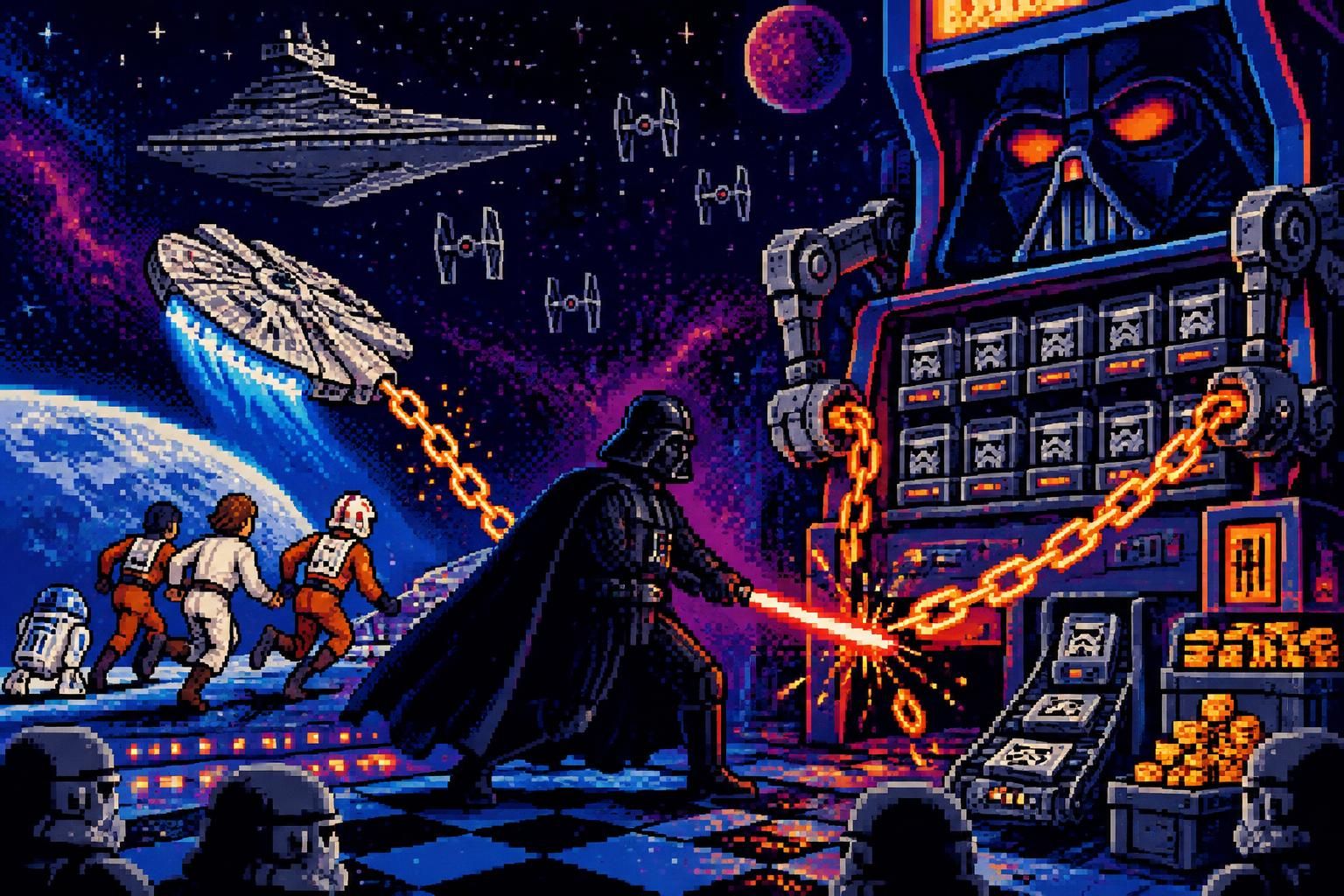
Star Wars and EA: Why Ending the Publisher Partnership Is a Strategic Choice
The question is no longer whether Star Wars can publish games without Electronic Arts. Lucasfilm’s exclusive arrangement with EA has ended, and other publishers have already entered the field. The remaining decision is narrower: should Lucasfilm continue commissioning new projects from EA, or direct those opportunities elsewhere?
I would examine the partnership as an allocation of resources rather than as a contest between loyalists and opponents. A license holder controls a finite number of major projects, a limited supply of development talent and an audience whose trust can be depleted faster than it is rebuilt. You can measure the arrangement by what it delivers, what it interrupts and what alternatives it prevents from receiving support.
EA’s record contains genuine achievements. Star Wars Jedi: Fallen Order and its sequel established a popular single-player series, while DICE’s Battlefront games produced battlefields of considerable visual and technical ambition. Those successes deserve recognition, but they do not erase disputes over monetization, canceled projects or the concentration of authority that shaped the partnership.
Consider a hypothetical developer named Nara, who has a proposal for a Star Wars game about a Rebel intelligence cell. She needs funding, a publisher, a license and enough time to make a coherent game. Under an exclusive arrangement, her route to the galaxy would pass through one publisher’s priorities; under a nonexclusive system, she can approach several partners with different appetites for risk.
That distinction matters because a publisher’s interests are not identical to a franchise’s interests. EA must consider its own portfolio, annual financial targets and available studios. Lucasfilm must also protect the long-term variety, reputation and cultural breadth of Star Wars, including projects that may not resemble the largest releases in EA’s portfolio.
In this editorial, the case for separation rests on incentives, not on the assumption that every EA decision was defective. A company can employ exceptional artists and still operate under a strategy that narrows the choices available to a license holder. You should judge the publisher partnership by its repeated patterns, not solely by its strongest individual product.
The military analogy is direct: at Endor, the Empire possessed formidable resources, yet concentration around a single decisive asset created a vulnerability. Exclusive video game licensing likewise places too much responsibility on one organization’s judgment. To understand the cost of that concentration, examine the first major battlefield: Battlefront.
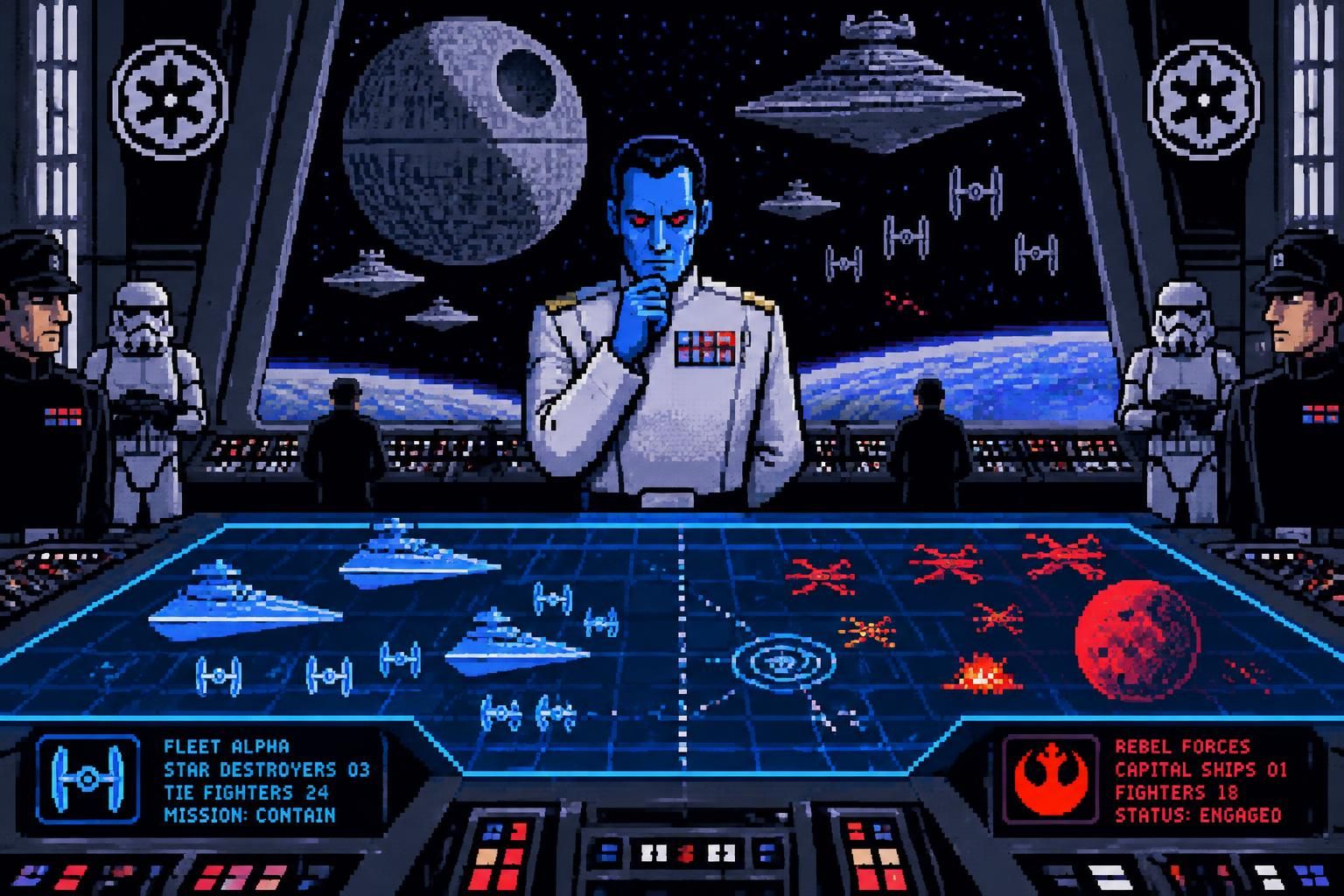
Star Wars Battlefront and EA: The Cost of Selling a Narrow Battlefield
When Star Wars Battlefront arrived in 2015, its strongest asset was immediately visible. DICE recreated the look and sound of the original trilogy with an attention to detail that made a blaster exchange on Hoth feel connected to the films. For many players, that fidelity demonstrated what a major publisher could achieve with an established license and substantial technical resources.
The weakness was not a lack of spectacle but the limits surrounding it. The game launched without a traditional single-player campaign, and its available settings and activities felt narrow to players who expected a broader survey of the galaxy. Its focus on the original trilogy was a creative choice; the commercial problem arose when that choice was paired with a substantial additional charge for future content.
EA offered a season pass priced at approximately $50 in the United States alongside a base game priced around $60. Regional prices varied, but the strategic effect was clear: players were asked to commit more money before they could judge all the content they would receive. 💰 For an audience already debating whether the launch package offered enough, the request made value difficult to establish.
Imagine Nara evaluating the game as a player rather than as a developer. She can admire the sound of a TIE fighter and still ask whether the maps and modes justify the initial purchase. If access to later locations requires another major payment, the impressive presentation does not answer her practical concern.
Paid expansions are not inherently defective. A substantial expansion can finance new work, extend a game’s life and give developers a clear budget. The question is whether the original product stands on its own and whether the additional offer is transparent enough for players to make an informed decision.
There is also an operational consequence in multiplayer games: paid map packs can divide the audience between those who own particular content and those who do not. A smaller matchmaking pool can make it harder to find a suitable match, especially as interest declines. Even a well-designed map offers less value if the people who purchased it struggle to play it with others.
For a closer look at the series’ place in the franchise, see this coverage of Star Wars Battlefront. Its history illustrates a distinction that matters to any license holder: technical excellence attracts attention, while a sustainable player experience determines whether that attention becomes lasting trust.
I would not infer that the first Battlefront failed to entertain its audience. I would infer that EA’s commercial design placed an avoidable burden on an otherwise powerful presentation. The next installment attempted to correct the content problem, but it exposed a more consequential flaw in the relationship between payment and play.
Battlefront II Loot Boxes: When Monetization Threatened Player Trust
Battlefront II, released in 2017, addressed several criticisms directed at its predecessor. It included characters and locations from the prequel, original and sequel eras, added a single-player campaign and moved away from the paid season-pass model. On the surface, the deployment was more complete: more eras, more recognizable forces and fewer barriers between owners of different map packs.
The vulnerability lay in progression. Before release, the game’s system linked randomized loot crates to items that could affect gameplay, while real-money purchases were associated with obtaining crates. That combination gave players reason to fear that spending more could provide a competitive advantage, even when skill and time spent playing should have been central to the outcome.
EA suspended real-money transactions shortly before launch and later substantially revised the progression system. Those changes matter: the final arrangement should not be described as if the original proposal remained untouched. Yet the reversal also shows that the initial design had created a serious conflict between the publisher’s revenue model and the expectations of its audience.
In a competitive match, you need to understand why you lost. Perhaps an opponent anticipated your route, coordinated with a squad or used the terrain more effectively. When progression can be accelerated through paid randomized rewards, that explanation becomes less reliable, and suspicion can damage a match even when no individual purchase determined the result.
The controversy also reached beyond one community. Loot boxes attracted scrutiny from lawmakers and regulators, including in the United States, as questions emerged about randomized paid rewards and their appeal to younger players. The precise legal treatment differs by jurisdiction; the business lesson does not depend on presenting every loot box as illegal gambling.
EA eventually supported Battlefront II with additional content and significant changes, giving the game a stronger reputation among some players over time. That later work should be credited to the teams who carried it out. It also required resources to repair a loss of confidence that a more restrained design might have avoided.
There is a useful cultural parallel in Mandalorian armor: its markings are meaningful because a community understands the obligations behind them. A Star Wars logo similarly carries expectations about the experience a player is buying. When the commercial system obscures the rules of fair competition, the symbol remains recognizable, but the trust attached to it becomes less secure.
I would require any future licensee to demonstrate its monetization plan before a multiplayer project receives final approval. Give players plain information about prices, odds where applicable and the relationship between purchases and gameplay. The lesson leads naturally to the next question: what happens when a promising project is not merely revised, but never reaches the battlefield?
EA’s Canceled Star Wars Games: What Project Ragtag Revealed
Project Ragtag was a story-driven Star Wars game in development at Visceral Games, the studio associated with Dead Space. Its creative leadership included Amy Hennig, known for her work on Uncharted, while Jade Raymond held a broader leadership role in EA’s Star Wars efforts. The project was expected to explore a criminal-side perspective rather than rely solely on Jedi protagonists or large military engagements.
EA closed Visceral in 2017, and the project in its existing form did not proceed. At the time, the company discussed moving toward a different approach for the game, but the version associated with Visceral was lost. That distinction matters: the closure and cancellation are established events, while any simple claim that one executive motive explains every decision would go beyond the available facts.
Game development is difficult to assess from outside a studio. Budgets change, technology fails to meet expectations and a project may need more time than its publisher can support. Canceling a troubled game is sometimes rational; continuing indefinitely can consume resources that would be better used elsewhere.
Nevertheless, cancellation has costs that do not appear in a release calendar. Teams disperse, accumulated knowledge becomes harder to retain and an audience loses the chance to discover a different interpretation of the setting. If Nara has spent years building a convincing underworld district, her work cannot automatically be transferred to a multiplayer shooter or recovered by another company.
The loss is especially significant in a franchise whose identity extends beyond its best-known battles. Consider the architecture of Coruscant’s lower levels or the criminal politics of Tatooine: both suggest stories about survival, trade and unequal power. A game centered on smugglers can express those cultures through dialogue, movement and player choices rather than through film-style spectacle alone.
Hennig later became involved in a separate Star Wars project at Skydance New Media. That is evidence that creative talent can find another route into the galaxy, not evidence that the original Visceral game could simply be reconstructed. A team, its technology and its particular moment of development cannot be assumed to survive a studio closure intact.
I would therefore assess a publisher not merely by the number of games it ships, but by how it manages projects before cancellation becomes the only viable option. Milestone reviews, independent technical assessments and early decisions about scope can reveal a failing plan while there is still time to change it. They cannot guarantee success, but they can reduce the chance that years of work disappear without producing a usable result.
For Lucasfilm, a diversified licensing portfolio offers another safeguard. If one publisher’s project collapses, other teams can still explore different parts of the setting. The cancellation at Visceral was not the last case in which a distinctive Star Wars proposition disappeared before players could evaluate it.
Respawn’s Mandalorian Game and the Limits of EA’s Star Wars Strategy
In 2024, EA canceled a Star Wars first-person shooter in development at Respawn as part of a broader restructuring. Reporting connected the project with a Mandalorian protagonist, while EA confirmed the cancellation of Respawn’s Star Wars shooter without releasing a finished game for the public to assess. The distinction between a reported concept and a demonstrated product is essential.
Respawn was a credible choice for an action game because its work on Titanfall had demonstrated expertise in movement and first-person combat. A Mandalorian premise could have used that expertise to explore jetpack mobility, tracking and encounters shaped by equipment. Those possibilities describe the appeal of the concept, not features that can be guaranteed from an unfinished project.
For Nara, who wants to tell a story outside the Jedi tradition, the cancellation represents another closed route. A Mandalorian game could examine the practical culture of a warrior society: how armor signals affiliation, how contracts shape conduct and how loyalty changes between clans. The setting’s art and customs are not decoration; they can determine the rules a character follows and the choices a player faces.
EA also reduced staff during the restructuring that accompanied the cancellation. Elsewhere in Respawn’s Star Wars work, Jedi series director Stig Asmussen departed EA in 2023. These events occurred in different circumstances, and there is no basis to treat the departure as proof of a particular cause or as a direct consequence of the shooter’s cancellation.
Staff reductions can be commercially defensible in a changing market, but their consequences for creative continuity remain real. Experienced developers carry knowledge about tools, production schedules and the details that make a fictional culture convincing. When a team is reduced or reorganized, that knowledge must be documented and transferred if subsequent projects are to avoid repeating earlier work.
A canceled game also creates an information problem for players. Concept art and anonymous reports can encourage expectations that no finished product was ready to meet. Lucasfilm and its partners cannot disclose every confidential detail, but they can communicate clearly when a project has ended and avoid letting an unconfirmed premise stand as a promise.
Here I would distinguish between risk management and risk concentration. A publisher that cancels an expensive shooter may be acting prudently in isolation; a license holder that depends too heavily on that publisher may still lose an entire genre from its near-term plans. Several independent projects, each with a manageable scope, can reduce that exposure without requiring every game to become a blockbuster.
The situation also places Respawn’s released Jedi games in sharper focus. They show that EA can support a successful alternative to multiplayer-led design, but they raise a further question: should one successful series be enough to justify the broader partnership?
Star Wars Jedi: What EA and Respawn Got Right
Star Wars Jedi: Fallen Order arrived in 2019 as a single-player action adventure built around Cal Kestis, a survivor of the Jedi purge. Its success demonstrated a substantial audience for a story-focused Star Wars game without requiring a competitive multiplayer mode. That achievement belongs in any fair assessment of Electronic Arts and its developers.
The game’s design connected its mechanics to its narrative. Cal’s developing abilities opened new paths through previously visited locations, giving exploration a practical purpose and making his recovery of confidence visible through play. You did not need to purchase a randomized advantage to understand why the character had become more capable.
Its cultural details also gave the setting texture. The ancient Zeffo and the worlds Cal visits are presented through architecture, artifacts and environmental storytelling, allowing players to infer histories that extend beyond the central conflict. Like an experienced commander studying a people’s art, a player can learn how a place was organized by observing what its inhabitants built and preserved.
Star Wars Jedi: Survivor, released in 2023, expanded the series with larger environments and additional combat options. It also encountered performance problems at launch, particularly on PC, which prompted patches and public discussion. Strong creative direction and technical reliability are separate requirements; a publisher must provide both if a game is to meet its audience’s expectations.
The series complicates any claim that EA is incapable of producing worthwhile Star Wars games. It also exposes the weakness of judging the whole partnership by a single line of successes. A fleet with one capable squadron still needs a strategy for the other sectors it is responsible for defending.
Nara might study Fallen Order and conclude that a focused single-player project can attract a large audience. She should not have to conclude that her own proposal must imitate Cal’s structure to receive funding. A healthy licensing system would allow a political adventure, a tactical game or a smaller narrative experiment to compete for attention on its own terms.
Ending new EA commissions would create a difficult practical issue if Lucasfilm still wanted to continue an established series. The parties would need to negotiate existing contractual rights, continuity of development, access to technology and the treatment of players who own earlier games. A recommendation to end a partnership is not a claim that Lucasfilm can unilaterally transfer an active project or its staff to another publisher.
I would protect the people and work already invested before announcing any transition. Existing commitments should be honored, affected teams should receive clear information, and players should know what will happen to support and access. Once those obligations are defined, Lucasfilm can compare future proposals against a broader field rather than treating past success as an automatic claim on the next license.
Star Wars Video Game Licensing After EA Exclusivity
EA obtained exclusive rights to develop and publish certain new Star Wars games in 2013, although the arrangement had exceptions, including some mobile and licensed titles. In 2021, Lucasfilm announced a new open-world Star Wars project with Ubisoft’s Massive Entertainment, signaling a move beyond EA’s exclusivity. The resulting Star Wars Outlaws arrived in 2024.
The opening of the license did not mean that EA immediately lost the ability to make Star Wars games. Exclusivity ending and a partnership ending are different events. Lucasfilm can work with several publishers at once, and EA can continue to participate where its agreements and project approvals permit.
This distinction is central to the reporting on Lucasfilm’s Ubisoft partnership. The decision created an additional route for a large Star Wars project; it did not establish that every new publisher would outperform EA. Competition supplies options, not a guarantee of quality.
Outlaws offers a useful case because its scoundrel protagonist and open-world structure differ from the Jedi series. Its reception also demonstrates that a new partner faces the same basic obligations as an established one: deliver a stable product, make the world rewarding to explore and communicate clearly with players. Replacing a logo on a box is not a substitute for effective oversight.
Lucasfilm can use several licensing models, each with different risks. The table below sets out choices that Nara’s hypothetical project might face when seeking a route to publication.
| Licensing approach | Potential advantage | Principal risk |
|---|---|---|
| One exclusive publisher | 🎯 A single organization can coordinate investment and scheduling | One company’s priorities can restrict the range of projects |
| Several major publishers | 🚀 Different studios can pursue distinct genres and audiences | Large budgets can still favor familiar, low-risk concepts |
| Major and independent partners | 🎨 Smaller teams can explore unusual stories and manageable scopes | Lucasfilm must provide oversight suited to different resources |
| Project-by-project agreements | 📋 Rights and obligations can match each game’s needs | Negotiations and coordination require sustained attention |
For Nara, project-by-project licensing could make a smaller Rebel intelligence game viable without demanding the sales targets of an open-world blockbuster. A publisher experienced in narrative games might be better equipped to evaluate dialogue and investigation than a company primarily seeking a large live-service audience. The appropriate partner depends on the mission, not simply on the size of its fleet.
Lucasfilm should also avoid confusing its different properties. Indiana Jones and the Great Circle, published by Bethesda Softworks, demonstrates that Lucasfilm properties can reach audiences through another publisher, but it is not a Star Wars game and does not establish the performance of a Star Wars licensing strategy. Each agreement must be judged against its own property and obligations.
Ending future EA commissions would be a stronger step than maintaining a nonexclusive arrangement, and it carries its own cost: Lucasfilm would lose access to an experienced publisher and established teams. I would accept that cost only with a replacement plan designed around studio capacity, accountable production and continuity for existing games.
Replacing EA: A Practical Plan for the Star Wars Franchise Future
A decision to stop commissioning EA should begin with an inventory, not a public declaration. Lucasfilm must identify existing contracts, unreleased commitments, support obligations and the technologies on which current games depend. Players should not lose access to purchased content merely because companies have chosen a different direction.
The proposed transition should then separate three questions: who owns or controls the relevant rights, who has the capacity to make the next game, and who is best placed to support it after release. These answers may involve different organizations. A license holder that treats them as one decision risks repeating the concentration it intended to escape.
For a hypothetical Rebel intelligence game, Nara’s team might pitch a contained investigation with a defined budget and a clear ending. Another studio might propose a large multiplayer Battlefront title requiring years of updates and substantial server capacity. Both can serve Star Wars, but they should not be evaluated against identical production milestones.
I would apply the following requirements to any new publisher partnership:
- 🎯 Define the creative mission: explain the intended audience, genre, scope and relationship to established Star Wars stories before full production begins.
- 💰 Disclose the commercial model: specify the base price, planned paid content and any randomized purchases, including whether spending affects gameplay.
- 🛠️ Set measurable technical standards: agree on performance targets, accessibility objectives and a process for addressing major launch defects.
- 👥 Protect production continuity: document essential tools and knowledge, establish realistic staffing plans and communicate material changes to affected teams.
- 🛰️ Plan for long-term access: clarify server support, offline functionality where feasible and what happens to purchased content if a service ends.
These conditions do not eliminate commercial risk. They make it possible to identify which risks are being accepted, who is responsible for them and when a failing plan requires intervention. You cannot judge a publisher’s performance without first establishing what it promised to deliver.
Ownership and financing also warrant scrutiny. Reports and announcements about proposed acquisitions should be distinguished from completed transactions, and the identity of an investor should not be treated as proof of a specific development decision. Where government-backed investment raises human-rights concerns, Lucasfilm can assess the documented ownership structure and apply consistent ethical standards without inventing a causal link to a studio closure.
The same caution applies to reports about future Battlefront projects or BioWare. Coverage of a possible Respawn and DICE Battlefront collaboration is relevant to industry planning, but an unannounced project is not a release commitment, and a reported connection between portfolio choices is not by itself proof of why every staffing decision occurred. EA’s established record is sufficient to evaluate the partnership without presenting unverified developments as settled fact.
For the franchise future, I would assign each proposed game a partner whose capabilities match its actual demands, then publish clear expectations for support and accountability. Nara’s intelligence cell would not need a Death Star-sized budget; it would need a team given the time and authority to make its chosen mission work. A durable licensing strategy begins by matching the force to the objective.

I am Grand Admiral Thrawn, strategist of the Galactic Empire. Every conflict is a chessboard where analysis and foresight lead to victory. The art and culture of a people betray their weaknesses. The Empire embodies order and discipline in the face of rebel chaos. History will remember that only strategy ensures peace.