
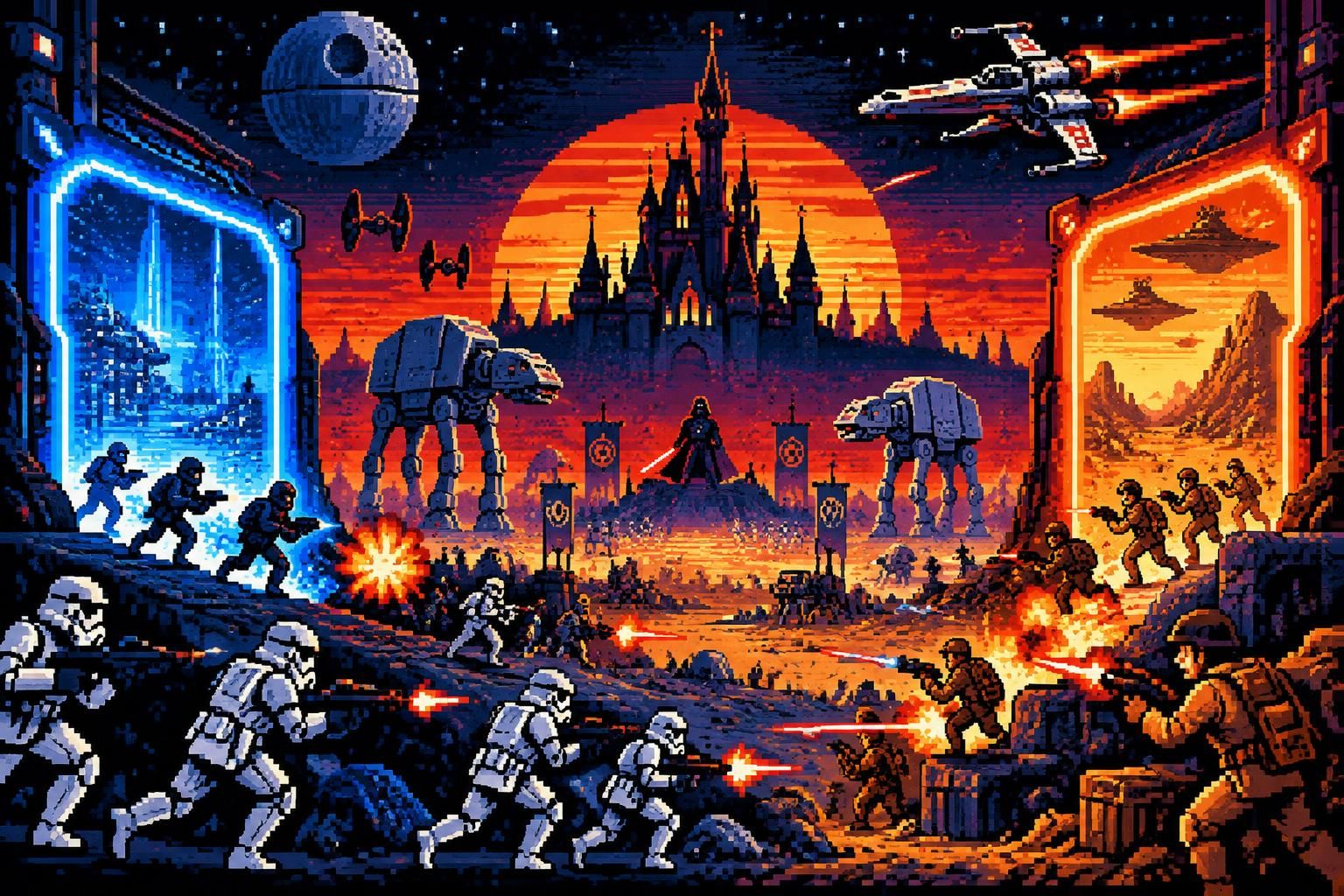
Disney’s Reported Battlefront Talks: Separating Intelligence From Confirmation
I treat the report that Disney is considering Bungie and DICE for a new Star Wars: Battlefront as a procurement signal, not a deployment order. For you, the distinction is practical: discussions about a development partner do not establish that a project has entered production, received a final budget, or secured a release window.
The supplied reporting attributes the central claim to gaming journalist Jeff Grubb and a Giant Bomb broadcast. It describes Disney as exploring potential partners, with the studio behind the previous modern entries positioned as a plausible first choice and the creator of Destiny presented as another possibility.
I separate that account into three categories: what was reportedly discussed, what commentators infer, and what an eventual publisher would still need to authorize. Developer selection, a signed agreement, and an announced game are different milestones. Collapsing them into one headline creates certainty that the underlying account does not support.
What the Battlefront 3 Rumor Actually Establishes
You can examine Polygon’s coverage of the reported developer discussions alongside DualShockers’ account of the potential studio choice. I would read both for their attribution rather than count them as separate confirmations; several articles repeating one source do not constitute several independent intelligence channels.
The reported preference for the previous developer also needs careful handling. If Grubb considers that outcome the most likely, his assessment remains a forecast rather than evidence that negotiations have concluded.
I apply the same discipline to the presumed title. “Battlefront 3” is useful shorthand for a potential third modern installment, but you should not mistake familiar numbering for an official product name, a declared feature set, or a promise to continue every system from the 2017 release.
Consider an imagined player, Varo, who commands a regular multiplayer squad. If he tells his teammates that a sequel is confirmed, they may postpone purchases or expect an imminent announcement; if he describes exploratory talks accurately, they can follow developments without building plans around an unapproved product.
This is not excessive caution. A licensing discussion must still reconcile creative control, commercial terms, technology, staffing, platform commitments, and support obligations before the first public trailer becomes a meaningful operational signal.
Why Industry Rumors Require a Clear Evidence Ladder
I would rank evidence in ascending order: unattributed speculation, reporting with a named source, corroborated accounts, an official partnership announcement, and visible production milestones. Each level answers a different question, and none should inherit the authority of the level above it.
⚠️ The defensible formulation is that a new installment is reportedly being explored. A release year, cross-generation strategy, gameplay perspective, or commercial model cannot be derived from that statement alone.
The supplied material also includes claims about another shooter’s commercial performance and workplace conditions. I would not treat those claims as established facts without appropriately dated financial disclosures, direct reporting, or attributable statements; they are not necessary to explain why a publisher might compare two candidates.
The strategic question is therefore narrower than the loudest headlines suggest: which organization could deliver the required battlefield experience under an acceptable agreement? That question remains useful even if the reported negotiations change direction.
In a military briefing, an uncertain contact is marked before resources are committed against it. I apply that principle here because your understanding of the evidence determines whether every later assessment rests on stable ground.
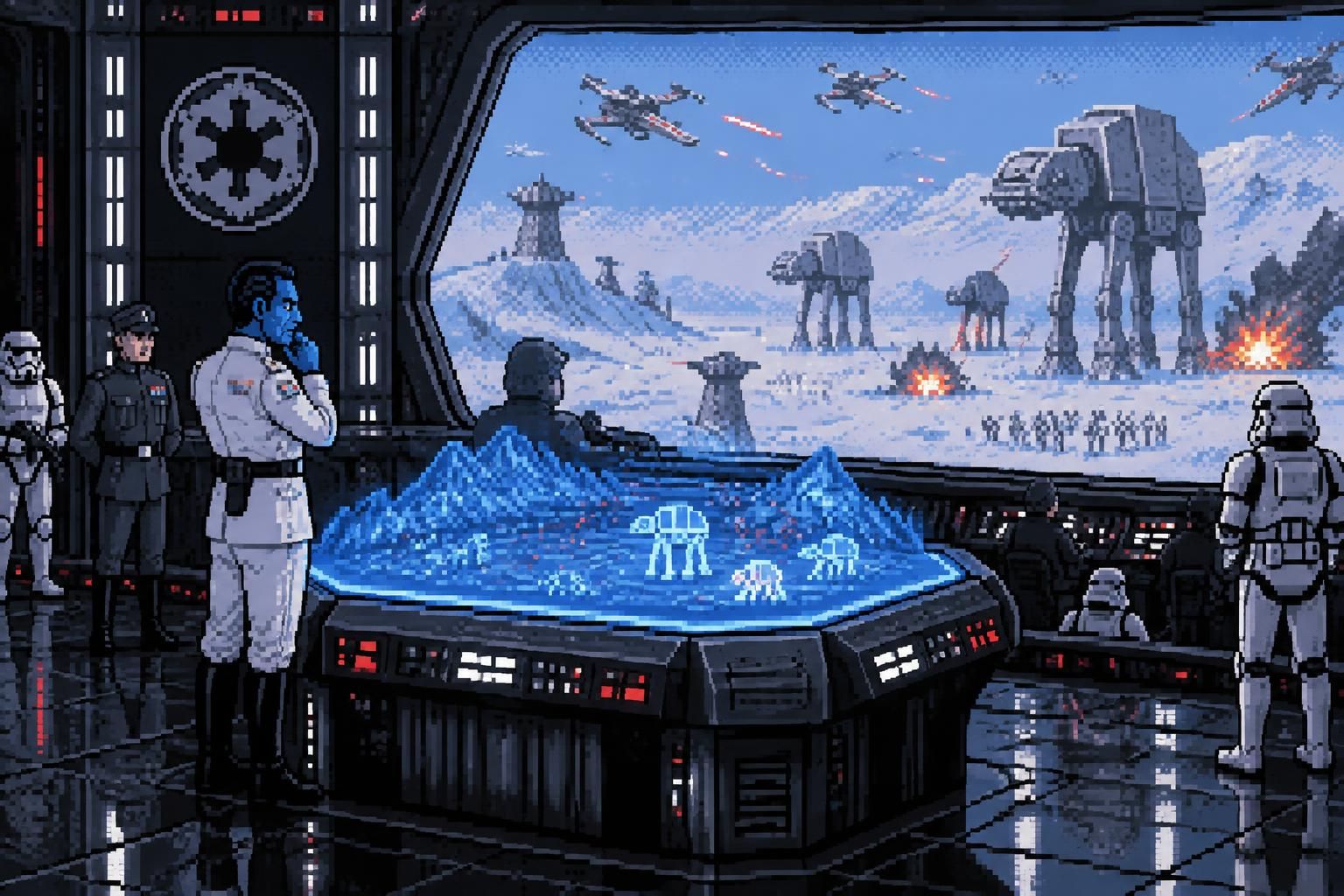
Why Battlefront’s Unfinished History Shapes a Possible Franchise Revival
I distinguish two histories whenever you encounter discussion of the elusive third entry. The canceled project associated with the original series and a possible successor to the modern releases belong to different production lineages, even though both have accumulated expectations around the same number.
The original games appeared in 2004 and 2005. A subsequent third installment was canceled during the following years, while the modern sequence began with DICE’s 2015 release and continued with its 2017 successor.
By 2026, that second modern release is nine years old. The interval explains why a franchise revival attracts attention, but elapsed time alone does not demonstrate that a viable production plan exists or that demand will translate directly into sustainable sales.
Battlefront II’s Recovery Offers a More Useful Lesson Than Nostalgia
I would not describe the 2017 launch as an uncomplicated success. Its progression and monetization controversy became central to its reception, making it a case study in how an admired setting can be undermined by systems that players perceive as unfair.
Subsequent changes revised progression, removed paid gameplay advantages, and expanded the available experience. Major content support concluded in 2020, leaving an important distinction for you to retain: the game’s later reputation reflects years of corrective work, not merely its original condition.
That recovery is operationally significant. It shows that an audience can reassess a product when its underlying incentives improve, but it also demonstrates the cost of spending post-launch capacity repairing trust that should have been protected before release.
You can explore the continuing audience through coverage of Battlefront II’s Steam player activity. I would use such reporting to investigate engagement patterns, while remembering that one storefront cannot represent console participation, total ownership, or the number of customers willing to buy a sequel.
For Varo’s squad, a return to an older multiplayer title might mean several different things. A discount may bring recruits, a creator’s video may trigger a weekend reunion, or renewed discussion may persuade former players to reinstall an existing purchase.
Those behaviors are not interchangeable. A temporary increase in concurrent users demonstrates activity during a particular period; it does not establish an enduring audience at a new premium price or willingness to fund years of optional content.
What Disney Should Preserve From Earlier Star Wars Shooters
I identify the enduring attraction as participation in recognizable battles rather than the mere accumulation of unlocks. A player remembers crossing exposed ground beneath a walker because movement, sound, scale, and vulnerability combine into an encounter that feels specific to this universe.
The cultural analogy is useful. Naboo’s ceremonial symmetry communicates order and legitimacy, while a Rebel installation assembled from mismatched equipment communicates adaptation; environments can establish a faction’s character before a soldier fires a weapon.
A new project should preserve that immediate legibility while examining which inherited mechanics actually served it. Familiarity is an asset when it reduces confusion, but a liability when it protects weak progression, excessive menu friction, or objectives that distribute action badly.
I would also separate preservation from imitation. Modern accessibility options, clearer squad tools, better onboarding, and stronger anti-cheat provisions can improve the experience without erasing the theatrical scale that makes these battles recognizable.
The relevant inheritance is therefore not a checklist of old assets. It is the ability to turn a familiar conflict into understandable, repeatable player decisions. Establish that requirement first, and the choice of developer becomes a comparison of capabilities rather than an exercise in nostalgia.
DICE’s Battlefront Advantage Depends on Capacity, Not Its Name
I regard DICE’s previous work on Battlefront as a substantial qualification, not an automatic entitlement. The organization delivered the two modern entries, but you should distinguish the experience associated with a studio’s history from the personnel, tools, and production capacity available for a future contract.
Teams change over time. Individual developers leave, technical pipelines evolve, leadership priorities shift, and knowledge becomes less useful when it is not maintained through documentation, working tools, and experienced staff who remain available.
A publisher evaluating the Swedish developer would therefore need more than a presentation of past achievements. It would need a credible account of who would lead the project, how the workforce would be assembled, and which existing commitments would compete for the same specialists.
Large-Scale Star Wars Warfare Fits DICE’s Established Experience
I see the strongest fit in the coordination of infantry, vehicles, terrain, and spectacle. A battlefield containing walkers, starfighters, defensive positions, and advancing squads requires more than excellent individual shooting; it requires several combat scales to coexist without making ordinary soldiers irrelevant.
Imagine Varo defending a transport route on Hoth. If hostile armor can observe every approach, his squad has no meaningful tactical choice; if infantry can disable that armor instantly from any location, the vehicle loses its purpose.
The map must instead create a sequence of exposures and opportunities. Covered routes allow movement, open ground rewards coordination, and anti-vehicle positions become valuable because reaching and holding them involves risk.
That interdependence is where experience with combined-arms design matters. You are not merely asking whether a vehicle looks authentic; you are asking whether its presence changes what nearby players should do.
Technical familiarity could also reduce uncertainty, particularly where established workflows already support large environments, layered audio, animation, and networked action. However, I would not assume that old assets or earlier technology can be transferred unchanged into a new product.
Rendering requirements, security expectations, accessibility standards, and platform targets may all demand substantial redevelopment. Reuse has value only when the cost of adaptation is lower than the cost of replacement.
Why EA’s Production Priorities Would Matter to Battlefront 3
DICE operates within Electronic Arts, so any agreement would need to fit a broader commercial schedule. I would examine staffing commitments and portfolio priorities before interpreting reported enthusiasm as practical availability.
A developer can want a project and still be unable to support it responsibly. The relevant question for you is whether a dedicated team could sustain production without repeatedly borrowing essential personnel from another demanding release.
I would require an early playable demonstration with representative networking, vehicle interaction, and objective flow. A visually polished corridor would prove little about a game whose defining promise depends on large, contested spaces.
That test should include ordinary soldiers, not only heroes. If basic infantry movement, target readability, and spawn behavior fail under pressure, no cinematic character reveal can repair the foundation.
The same scrutiny should extend to long-term operations. Matchmaking, moderation, exploit response, and service reliability are not peripheral expenses; they determine whether a multiplayer audience remains deployable after the opening campaign of publicity.
The case for DICE is strongest when continuity produces measurable execution advantages. I would favor demonstrated readiness over familiarity alone, because a recognized insignia cannot substitute for a staffed and tested production plan.
Bungie’s Battlefront Potential Would Depend on Adapting Its Shooter Discipline
I assess Bungie as a different design proposition, not merely an alternate supplier for the same blueprint. Its history with Halo and Destiny gives you a basis for examining weapon feel, enemy readability, cooperative encounters, and the relationship between movement and combat spaces.
Those strengths could suit a licensed shooter, but capability in one setting does not guarantee compatibility with another. The important question is whether the team could preserve its mechanical discipline while accepting the visual, narrative, and organizational constraints of this particular battlefield.
I also reject the implication that the studio is simply “free for work.” Bungie belongs to Sony Interactive Entertainment, and any substantial external partnership would require compatible corporate arrangements, resource allocation, and approval processes.
What Bungie Could Contribute to Star Wars Combat
The most relevant contribution would be precision in the interaction between player input and visible response. You notice that discipline when a weapon’s recoil, sound, projectile behavior, and target reaction communicate the same event without ambiguity.
A blaster must satisfy a demanding dual requirement. It should feel responsive enough for competitive play while retaining the audiovisual identity that distinguishes an E-11 or a Rebel sidearm from a contemporary firearm.
I would test that relationship using a small encounter before authorizing a vast arsenal. If Varo cannot identify why he missed, whether an opponent is protected, or how heat affects his next shot, additional weapon variants only multiply confusion.
Encounter design provides another potential advantage. A good combat space invites movement by changing threats, sightlines, and useful positions, rather than relying exclusively on higher enemy health or a constant supply of rewards.
Applied to a boarding action, that could mean security doors dividing the fight, an exposed control station creating temporary urgency, and flanking routes that force defenders to reconsider fixed positions. Such systems produce decisions without requiring an elaborate loot economy.
Why Destiny Systems Should Not Automatically Enter Battlefront
I would not equate successful adaptation with importing every familiar progression mechanism. Randomized equipment, extensive build crafting, or a demanding seasonal schedule could conflict with an audience seeking immediate access to recognizable troops and straightforward team objectives.
Consider the first evening for Varo’s newest recruit. If the recruit loses because a veteran understands cover and timing, the lesson is actionable; if the defeat depends on obscure modifiers accumulated over months, the relationship between practice and improvement becomes harder to read.
The setting itself offers differentiation through class roles, equipment, faction doctrine, and terrain. A heavy trooper can suppress a route while a specialist watches a distant approach, creating distinct functions without requiring thousands of numerical permutations.
I would also separate contemporary reporting about workforce disruption from unsupported conclusions about future performance. Verified staffing changes can inform a capacity assessment, but allegations about management or claims of commercial failure should not be converted into facts through repetition.
Likewise, the existence of Marathon does not establish that an extraction structure would suit this project. Genre decisions should follow the intended audience and battlefield fantasy, not the most recent product associated with a candidate.
The strongest proposal would demonstrate restraint as well as ambition. Bungie’s value would lie in translating its combat expertise, not reproducing another franchise beneath different armor. That distinction becomes decisive when comparing what both candidates would actually be asked to build.
Battlefront 3 Gameplay Needs a Clear Battlefield Doctrine
I would define the desired player experience before selecting its most marketable features. For you, that means asking a direct question: should this video game primarily deliver accessible mass warfare, competitive infantry combat, cooperative military scenarios, or an expansive collection of loosely connected modes?
A project can contain several experiences, but each additional pillar increases design, testing, matchmaking, and support requirements. Without a hierarchy, breadth becomes fragmentation, and a large advertised feature list can conceal a weak central battle.
I would establish ordinary troopers and objective-based combined arms as the reference encounter, then evaluate every proposed addition by whether it strengthens or disrupts that foundation. This is a proposed design standard, not a description of an announced product.
How Star Wars Factions Can Shape Meaningful Multiplayer Roles
Cultural identity should influence function rather than remain confined to costumes. Imperial architecture favors hierarchy, controlled movement, and imposing sightlines; Rebel spaces suggest improvised defenses, concealed access, and equipment adapted to necessity.
You can turn those differences into readable environments without imposing simplistic balance advantages. An orderly installation may have strong defensive corridors but vulnerable maintenance access, while a rough encampment may offer flexible movement at the cost of exposed supplies.
For Varo’s squad, an objective inside an Imperial archive should therefore produce different decisions from one in a forest outpost. The former might reward coordinated breach timing, while the latter depends on observation, concealment, and control of irregular approaches.
I would use the following priorities to assess whether those differences produce useful play rather than decorative complexity:
- 🎯 Readable objectives: you should understand what must change on the battlefield and why your squad matters.
- 🛡️ Protected deployment: spawn systems should provide a reasonable opportunity to act without making reinforcement entirely risk-free.
- 🚀 Interdependent roles: infantry, armor, and aircraft should create opportunities for one another rather than compete in isolated contests.
- ⚔️ Controlled hero influence: recognizable characters should alter local conditions without erasing the relevance of ordinary troops.
- 🤝 Useful squad tools: pings, clear orders, and accessible communication should support coordination without requiring voice chat.
The argument behind these priorities is simple: a public match cannot assume military discipline. Its systems must make cooperation understandable enough that unfamiliar players can contribute before they have learned every route or acquired specialized equipment.
Why Heroes, Space Battles, and Bots Need Separate Tests
Hero characters require particular restraint because their appeal can conceal systemic damage. If an elite unit repeatedly destroys newly deployed opponents, its dramatic importance comes at the expense of the larger match.
I would evaluate counters, warning signals, resource costs, and escape opportunities rather than rely on one health adjustment. You should recognize a dangerous presence, understand your available response, and retain a reason to participate even when direct confrontation is unwise.
Space combat raises a different problem: production scope. A meaningful fighter mode needs its own handling model, encounter structure, interface, and matchmaking population, so its inclusion should follow a credible staffing plan rather than an assumption that every recognizable vehicle must be playable.
Cooperative and offline options deserve equal scrutiny. Competent bots and adjustable scenarios can support training, accessibility, preservation, and players who cannot commit to competitive sessions, but those benefits require deliberate development rather than a token menu entry.
I would test the whole doctrine through a repeatable operation in which Varo escorts a convoy, loses a route, adapts, and still has a plausible path to success. The decisive feature is not the number of systems present, but the quality of decisions those systems create.
Disney’s Battlefront Business Model Must Protect Competitive Trust
I consider monetization a battlefield condition because it changes incentives before you enter a match. A system that sells perceived competitive advantage affects recruitment, retention, reputation, and the credibility of every later balance adjustment.
The lesson from the 2017 controversy is not that all optional purchases are inherently destructive. It is that the relationship between payment and power must be clear, and that a publisher cannot assume a famous license will neutralize objections to an unfair progression structure.
For a possible revival, I would establish commercial boundaries before presenting a reward screen. If players cannot quickly determine what money buys, the interface itself becomes a source of suspicion.
Battlefront Progression Should Reward Participation Without Selling Superiority
You can examine the earlier reward systems through this discussion of Battlefront II’s crate rewards. I would use that history to trace how progression was understood by players, while distinguishing original mechanics from changes introduced later.
A cosmetic-focused approach avoids one major conflict by separating expenditure from combat effectiveness. However, it still requires clear pricing, recognizable categories, and care around scarcity or limited-time offers that pressure players to purchase before making a considered decision.
Canon coherence matters as well. A uniform variant can offer visual distinction without undermining faction readability, whereas an excessive effect around a weapon or character may interfere with target recognition during crowded encounters.
I would ask you to evaluate purchases from the perspective of Varo’s newest recruit. Can that player identify opposing classes, understand incoming damage, and compete on equal mechanical terms without browsing a store?
If the answer is no, the commercial layer is imposing a tactical penalty on nonparticipants. That cost is paid in match quality and trust, even if the immediate transaction figures appear favorable.
How the Main Battlefront Funding Options Compare
| Commercial approach | Potential advantage | Strategic risk |
|---|---|---|
| 🎮 Premium purchase | A clear initial transaction and defined launch package | Price can restrict recruitment unless the included experience is convincing |
| 🎨 Optional cosmetics | Additional funding without directly selling combat strength | Visual excess or unclear pricing can weaken trust and readability |
| 🗺️ Paid battlefield expansions | Revenue attached to substantial new environments | Separate map ownership can divide matchmaking populations |
| 📅 Seasonal content | A regular reason to return and a visible support schedule | Production pressure can encourage repetition or unreliable commitments |
I would not select among these approaches by revenue potential alone. The proper comparison includes how each affects population density, regional matchmaking, onboarding, and the ability of friends with different spending habits to remain together.
Paid maps illustrate the problem precisely. A battlefield can be well designed yet become difficult to access when too few eligible players are searching in the same region and mode.
Free access to shared combat spaces can reduce that division, but it does not eliminate operating costs. Another source of revenue must support servers, moderation, security updates, and the workforce producing future content.
That is why promises of indefinite support require scrutiny. I would prefer a funded, credible content plan over an ambitious calendar that depends on every commercial forecast exceeding expectations.
Licensing and platform arrangements also matter, although their terms should not be guessed. Disney, a publishing partner, and a developer would need incentives that support the same long-term experience rather than reward conflicting short-term targets.
A sustainable model makes the service worth funding without making victory worth purchasing. Establishing that boundary early would protect both the audience’s confidence and the production team’s ability to plan.
Battlefront Game Development Requires Milestones Before Release Predictions
I would not assign a release year to an unannounced project whose development partner is reportedly still being discussed. You can infer that a large licensed shooter would require substantial preparation, but a plausible duration is not the same as an approved schedule.
Game development begins with obligations, not trailers. Scope, staffing, technology, creative approval, financial responsibility, and the division of publishing duties all influence what can be built and when it can be delivered.
Even the phrase “in development” can obscure important differences. A small group evaluating concepts is not equivalent to a fully staffed production team building launch content against a stable technical foundation.
What a Credible Battlefront Production Plan Would Demonstrate
I would divide evaluation into successive proofs. First, a prototype must establish that movement, shooting, and the core objective are compelling; next, a representative slice must show that art, networking, animation, and interface systems can work together at the intended quality.
That representative slice should contain difficult interactions rather than only favorable ones. Vehicles passing through contested spaces, several simultaneous effects, players reconnecting, and crowded objective zones provide more useful evidence than an empty environment shown under ideal conditions.
Varo’s hypothetical convoy mission offers an appropriate test. The team should demonstrate that it remains understandable when defenders flank, armor changes position, a hero enters the area, and network conditions differ between participants.
If the experience collapses under those conditions, expanding the number of maps only reproduces the weakness. I would correct the underlying systems before treating content volume as evidence of progress.
Platform selection creates another set of dependencies. A cross-generation release could broaden access, but differences in memory, processors, storage, and certification requirements may constrain level design or multiply optimization work.
You should therefore treat platform claims in industry rumors as separate propositions requiring separate evidence. A reported studio conversation does not establish which consoles, storefronts, or hardware generations would receive the finished product.
Why Live Operations Must Be Budgeted Before Launch
Multiplayer production does not end when the software passes certification. Matchmaking adjustments, server capacity, account support, exploit detection, and moderation need owners, procedures, and funding before the first large influx of users.
I would also require clear responsibility for emergency decisions. When an exploit spreads, a team needs authority to disable an item or mode rapidly, communicate the reason, and restore functionality after testing.
Accessibility belongs in this early planning as well. Subtitle controls, remappable inputs, visual clarity, audio alternatives, and adjustable interface elements become more expensive to retrofit when foundational systems were built without them.
Security must receive similar treatment. A competitive environment loses strategic meaning when players cannot trust that opponents obey the same rules, and visible enforcement failures can drive away legitimate users faster than new cosmetic releases attract them.
Public testing would provide evidence that internal reviews cannot. However, I would judge a test by what it measures—performance, onboarding, balance, or service load—rather than assume the word “beta” guarantees that fundamental problems remain inexpensive to fix.
The most useful announcement would therefore identify responsibilities, show representative play, and establish the next verifiable milestone. A schedule becomes credible when demonstrated capability supports it, not when anticipation demands a date. That standard also provides the clearest way to compare the two reported candidates.
How to Judge a New Star Wars: Battlefront Announcement When It Arrives
I would evaluate any future announcement through a scorecard rather than an allegiance to a studio name. Both reported candidates have relevant experience, but you need evidence that the chosen team can deliver the specific combination of accessibility, scale, authenticity, and sustained operation this series requires.
The first criterion is mandate. An announcement should make clear who develops the game, who publishes it, how Lucasfilm Games participates, and whether the revealed material represents actual production rather than an aspirational concept.
The second is identity. You should be able to explain the central experience in a sentence without relying on a list of famous characters, planets, or weapons.
What the First Battlefront Gameplay Reveal Should Prove
I would look for continuous sequences showing ordinary player decisions. A trooper choosing cover, responding to an objective change, cooperating with armor, and recovering after a failed advance reveals more than a montage of cinematic eliminations.
Editing can hide weak transitions. If every clip begins at the moment of impact, you cannot assess travel time, spawn quality, target acquisition, or whether players receive enough information to act intelligently.
For Varo’s squad, the critical question is whether coordination creates a visible advantage without making solo participation futile. A newcomer should have a useful task, while an experienced group should gain efficiency through timing and role distribution.
I would also examine losses. A well-designed encounter lets you understand why a defense failed and what could change next time; an opaque one attributes defeat to effects, modifiers, or attacks that the interface never explained.
The artistic layer should support that clarity. Mandalorian armor communicates clan and function through silhouette and markings, while Imperial equipment emphasizes standardization; thoughtful visual language can convey battlefield information without filling the screen with additional symbols.
This is where authenticity and usability should reinforce each other. A recognizable troop type can serve both the fiction and the tactical interface, provided customization does not erase the distinction.
Which Battlefront Promises Deserve the Closest Scrutiny
I would inspect claims about scale, longevity, and player freedom most closely because each can conceal a trade-off. More participants can increase spectacle while reducing individual influence; more modes can increase choice while weakening matchmaking populations.
A promise of years of content also needs context. The relevant evidence is not the length of a roadmap but the staffing, production cadence, and contingency planning that make its delivery plausible.
You should ask whether cooperative play, offline functionality, and accessibility are demonstrated features or merely anticipated additions. Their presence changes who can use the product and how much of it remains valuable when competitive populations decline.
The broader history of the medium offers useful context through this examination of how Star Wars gaming has evolved. I would use that perspective to resist the assumption that one successful formula must govern every future adaptation.
There is room for tactical campaigns, character-led adventures, and large multiplayer battles because they satisfy different objectives. A new installment would need to justify its particular role through execution, not through the absence of alternatives.
My decisive test would remain a repeatable session: can Varo and a newcomer join, understand their assignment, encounter meaningful resistance, and identify a reason to return after the spectacle becomes familiar? That sequence measures enduring design rather than promotional impact.
The next meaningful signal is demonstrable capability: a committed team, representative gameplay, transparent commercial rules, and a support plan that matches the promised battlefield. Until those elements appear, I would track the reported negotiations as intelligence awaiting corroboration rather than an operation already underway.

I am Grand Admiral Thrawn, strategist of the Galactic Empire. Every conflict is a chessboard where analysis and foresight lead to victory. The art and culture of a people betray their weaknesses. The Empire embodies order and discipline in the face of rebel chaos. History will remember that only strategy ensures peace.