
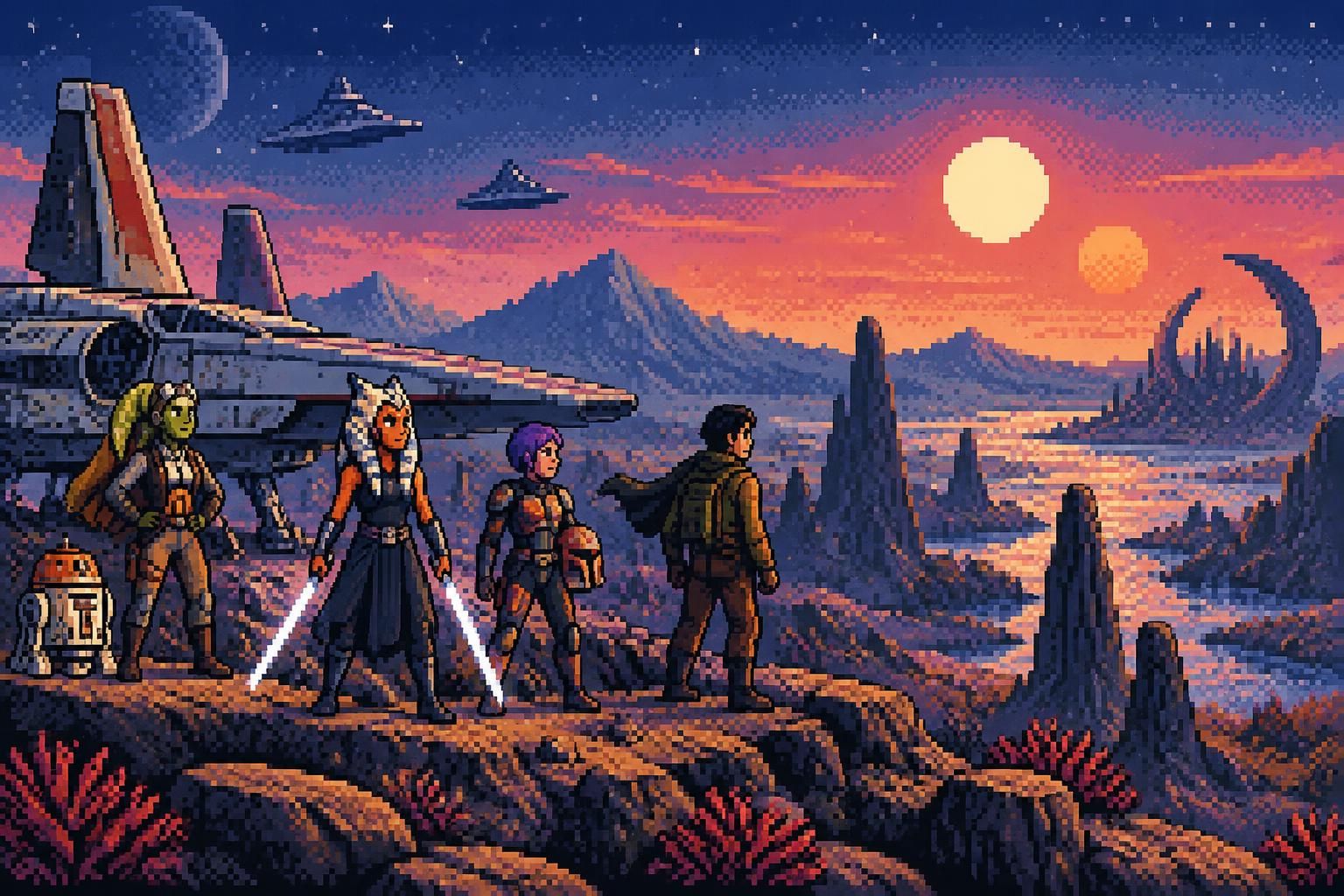
‘Ahsoka’ Season 2 Cast Reveals the Stakes Behind Their Character Journeys
At an LA Comic-Con panel, Rosario Dawson, Natasha Liu Bordizzo and Eman Esfandi offered a controlled glimpse of Ahsoka Season 2. I would ask you to distinguish what the cast described from what they did not: they discussed their characters’ states of mind and their experience on set, but withheld the detailed story.
Dawson suggested that Ahsoka Tano enters the new season having made progress with the burdens of her past. Bordizzo expressed pride in Sabine Wren’s journey, while Esfandi anticipated more time with Thrawn, Chopper and other familiar figures.
Their remarks also identified a change in production conditions. After a first season Dawson described as being filmed mostly inside the Volume, the performers spent more time on outdoor sets, where weather, physical scenery and distance became part of their working environment.
What the Ahsoka Cast Could Say About Season 2
The panel was recorded and posted on YouTube, giving viewers access to the cast’s own descriptions rather than a complete plot briefing. I find that distinction useful: a performer can explain the emotional direction of a character without identifying the events that produce it.
Consider Dawson’s account of Ahsoka’s healing. It tells you that the first season’s encounter with Anakin Skywalker remains significant; it does not establish that Ahsoka has resolved every problem or reveal which threat will test her next.
Bordizzo’s comments work in the same way. Her enthusiasm for Sabine’s progress and for the drama between characters points toward consequential relationships, but it does not establish who disagrees, what causes the disagreement or how it ends.
Esfandi supplied a more tangible clue by speaking about Chopper and a certain Imperial adversary. Even there, the scope of his remarks matters: an indication that viewers will spend more time with familiar characters is not a scene-by-scene account of their roles.
I recommend examining those remarks against the position established at the end of Season 1. Ahsoka and Sabine remain on Peridea, while Ezra has returned to the familiar galaxy and Thrawn has escaped with the assistance of the Great Mothers.
That separation is a useful starting map, not a guarantee that every character will remain in place. It explains why the cast’s references to individual journeys carry weight: the principal figures begin from different locations, with different resources and obligations.
For the wider official context, Lucasfilm’s Ahsoka Season 2 coverage provides a useful companion to the panel. The distinction between an announced detail, an actor’s interpretation and an audience theory will remain important as promotion continues.
The practical lesson is straightforward: the cast has described direction, not destination. To understand where those directions diverge, begin with the character who has already confronted her past.
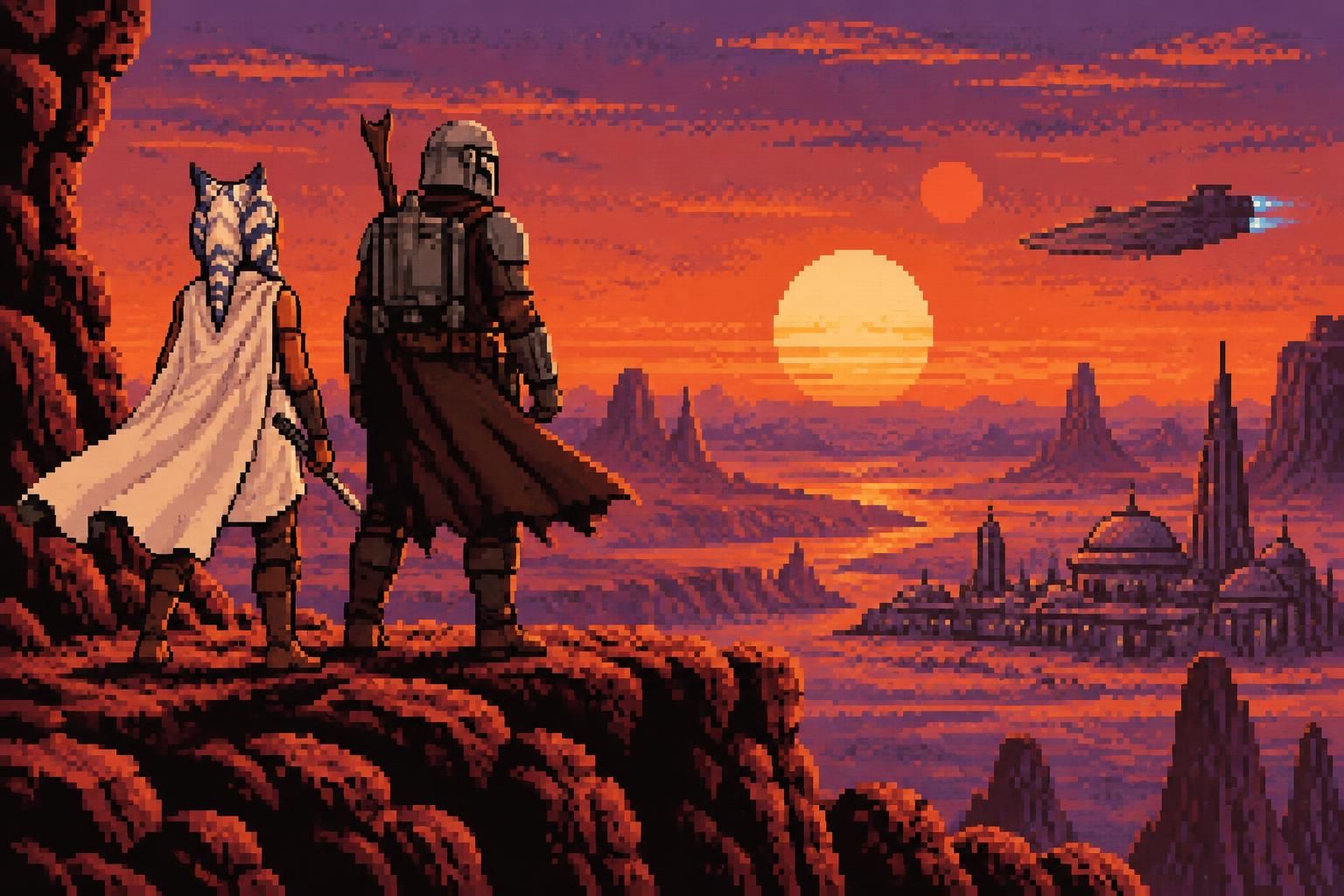
Rosario Dawson Teases Ahsoka’s Next Challenge After Healing
Dawson described Ahsoka as someone who carried unresolved pain for a long time and made substantial progress during the first season. She associated that change with the emergence of Ahsoka the White, the version of the character who returns from her encounter with Anakin with a different bearing.
I would not interpret that change as an end to conflict. Dawson’s point was more precise: healing a wound from the past does not prevent a person from facing new pressures in the present.
For you as a viewer, that distinction changes how a familiar character can be assessed. Ahsoka need not repeat the same internal struggle to remain dramatically vulnerable; a new decision can test whether her clearer perspective holds under unfamiliar conditions.
Why Ahsoka’s Season 1 Encounter With Anakin Still Matters
In Season 1, Ahsoka’s confrontation with Anakin connects her Jedi training, the Clone Wars and her anxiety about the legacy of a master who became Darth Vader. Their encounter forces her to consider whether she is defined solely by war and by the failures attached to that history.
When she returns, her lighter clothing offers a visible marker of change. Costume alone does not explain a character’s psychology, but Star Wars has often used clothing and visual contrast to make a transition legible before a character explains it.
I see a tactical difference between carrying history as information and allowing it to dictate every response. A commander who remembers a defeat can learn from it; a commander who assumes every new engagement must end the same way may misread the terrain.
Dawson’s comments suggest Ahsoka will bring that altered perspective into her relationships. She also described the new season as intense, which indicates that a calmer starting point does not necessarily produce a quieter campaign.
The first season already established a demanding context. Ahsoka must navigate her bond with Sabine, the consequences of their separation from their home galaxy and the uncertainty surrounding powerful forces on Peridea.
Those circumstances offer several possible tests, but the cast did not disclose the particular decisions involved. I would treat any exact prediction about her alliances or confrontations as speculation rather than as a revealed plot point.
A Lighter Ahsoka Does Not Mean a Simpler Story
Dawson’s interpretation gives the series room to explore a character who has changed without making her invulnerable. In a prolonged conflict, an experienced leader may become more receptive to allies while still facing decisions for which no painless answer exists.
That possibility matters for Sabine as well. Their relationship has already moved between apprenticeship, separation and renewed trust, so a shift in Ahsoka’s outlook can alter the way they speak, teach and respond to one another.
Think of the Jedi tradition as a cultural inheritance, not merely a collection of combat techniques. Its teaching practices, rituals and choices about attachment shape how its members understand duty; Ahsoka’s history outside the Order gives her a distinct position from which to evaluate those habits.
Further reporting has examined Dawson’s comments on Ahsoka’s changing outlook. The panel adds a practical limit to that discussion: the actor has identified a state of readiness, not a complete list of the challenges ahead.
Why does that matter? Because progress becomes meaningful on screen when it affects a choice, especially a choice made in relation to someone else.
For Ahsoka, the significant question is not whether the past has disappeared. It is how she will act now that she is less constrained by it—and how that change will affect the student beside her.
Natasha Liu Bordizzo Promises a Meaningful Sabine Wren Journey
Bordizzo said she was proud of Sabine’s Season 2 journey and believed viewers would have reason to feel proud of her as well. She did not disclose the events behind that assessment, but she emphasized both Sabine’s personal arc and the dramatic scenes shared by the cast.
I would read that as an indication of emphasis rather than a verdict on Sabine’s eventual success. Pride can arise from a difficult decision, an act of loyalty, an admission of responsibility or a skill earned through sustained effort.
At the end of the first season, Sabine has remained with Ahsoka on Peridea after helping Ezra find a route home. The position is strategically awkward: she has achieved a long-standing personal objective while becoming separated from the people and places she fought to reach.
Sabine’s Mandalorian Art as a Record of Experience
Sabine’s background makes her particularly useful to this analysis. She is a Mandalorian, an artist and an experienced member of the Ghost crew, and each aspect gives her a different way to interpret conflict.
Her armor and visual work are not incidental decoration. In Mandalorian culture, armor can communicate family, identity and allegiance; Sabine’s use of color adds an individual language to a tradition often associated with martial discipline.
On Lothal, her mural commemorating the Ghost crew makes memory visible in a public place. It preserves relationships and collective sacrifice, allowing those who see it to understand that the liberation of a world was accomplished by individuals as well as by movements.
Bordizzo explained that Star Wars Rebels gave her a substantial emotional history to draw on when she first played Sabine. Although she had not personally lived the events portrayed in animation, she approached the material as a set of memories that could give live-action scenes additional weight.
The mural scene was a particular example. Bordizzo described the experience of standing before it as if Sabine already remembered the people and events it represented, giving the performance a connection to earlier adventures without requiring the dialogue to recount them all.
I find that a precise illustration of cultural intelligence. An image can carry information about loyalty, loss and priorities that a written order would struggle to convey as efficiently.
Why Interpersonal Drama Matters to the Ahsoka Series
Bordizzo also recalled the cast reacting to the intensity of certain scenes between takes. She presented those exchanges as a reason for excitement, while leaving the participants and circumstances undisclosed.
What can you infer from that without inventing a plot? At minimum, the production appears to have given relationships enough space to become a source of pressure, rather than relying entirely on battles or revelations to create movement.
Sabine’s first-season choices demonstrate why such scenes can matter. Her desire to recover Ezra intersected with a much larger strategic problem: Thrawn’s possible return, and the consequences that return could have for the New Republic.
That does not reduce her motives to a simple equation. It shows how a personal commitment can affect a wider operation, particularly when an adversary understands the importance of that commitment.
Ahsoka and Sabine must also function as teacher and student after a history of interrupted training. If their priorities differ, their discussions can reveal the practical limits of trust more clearly than a declaration of loyalty.
For a closer look at the broader Ahsoka Season 2 adventure, the developing relationships provide a useful frame. Bordizzo’s promise is deliberately restrained: Sabine’s progress matters, but the manner of that progress remains to be seen.
Her cultural identity supplies the evidence already available; the new season will determine what she does with it. That brings the analysis to another former Ghost crew member, whose return places him in a very different position.
Eman Esfandi Explains Ezra Bridger’s Return and New Season 2 Encounters
Esfandi’s remarks focused on the people and droids Ezra encounters, including Chopper and several other beloved characters whose names he did not reveal. He also welcomed the prospect of spending more time with Thrawn, identifying a rivalry that has shaped Ezra’s life for years.
At the end of Season 1, Ezra returns to the familiar galaxy after a long exile on Peridea. I would begin with the practical consequences of that return: he has re-entered a political and personal landscape that continued to change while he was away.
Reunion is not identical to reintegration. A person may recognize old allies immediately and still need time to understand the institutions, threats and responsibilities that developed during an absence.
Ezra’s Reunion With the Ghost Crew
Ezra’s arrival brings him back into the orbit of Hera Syndulla and the community associated with the Ghost. Their shared history offers a foundation of trust, but it does not automatically explain every change that occurred after the struggle to free Lothal.
For viewers who followed Rebels, the emotional context is substantial. Ezra grew from a resourceful street survivor into a Jedi apprentice and a member of a crew whose bonds were forged through repeated acts of resistance.
For viewers who met him first in live action, the same history can be communicated through behavior: familiarity in conversation, an established joke or a moment in which someone acts without needing an explanation. I would look for those small signals before assuming that a scene must pause for a full account of the past.
Esfandi’s comments on Chopper suggest that the droid will have a notable presence. He praised the puppeteers who operated the character and joked that Chopper had the temperament of a demanding star, contrasting him with the more composed Huyang.
The joke is useful because it identifies a feature of the character. Chopper’s abrasive manner, loyalty and unpredictable interventions are part of the Ghost crew’s identity; his personality is not simply a substitute for a human conversation.
A droid can also expose the culture of a group. The crew’s tolerance for Chopper’s behavior reflects a long relationship in which usefulness, affection and irritation coexist without requiring constant explanation.
What Ezra Knows About Thrawn
Ezra’s return has an immediate strategic dimension because Thrawn has returned too. Their encounter on Lothal ended with purrgil carrying both of them away, making Ezra one of the New Republic’s most relevant sources on the Imperial commander’s capabilities.
Knowledge, however, must be converted into action. A warning is only effective if the people receiving it understand its urgency, trust its source and possess enough authority to respond.
I would therefore separate two questions: what Ezra can tell his allies, and what those allies can do with the information. The first concerns memory and communication; the second concerns political will, resources and competing priorities.
Esfandi did not disclose the details of those conversations. His reference to more time with Thrawn signals the importance of the adversary, but it does not establish whether Ezra and the Grand Admiral will share particular scenes or how their conflict will unfold.
For context around the actor’s earlier remarks, this report on Esfandi’s Season 2 comments follows the developing discussion. The safest reading remains that Ezra’s return creates opportunities for both reunion and renewed danger.
As you assess his role, note the contrast with Ahsoka and Sabine: Ezra is back among familiar institutions while they remain far from them. That divided position gives each part of the story a different set of available allies.
It also makes the returning Imperial threat more than a distant rumor. The next question is how the cast’s comments frame that threat without exposing the campaign ahead.
Thrawn, Chopper and Familiar Faces Shape the Season 2 Cast Tease
Esfandi referred to a particular war criminal whom viewers enjoy watching, a description that points toward Thrawn. His enthusiasm for more time with the character is a cast tease, not a disclosure of the Grand Admiral’s complete plan.
I advise you to examine the pieces already on the board. Thrawn returned at the end of Season 1 with the Great Mothers, their cargo and a vessel that had survived an extended exile; the New Republic now faces the possibility that a disciplined Imperial commander has re-entered its sphere.
That return is significant because an adversary’s strength is not measured only by the number of ships visible at one moment. Intelligence, alliances, timing and the ability to persuade others to commit resources can alter the balance before a fleet fires.
Assessing Thrawn’s Forces Without Inventing a Campaign
The first season showed Thrawn conserving resources and using Morgan Elsbeth, Imperial forces and the Nightsisters to secure his departure. His objective was not to defeat every opponent on Peridea; it was to prevent those opponents from stopping his return.
I regard that distinction as essential. A force can lose ground in one engagement while accomplishing its larger objective, and a pursuer can win a confrontation yet fail to prevent a strategic withdrawal.
For the New Republic, the weakness exposed by Thrawn’s escape is the gap between warning and response. Hera’s concern encountered political resistance, demonstrating that information does not automatically become an authorized operation.
The possible corrective is equally practical: compare independent reports, assess the credibility of witnesses and prepare proportionate contingencies before an adversary’s intentions are fully visible. That is an analytical recommendation, not a claim that Season 2 will depict a particular New Republic decision.
The Nightsisters add a cultural dimension. Their practices and the Great Mothers’ connection to Peridea represent a source of power that conventional naval assumptions alone cannot explain, so an effective assessment would account for both material and unfamiliar capabilities.
Additional background on that alliance can be explored in coverage of the Nightsisters’ possible role. The operative word is possible: the precise use of their abilities in the new season was not detailed at the panel.
Chopper’s Practical Presence on Set
Chopper offers a different kind of evidence: a physical performer-operated character interacting with actors in the same space. Esfandi credited the puppeteers, whose work allows the droid’s movements and timing to become part of a scene rather than an element added only in later discussion.
That immediacy can affect an actor’s response. A turn of the droid’s body, a pause or an interruption gives another performer something concrete to react to, even when sound and other refinements are completed later.
Esfandi’s affectionate joke about Chopper being a diva should be understood as a joke, not as a production dispute. It reflects the character’s established comic temperament and the cast’s enjoyment of working with the team that brings him to life.
His reference to other familiar characters remains deliberately unspecific. I would not convert that remark into a list of confirmed appearances, however plausible a reunion might seem from earlier Star Wars stories.
Instead, consider the narrative function of a returning figure. A familiar face can carry history into a scene quickly, but its value depends on what it contributes to the current situation rather than on recognition alone.
That principle also applies to the actors’ preparation. Their different methods for using the animated series show how established history can support a performance without dictating every choice.
How Star Wars Rebels Informed the Ahsoka Season 2 Cast
Bordizzo and Esfandi approached Star Wars Rebels differently while preparing to play established animated characters in live action. I find the contrast instructive because both used the same history, but selected different methods to preserve the qualities they considered most important.
Bordizzo treated the series as a deep store of memories for Sabine. Esfandi, concerned that he might imitate Ezra’s animated voice too closely, relied on research and a limited selection of episodes recommended by Dave Filoni.
Neither approach requires you to choose between fidelity and invention. The practical question is how an actor can understand a character’s past while making that character credible at a different age and in a different medium.
Bordizzo’s Preparation: A Pre-Existing Emotional Archive
Bordizzo explained that the animated series supplied background she might otherwise have built through journals, music and other exercises. Sabine already had friendships, losses, habits and a visual history, giving the actor a developed foundation before filming began.
That foundation affects more than exposition. A scene can acquire weight when a performer understands what a location or object means to the character, even if the script does not spell out the entire history for the audience.
The Lothal mural illustrates the mechanism. Sabine’s artwork is a record of the Ghost crew, and Bordizzo approached it with an awareness of the relationships and sacrifices represented there.
I would describe that as preparation through cultural evidence. An artifact reveals what its maker chose to preserve, whom she considered important and how she wanted a community to remember them.
The method does not mean an actor must reproduce every animated gesture. It means that new choices can be made with an understanding of the experiences that shaped the person making them.
Esfandi’s Preparation: Research Without Direct Imitation
Esfandi said he has a tendency to pick up voices and accents, which made him cautious about watching the whole animated series before establishing his own performance. He also noted that the live-action Ezra is older than the version viewers followed in much of Rebels.
Instead, he researched Ezra’s history in written form and spoke with Filoni about his concern. Filoni reassured him and selected five episodes that illustrated key relationships, including those with Sabine, Ahsoka, Kanan, Hera, Chopper, Zeb and Thrawn.
That was a targeted approach rather than a rejection of the source material. The written account provided a broad chronology, while the selected episodes offered examples of how Ezra behaved with specific people.
Esfandi also described receiving character guidance through the production team. One example involved a suggestion that Ezra should smile after being punched, a small adjustment that helped define his humor under pressure.
The example demonstrates how a performance can remain connected to an established character without becoming a vocal impression. A reaction, rhythm or sense of humor may communicate continuity more effectively than copying the exact sound of an earlier actor.
Esfandi said he found that his own sense of humor often aligned with Filoni’s understanding of Ezra. That gave him confidence in certain instincts while still allowing the creative team to supply corrections when needed.
For you, the distinction can be summarized in practical terms:
- 🎨 Bordizzo used Sabine’s animated history as emotional memory, particularly when working with locations and imagery tied to her past.
- 📚 Esfandi researched Ezra’s biography while limiting direct exposure to the animated performance.
- 🎬 Filoni selected key episodes and supplied guidance to help preserve relationships and character behavior.
These methods serve the same objective: continuity that remains flexible enough for a new performance. The next production question concerns a different form of continuity—how the series moved from controlled virtual environments into physical outdoor spaces.
Why Ahsoka Season 2 Moved Beyond the Volume to Outdoor Sets
Dawson highlighted the opportunity to shoot much more of Season 2 outdoors. She contrasted that experience with the first season, which she described as taking place mostly inside the Volume, a stage environment that can display digital backgrounds around performers.
I would not reduce the change to a contest between superior and inferior technologies. Each approach solves a different production problem, and Dawson acknowledged the remarkable capacity of the Volume to transform the same stage into different planetary environments.
The relevant question for you is what changes when actors work in real weather and physical space. Their comments suggest differences in sensation, scale and the immediate relationship between performers and their surroundings.
The Volume’s Controlled Environment
Virtual production can place performers before large digital displays while crews control lighting and background conditions. A stage can be reconfigured for different scenes without requiring the entire production to travel to a new landscape for each fictional planet.
Dawson recalled arriving at the same stage and seeing it transformed into different places. That flexibility is particularly relevant to Star Wars, where a series may move among worlds with distinct skies, terrain and architecture.
Control also has practical advantages. A crew can maintain a planned visual environment without depending entirely on whether clouds, rain or daylight match the needs of a scene.
But a controlled stage and an outdoor environment make different demands on performers. The cast’s preference for additional exterior work reflects their experience of the latter, not evidence that the first method lacked technical or artistic value.
Real Weather and Space Changed the Working Conditions
Dawson described extreme heat, cold, rain and slippery conditions during outdoor filming. Those details matter because they identify real physical challenges, rather than treating every exterior as a comfortable substitute for a soundstage.
Weather can affect movement and concentration. A performer crossing wet ground must account for footing, while a crew must protect equipment, manage schedules and keep working conditions safe.
At the same time, Dawson valued being able to feel the environment rather than imagine all of it. She also described the sense of scale provided by space extending into the distance, even though digital work would still be needed to complete the fictional setting.
That final qualification is important. An outdoor set does not necessarily show the finished planet in its entirety, and a physical location can coexist with substantial visual effects.
Bordizzo agreed that working outside gave the sets an energy she appreciated. She distinguished between already having practical props and gaining physical environments that offered a greater sense of grandeur.
I would compare the two approaches as tools with different strengths:
| Production approach | Practical advantage | Consideration for the cast and crew |
|---|---|---|
| 🖥️ Volume stage | Controlled digital surroundings can be changed between scenes. | Performers work within a planned stage environment. |
| 🌦️ Outdoor sets | Physical weather, terrain and distance are present during filming. | Heat, cold, rain and footing can complicate the work. |
| 🎨 Practical scenery with visual effects | Built elements give actors tangible surroundings while later work extends the world. | The finished planetary image may still depend on post-production. |
The panel did not provide a complete inventory of filming locations, so I would not assign specific countries or landscapes to individual scenes. The reliable point is that the cast experienced more exterior work and valued what it brought to the series.
Further coverage of Ahsoka Season 2 filming places that production shift in a broader context. The remaining question is how physical craftsmanship contributes to the worlds the camera records.
Hand-Painted Sets Give Ahsoka Season 2 a Different Sense of Scale
Bordizzo singled out the pleasure of seeing people hand-paint sets and create tangible scenery. Her comments placed human craftsmanship alongside the digital tools used by modern productions, rather than suggesting that one eliminates the need for the other.
I would ask you to consider what a painted surface contributes before an effect is added. It gives performers a texture to touch, a color that interacts with available light and a physical object around which a camera and crew can plan.
Those qualities do not automatically guarantee a better scene. They provide material information that actors, designers, cinematographers and effects artists can use when building one coherent environment.
Practical Art and Digital Production Can Work Together
Star Wars has long combined techniques: built objects, costumes, puppetry, locations and visual effects have all served the creation of unfamiliar worlds. The balance changes with the needs of a production, but the underlying task remains consistent—make separate elements appear to belong to the same place.
A physical wall, for example, can establish where a performer stands and how light falls on a nearby face. Digital extensions can then enlarge the architecture beyond what was constructed, provided the finished image respects the perspective and visual character of the material already photographed.
Dawson’s description of outdoor scale reflects that combination. The cast could see and feel part of the environment, while knowing that the complete planet and setting would be assembled later.
Bordizzo’s appreciation of hand-painted work also recalls Sabine’s own relationship with art. The comparison has limits—the actor was discussing production craft, not revealing a Sabine plot—but both involve color and surface carrying meaning through deliberate human choices.
In the fictional galaxy, a mural can preserve a community’s memory. On a set, painted detail can help establish age, use and identity, giving a fictional culture a visible history without requiring a character to explain it.
I would not claim that a particular brushstroke in the new season has a specific story purpose before seeing it. The useful observation is broader: physical detail gives a production another way to communicate how people inhabit a place.
What the Cast’s Outdoor Experience Reveals About Story Development
Production conditions and story development are related, but they are not interchangeable. A larger exterior can give a director more space to stage movement; it does not by itself tell you which characters will meet or what they will decide.
Similarly, harsh weather can create demanding workdays without confirming that the finished scene will depict a storm. Behind-the-scenes anecdotes explain the making of a series, not every detail of the world as it appears after editing and effects.
The most informative cast comments connect environment to performance. Dawson described feeling the elements and seeing distance; Bordizzo described the energy of physical scenery; Esfandi credited the puppeteers whose work made Chopper an active presence on set.
Together, those observations suggest a production interested in giving performers concrete things to respond to. They do not establish that every scene was filmed outdoors, that digital techniques were abandoned or that practical work required no later alteration.
If you want to evaluate the result when the series arrives, look beyond the size of a landscape. Watch how a character moves across it, how a conversation uses the surrounding space and whether a physical object changes the rhythm of an exchange.
The LA Comic-Con recording remains the source for the cast’s fuller anecdotes, including the preparation choices and experiences discussed here. The most useful insight is not that one filmmaking method has replaced another, but that physical space, craft and digital construction can serve the same dramatic objective: making each character’s choices feel grounded in a lived-in Star Wars world.

I am Grand Admiral Thrawn, strategist of the Galactic Empire. Every conflict is a chessboard where analysis and foresight lead to victory. The art and culture of a people betray their weaknesses. The Empire embodies order and discipline in the face of rebel chaos. History will remember that only strategy ensures peace.