
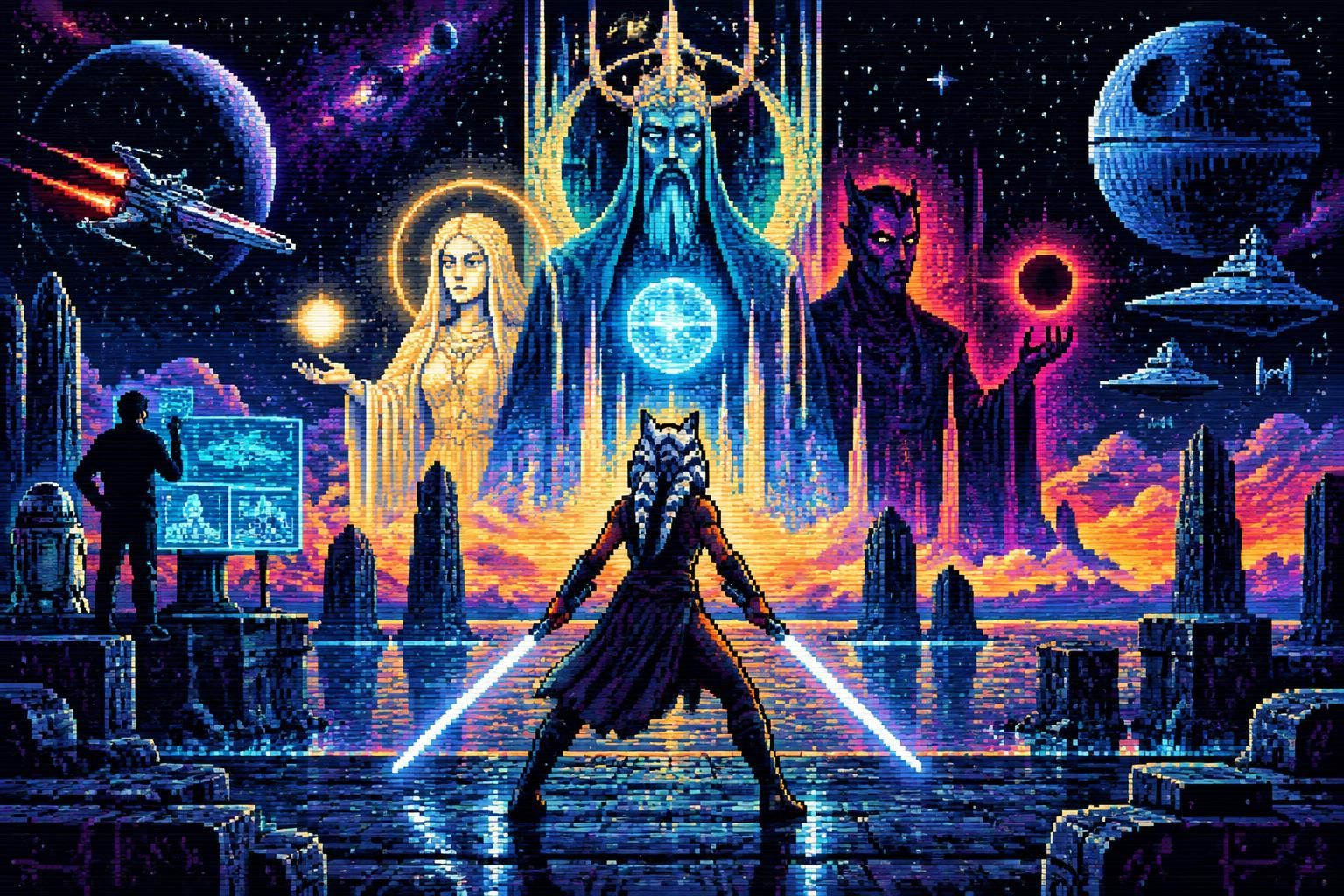
Jon Watts and Episode X: What the Star Wars Reports Actually Establish
⚠️ The report that Jon Watts may direct the next numbered Star Wars film requires a precise distinction: a director being considered is not the same as a director being hired. Knight Edge Media’s account of Lucasfilm’s interest in Watts put his name into circulation, and subsequent coverage gave the possibility wider reach. Lucasfilm declined to comment on the initial report. Until the studio announces an agreement, the appointment remains unconfirmed.
I would advise you to treat the story as an indication of direction, not a completed maneuver. Watts has worked in this galaxy through Star Wars: Skeleton Crew, while his Spider-Man films demonstrate experience managing familiar characters, complex effects, and audiences with sharply defined expectations. Those credentials explain why he could be considered. They do not establish what screenplay he has read, what terms have been discussed, or whether he would ultimately take the assignment.
The sequence in which a story spreads matters. The Star Wars News Net weekly account describes a rapidly developing report; Empire’s coverage of Watts and the possible Episode X likewise frames the film as a possibility rather than an announced production. Multiple articles can reflect the same underlying information. A larger number of headlines does not, by itself, constitute several independent confirmations.
Why Jon Watts Fits the Proposed Mission
Watts’s most relevant skill may be organizational rather than stylistic. His Spider-Man films placed a young central character inside a much larger fictional system without requiring every scene to explain that system. A post-sequel Star Wars story would face a similar logistical problem: acknowledge the established galactic saga while giving new characters room to act. You can recognize that aptitude without assuming his approach is the only one Lucasfilm might choose.
Skeleton Crew offers a different example. Its younger protagonists encounter institutions, criminals, and places they only partly understand. That limited perspective can make a vast setting legible; the audience learns the rules as the characters do. If a future film introduces a generation of Jedi after The Rise of Skywalker, a director who can control such a perspective would have a practical advantage. The comparison concerns storytelling mechanics, not a prediction that the movie will resemble the series.
There is also a weakness in treating any prior project as a complete forecast. A television season distributes revelations across episodes, while a theatrical installment must establish its immediate conflict and resolve enough of it within one sitting. Large-scale filmmaking requires its own allocation of time, spectacle, and character decisions. Watts’s earlier films provide evidence of experience; the eventual script would determine how useful that experience becomes.
My assessment therefore rests on three separate questions: Is Watts being pursued? Has he accepted? Has the project received the approvals needed to shoot? Current reporting supports discussion of the first question, not a definitive answer to all three. This is the discipline you should apply whenever Star Wars news moves faster than an official announcement. The next signal to examine is not another headline repeating his name, but a concrete production decision.
That decision also has a commercial dimension. Lucasfilm must decide whether audiences should see the proposed film as a new entry point or as the next chapter of an existing sequence. Watts could serve either objective, but the title and story would have to reinforce the choice. A familiar film director can make a campaign easier to explain; he cannot, by himself, define what the campaign promises.
Operational insight: a plausible candidate is evidence of development momentum, while a signed director and approved production are evidence of commitment.
Star Wars Episode X Development: Why a Green Light Matters
The reported Kinberg trilogy occupies a more advanced position in Lucasfilm’s slate than a project mentioned only as an idea. Reporting on the search for an Episode X director has added a potential filmmaker to the discussion, while accounts of Simon Kinberg’s writing indicate that the story itself is being developed. Neither circumstance proves that cameras are about to roll. Development and production are different phases with different obligations.
I separate those phases because premature schedules distort every later judgment. A screenplay can be submitted, revised, and evaluated without a final budget or filming window. A studio green light generally means the principal resources and timetable have reached an approved form. Cast availability, locations, effects planning, and financing must then function together. You can have serious internal support for a movie that has not yet crossed that threshold.
Some reporting has suggested an aggressive timetable, including casting activity and a possible early production start. Other coverage has been more guarded about the absence of formal approval. These accounts need not cancel each other out. Exploratory casting can test whether a proposed character lineup is workable; it does not require the entire production machine to be authorized. Similarly, hiring or approaching a director can help refine a budget rather than follow its approval.
How Lucasfilm Could Test the Schedule
Consider a practical example. If Kinberg’s draft requires a remote Jedi enclave, several alien cultures, and extensive starship action, production planners would first have to determine which environments need physical construction and which rely on visual effects. Those choices affect cost, shooting days, and the actors’ schedules. A director’s interpretation might reduce the number of settings while preserving the dramatic purpose of each one. That is a meaningful step toward a green light, though it remains short of one.
Planning a trilogy adds another variable. Kinberg could establish the first film’s central conflict while mapping later consequences, but a map is not three finished screenplays. The useful test is whether the opening installment works on its own terms. A New Hope gives Luke Skywalker a defined objective and a decisive result, even though the Empire remains. Future possibilities become an asset when the immediate film has first earned them.
🎬 The proposed project also has to be distinguished from other upcoming movies. Star Wars: Starfighter and the Kinberg-developed film have been discussed as separate ventures. Their writers, creative purposes, and reported places on the slate should not be collapsed into one announcement. Coverage of the Starfighter cast discussion illustrates why casting news for one production does not certify a schedule for another.
The uncertainty surrounding a release window is therefore not a sign of failure. It indicates that several interdependent choices remain open. A studio could be committed to finding the right form for a film and still decline to lock a date that the script or production plan cannot support. The reverse is more dangerous: a date announced too early becomes a constraint imposed on the story.
For readers tracking this campaign, the hierarchy of evidence is straightforward. An official director announcement would settle personnel. A cast announcement would define part of the story’s human scale. A production start would show that the resources have aligned. Until then, projected schedules remain proposals. The strongest indicator of progress is not speed of rumor, but the number of decisions Lucasfilm is prepared to make public.
Episode X or a New Title: The Stakes of Numbering the Galactic Saga
Calling a film Episode X would do more than identify its position in a sequence. It would tell you to expect a direct relationship with the nine numbered films, particularly the aftermath of The Rise of Skywalker. That label carries an advantage: audiences immediately understand the scale of the intended event. It also carries a burden: a film advertised as the tenth episode must clarify what major historical development warrants the designation.
Recent reports have increasingly used “Episode X” and, in some cases, described a possible Episodes X–XII. Coverage presenting Watts in the context of a further Skywalker Saga installment shows how readily that framing can take hold. Yet a reporter’s shorthand is not an official title. Lucasfilm has not confirmed that the Kinberg-developed movie will use a numbered name.
I would examine the naming question as a promise about continuity. If the film centers on new protagonists dealing with a political order reshaped by the First Order’s fall, an episodic number could signal the next historical phase. If the story concerns a narrower conflict in the same era, a distinct title might set more accurate expectations. The issue is not whether the numeral attracts attention. The issue is whether the movie can fulfill the narrative contract it creates.
What a Numbered Star Wars Film Must Resolve
At the end of Episode IX, the immediate Sith threat has been defeated, but the galaxy’s durable political structure is not comprehensively depicted. A sequel could build its conflict from that gap. Who coordinates security when central authority has repeatedly failed? How do worlds that survived occupation respond to a proposed new alliance? These questions have consequences for a Jedi story because a peacekeeping order needs to know whom it serves and what authority it accepts.
A concrete comparison helps. The Rebel Alliance at Yavin has a recognizable military purpose: destroy the Death Star before the Empire can use it again. By contrast, a film about rebuilding after Exegol would face a dispersed problem. Many systems could want protection without agreeing on a single government. That condition offers drama, but it needs sharply drawn characters and an immediate objective. A title cannot substitute for either.
Numbering also shapes the marketing of a trilogy. If Kinberg’s project is presented as Episodes X–XII, viewers will reasonably ask whether the first movie initiates a three-part conflict and how its resolution will affect the later films. Lucasfilm need not lock every detail before production. It does need a coherent account of the first installment’s purpose. Otherwise, a promise of three chapters risks becoming more prominent than the chapter available to watch.
The historical lesson of the franchise is more nuanced than a demand for a fixed blueprint. Leia’s role across the sequels, for example, was affected by Carrie Fisher’s death before the final film was made. No advance outline removes real-world contingencies of that kind. Effective planning identifies essential relationships and stakes while preserving enough flexibility to respond to changed circumstances. You should ask whether the creative team understands the direction of travel, not whether it can guarantee every future scene.
Discussion of the reported Episode X framing and the New Jedi Order project demonstrates how one potential title can also change perceptions of other films. A renamed or reconfigured story might continue ideas from an earlier proposal; it might not. Without confirmation, the prudent reading is that the franchise’s public map is still being drawn.
Strategic lesson: “Episode X” would be an effective signal only if the film’s political, Jedi, and character conflicts justify continuing the numbered galactic saga.
Rey’s Reported Return and the Future of the New Jedi Order Film
Reports that Daisy Ridley may return as Rey in the Kinberg-developed films give the prospective storyline an important point of continuity. They do not establish how much screen time she would receive. Some accounts describe a smaller role and suggest that the separate Rey-centered project associated with director Sharmeen Obaid-Chinoy has been set aside. Those claims should be read as reports about the slate, not as a formal cancellation notice from Lucasfilm.
I would begin with Rey’s position at the end of The Rise of Skywalker. She has survived the confrontation with Palpatine and chosen to carry the Skywalker name. That decision is meaningful but incomplete as a plan for an institution. Training students, defining the responsibilities of Jedi, and responding to public distrust would each test whether a personal victory can become a lasting order. A subsequent film need not make Rey its sole protagonist to explore those consequences.
A reduced role could serve a new ensemble if the script gives her a clear function. Obi-Wan Kenobi matters in A New Hope because he connects Luke to the Force, supplies crucial knowledge, and then leaves Luke to act. Rey could occupy a different form of mentorship without repeating that arc. She might establish a principle that younger Jedi challenge, or confront the limits of what one survivor can teach. The key is that her presence must alter decisions rather than merely authenticate the setting.
Where a Rey Story Meets a New Generation
Imagine a student asked to mediate between two systems after the collapse of First Order control. One world demands immediate intervention against former occupiers; the other fears that armed Jedi will simply become another unelected authority. Rey’s experience might tell the student why restraint matters, but it cannot solve the political dispute for them. That arrangement creates a new protagonist with a genuine task while letting an established character embody the previous era’s lessons.
Such a story would also expose a recurrent strategic weakness in galactic institutions: reliance on singular figures. The Republic repeatedly leaned on exceptional Jedi; the Resistance relied on a small number of leaders and pilots. Rebuilding a durable order requires procedures that survive any one master. If a film uses Rey chiefly as the person everyone consults, it should recognize the dependency it has created. Otherwise, its supposed renewal reproduces the same vulnerability.
The reports about Obaid-Chinoy’s film introduce a separate question of production identity. A project can be delayed, rewritten, merged with another concept, or shelved. Those outcomes are not interchangeable. Reporting on Watts and the proposed continuation can help readers track the emerging film, but only an official Lucasfilm update can define its relationship to the earlier Rey proposal. Treating “shelved” as “every idea has been discarded” goes beyond the available evidence.
There is a practical reason to keep the possibilities distinct. A Rey-led feature and an ensemble Episode X would require different scripts, budgets, and marketing campaigns. The first asks audiences to follow a familiar character’s next mission. The second asks them to accept new leads within a familiar historical sequence. Rey could appear in both conceptions, but her role would carry a different narrative weight in each.
For now, the defensible position is narrow: Ridley’s return and a diminished part have been reported, while the status of the standalone project remains subject to confirmation. That does not diminish the story possibilities. It prevents an unannounced plan from being mistaken for a finished one. A new Jedi era becomes convincing when its emerging characters have problems that Rey cannot simply resolve on their behalf.
Ahsoka Season 2 and the Mortis Gods: What Filoni Has Confirmed
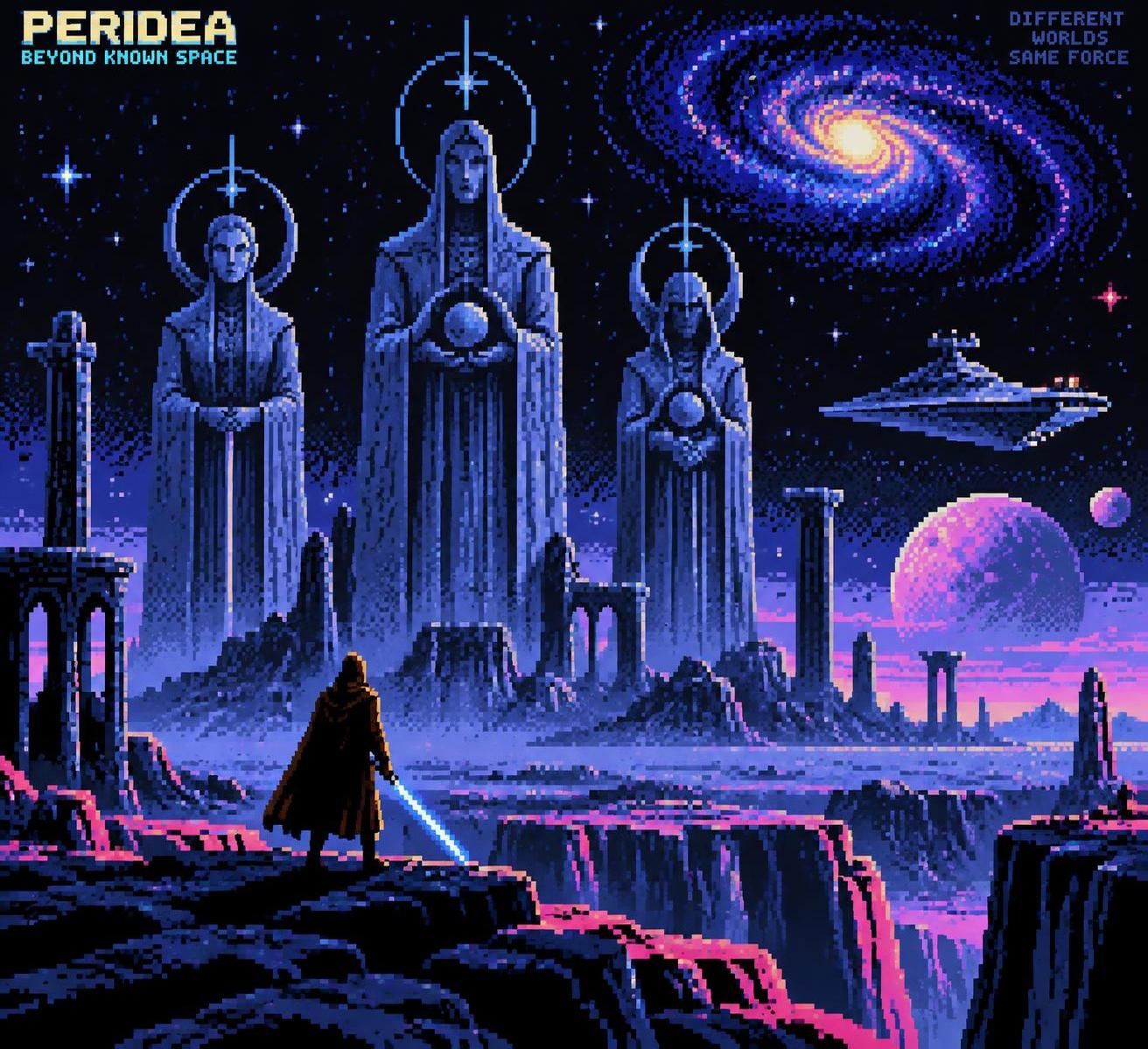
🌌 The final image of Ahsoka Season 1 placed Baylan Skoll beside immense figures associated with the Mortis Gods. Dave Filoni has since confirmed that Ahsoka Season 2 will pursue that material. This is a firmer basis for analysis than the Episode X director reports: the series’ creative leader has identified a direction. It does not, however, answer what the figures on Peridea are or how the story will interpret them.
I would first establish the older reference. In The Clone Wars, the Father, Son, and Daughter appear in an extraordinary Force-centered setting. Their conflict presents competing impulses and a fragile attempt at balance. They are not simply three more rulers with armies. Their importance lies in how they test Anakin Skywalker’s identity and the capacity of powerful individuals to contain opposing forces. Moving their imagery into Ahsoka therefore changes the scale of expectation without automatically creating a literal return.
The distinction between a depiction and a living presence is essential. A statue can mark a site of worship, record an ancient encounter, warn travelers away, or claim authority for someone who built it. Peridea’s sculpted figures are evidence that the imagery has meaning there. They are not proof that the beings shown have reappeared in bodily form. You should keep that distinction in view when considering claims that the season must immediately threaten the entire galaxy.
Why Peridea Is the Right Place for This Mystery
Peridea is separated from the familiar galactic stage. That distance allows the series to explore old beliefs without forcing every institution in the New Republic to respond at once. It also gives Baylan room to pursue a goal distinct from the power sought by Grand Admiral Thrawn. Where Thrawn’s return is an identifiable strategic concern for the main galaxy, Baylan’s interest in the planet remains harder to classify. The two threats need not operate on the same timescale.
The location’s visual culture matters. Its ruins and carvings suggest that people once invested substantial labor in representing these figures. Architecture is a record of priorities: a civilization does not create monumental forms without making choices about memory, authority, or fear. Baylan standing on the Father’s extended finger places him physically inside that record. The composition suggests a direction of travel, but the destination is still withheld.
Ahsoka herself has a particular connection to this imagery through her earlier encounter with the Daughter in The Clone Wars. That history can make her response to Peridea more specific than a generic discovery of ancient ruins. Yet a useful sequel should show what she observes and how she tests it. Recognition alone is not an investigation. If the site contains a mechanism, a warning, or traces of another Force tradition, the series must demonstrate why she interprets the evidence as she does.
Coverage connecting Ahsoka developments with wider Star Wars news reflects the temptation to treat every series as a signal for every film. The connections may eventually matter, but narrative proximity is not proof of a crossover. Filoni can give the Mortis imagery substantial significance within Ahsoka’s journey before any other project addresses it.
The most productive question for Season 2 is therefore not whether the power level will rise. It is what each character believes the Peridea site can accomplish, and what evidence supports that belief. Baylan’s search, Ahsoka’s history, and the planet’s art provide distinct lines of inquiry. Filoni has confirmed the subject of investigation; the statues have not yet disclosed its answer.
The imagery becomes more revealing when its omissions are examined as carefully as its scale.
The Missing Daughter and the Father’s Gesture on Peridea
The Peridea tableau invites close inspection because its composition appears incomplete. Viewers have questioned the apparent absence or damaged state of the Daughter’s representation, while the Father points outward and Baylan occupies the end of that gesture. I would resist converting those observations into a single answer. An incomplete artwork can be an intentional clue, but the story must establish whether damage, concealment, or perspective explains what the camera shows.
🔎 Consider the Daughter first. Within the Mortis story, she is associated with the light side and with a defining event in Ahsoka’s past. If her image is missing from a monumental grouping, one possible reading is that the site records a loss. Another is that time or conflict altered an originally complete monument. A third is that what appears absent has significance elsewhere on the planet. Each possibility leads to a different investigation; none follows automatically from the final shot.
The Father’s extended arm presents a second problem: direction without a known target. In military terms, it resembles an arrow on a damaged chart. It tells an observer where to look, not what lies there. Baylan appears to believe that Peridea contains something worth reaching. His presence on the sculpture connects his search to the site, but it does not confirm that he understands its makers’ intentions. Intelligent characters can misread artifacts when their desires supply the missing translation.
How Ahsoka Season 2 Can Test the Monument’s Meaning
A methodical investigation would compare the statue with other evidence: inscriptions, local traditions, changes in the terrain, and the behavior of anyone who has occupied the region. If a carved path leads toward a particular horizon, that path would strengthen a directional reading. If similar figures appear in several locations with different orientations, the pointing hand may instead serve a ritual or symbolic purpose. The physical arrangement should determine the theory, not merely decorate it.
Star Wars has repeatedly shown that cultural objects influence strategic choices. The Jedi Temple’s archives preserve knowledge, but their catalog cannot account for a missing planet in Attack of the Clones. The error does not make the archive worthless; it shows how an apparently authoritative system can conceal a gap. Peridea’s monuments may function in the same way. Their scale encourages confidence, while their damage and unknown origin demand caution.
The Nightsisters’ presence adds another interpretive layer. Their practices treat power, ancestry, and the dead differently from conventional Jedi teaching. A place that means one thing to Baylan may mean something else to them. If the season contrasts those readings, the conflict can emerge from competing uses of the same landscape rather than from a simple contest over a powerful object. Culture then becomes an active force in the plot.
Ahsoka’s own experience creates a useful counterweight. She knows enough about the Mortis figures to recognize the danger of a superficial reading, but personal history can also narrow perception. When you encounter an image tied to a formative event, resemblance is persuasive. An effective inquiry would force her to ask whether Peridea preserves the same tradition she knew or an older, altered understanding of it.
The practical storytelling test is whether the landmark produces decisions. A missing figure should change where someone searches or whom they trust. A pointing hand should guide an expedition, provoke an argument, or reveal that an earlier traveler took the wrong route. Without consequences, the tableau remains striking background art. With them, it becomes evidence in a contest of interpretation.
Peridea’s most useful clue may be the gap between what its sculptures display and what their observers assume they know.
Mortis Gods, Thrawn, and the Sequel-Trilogy Continuity Problem
Expanding the Mortis material creates a recognizable continuity challenge. Ahsoka takes place before the sequel trilogy, whose films do not describe a public crisis involving the Mortis Gods. That silence does not prohibit Season 2 from telling a consequential story. It does require care about the crisis’s visibility, duration, and effects. If every major world witnessed an open confrontation with ancient Force powers, later silence would need a credible explanation.
I would measure the problem in three parts: who learns of the event, what physical consequences survive it, and which institutions have reason to preserve a record. A private confrontation on Peridea can profoundly affect Ahsoka and Baylan without becoming common knowledge across the New Republic. An event that destroys fleets in the known galaxy would be harder to contain. Scale is not merely a measure of spectacle; it determines what later history must remember.
Thrawn’s return offers a contrasting type of threat. He represents coordination, supply, intelligence, and the ability to unite forces under a disciplined plan. His opponents can identify fleets, allies, and political warning signs, even if they disagree about the response. Baylan’s search on Peridea is less legible. Until his objective is established, observers cannot calculate its reach in the same way. The season can use that difference to avoid making both plots compete for the title of “greatest danger.”
Containing a Large Star Wars Threat Without Making It Trivial
A contained conflict need not be inconsequential. At Endor, a relatively small ground force affected the outcome of a fleet battle because the shield generator linked the two theaters. Conversely, an immense discovery on a distant planet might alter only a few characters if access to it is restricted. The cause-and-effect chain matters more than the object’s apparent power. Season 2 can make Peridea significant by showing a decision that changes Ahsoka’s choices, not by announcing that all civilization is at risk.
Another solution is temporal rather than geographical. A long-buried Force phenomenon may be encountered, understood in part, and prevented from spreading. Later generations might inherit its consequences without knowing its source. That approach would preserve room for sequel-era stories, provided the show makes the containment visible rather than asking viewers to assume it occurred. A problem solved offscreen merely transfers uncertainty to the audience.
Institutions create a further opportunity. The New Republic has shown a limited capacity to recognize emerging dangers when evidence reaches it through uncertain channels. Ahsoka could carry accurate information that officials cannot verify or prioritize. Such a response would be politically plausible, though it should not become a universal excuse for ignoring any scale of threat. Specific officials need specific reasons to dismiss, conceal, or misinterpret a report.
🎯 You should also distinguish a mythic conflict from a military one. Thrawn can lose access to resources and still remain dangerous through strategy. The Mortis figures, by contrast, carry symbolic meanings that characters may mistake for rules of combat. Treating both as opponents to be defeated by greater firepower would flatten their differences. The more productive collision lies between Thrawn’s material calculations and the beliefs that drive those navigating Peridea.
Filoni’s task is not to make the series small. It is to assign every major event a traceable footprint in the known timeline. Which characters witness it? What do they report? What remains afterward? Those questions protect the causal integrity of the setting while leaving room for mystery. A galactic threat can remain compatible with later history only when its path through that history is carefully defined.
The same discipline applies beyond the two major stories: a useful news brief separates a confirmed project from the possibilities attached to it.
More Star Wars News: A New Hope in VR, Publishing, and the Movie Slate
The Watts and Mortis stories dominate this week’s discussion, but smaller developments show how Lucasfilm works across different forms. One report describes Industrial Light & Magic developing a VR-enhanced version of A New Hope for Meta headsets, with availability discussed for the following year. That prospect concerns a familiar film presented through a different medium, not a replacement for the original. The distinction matters because immersive technology can alter how a scene is experienced without changing what occurs in it.
I would examine the VR project through an example. The opening pursuit above Tatooine establishes the imbalance between the Rebel ship and the Star Destroyer through scale and framing. A headset presentation might let a viewer sense that scale differently, but greater spatial freedom creates a design problem: attention can drift away from the action that the original composition directs the viewer to notice. Successful enhancement would preserve the scene’s essential information while using immersion to reveal its environment.
The project also sits near the approach of A New Hope’s fiftieth anniversary in 2027. That timing gives restoration and presentation experiments a clear historical context. It does not mean every technical detail or release arrangement is settled. Until ILM and its partners specify the finished experience, “VR-enhanced” should be treated as a description of the initiative, not a complete account of its features.
Which Updates Change the Star Wars Map?
Publishing offers a quieter form of expansion. Current discussion includes a review of The Book of Boba Fett #2, a reminder that comics can revisit characters and settings without requiring an immediate screen announcement. The Mon Calamari leader King Lee-Char likewise remains a useful subject for character analysis. His people’s shipbuilding and political role demonstrate how a culture’s skills can influence the military balance well beyond a single battle.
For readers comparing the week’s developments, the following distinctions prevent unrelated signals from being merged into one supposed master plan:
- 🎬 Jon Watts and the Kinberg film: a reported director pursuit concerns personnel; it is not yet a Lucasfilm announcement or production green light.
- 🌌 Ahsoka Season 2: Filoni has identified the Mortis material as a direction, while Peridea’s specific answers remain part of the story.
- 🥽 A New Hope in VR: an immersive presentation project concerns access to an existing film, not a new episode of the saga.
- 📚 Publishing and character studies: smaller releases can deepen the setting without indicating a direct connection to upcoming movies.
This table provides a more exact measure of the principal claims than headline volume alone:
| Development | What is established | What remains open |
|---|---|---|
| 🎬 Jon Watts and Episode X | His name has been reported in connection with the proposed film. | A formal appointment, official title, and green light. |
| 🌌 Mortis Gods in Ahsoka Season 2 | Filoni has confirmed that the series will explore the Mortis material. | The statues’ meaning and the scope of the conflict. |
| 🥽 A New Hope VR presentation | A VR-enhanced project has been reported. | Its final features and confirmed availability. |
| 📚 Boba Fett and Mon Calamari coverage | Publishing and character-focused discussion continue. | Any connection to a future screen story. |
One additional comparison is useful. Coverage of The Mandalorian and Grogu’s trailer concerns a film with a different public identity from the proposed Kinberg installment. Both may occupy the same theatrical slate, but they should be evaluated on their own announcements. A trailer tells you what one production has chosen to show; it does not establish the status of another.
You can apply the same standard to a comic review or a character spotlight. Neither is minor simply because it lacks a theatrical release date. They supply cultural and political detail that makes the galaxy coherent: what communities value, which leaders command trust, and how a conflict affects those outside its central heroes. Those details are useful when later stories draw on them, but usefulness is not confirmation of a crossover.
The week’s clearest pattern is a distinction of evidence: some Star Wars developments identify work underway, some identify creative intent, and others remain reported possibilities awaiting an official decision.

I am Grand Admiral Thrawn, strategist of the Galactic Empire. Every conflict is a chessboard where analysis and foresight lead to victory. The art and culture of a people betray their weaknesses. The Empire embodies order and discipline in the face of rebel chaos. History will remember that only strategy ensures peace.