
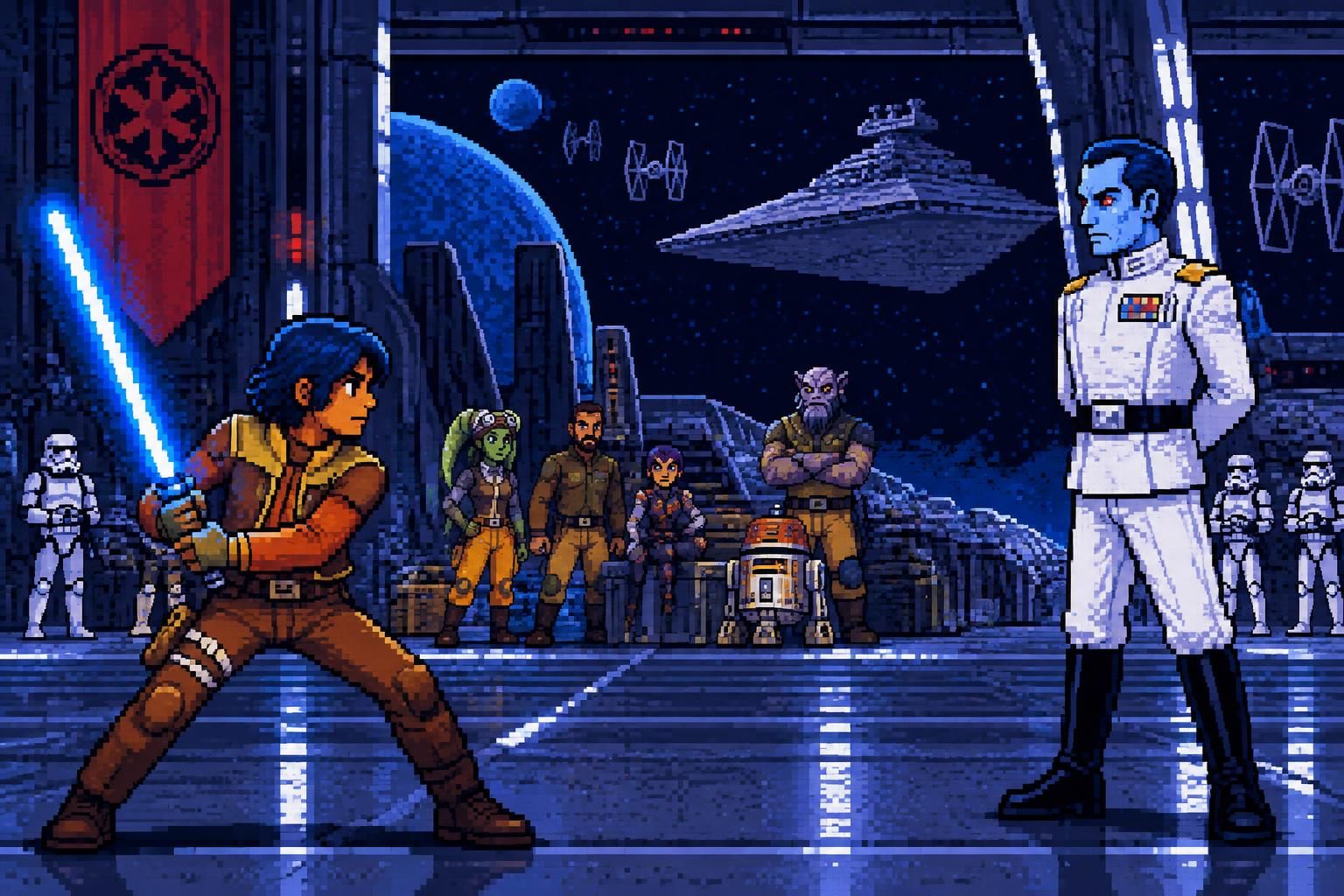
January 2027 Star Wars Comics: Release Dates and the Three Main Objectives
I separate the January 2027 Star Wars comics schedule into three distinct operations: a crossover that changes the battlefield, an escape story that examines an existing campaign, and a manga adaptation that presents familiar events through a different visual language. You will gain more from these comic book releases by identifying those differences before placing an order.
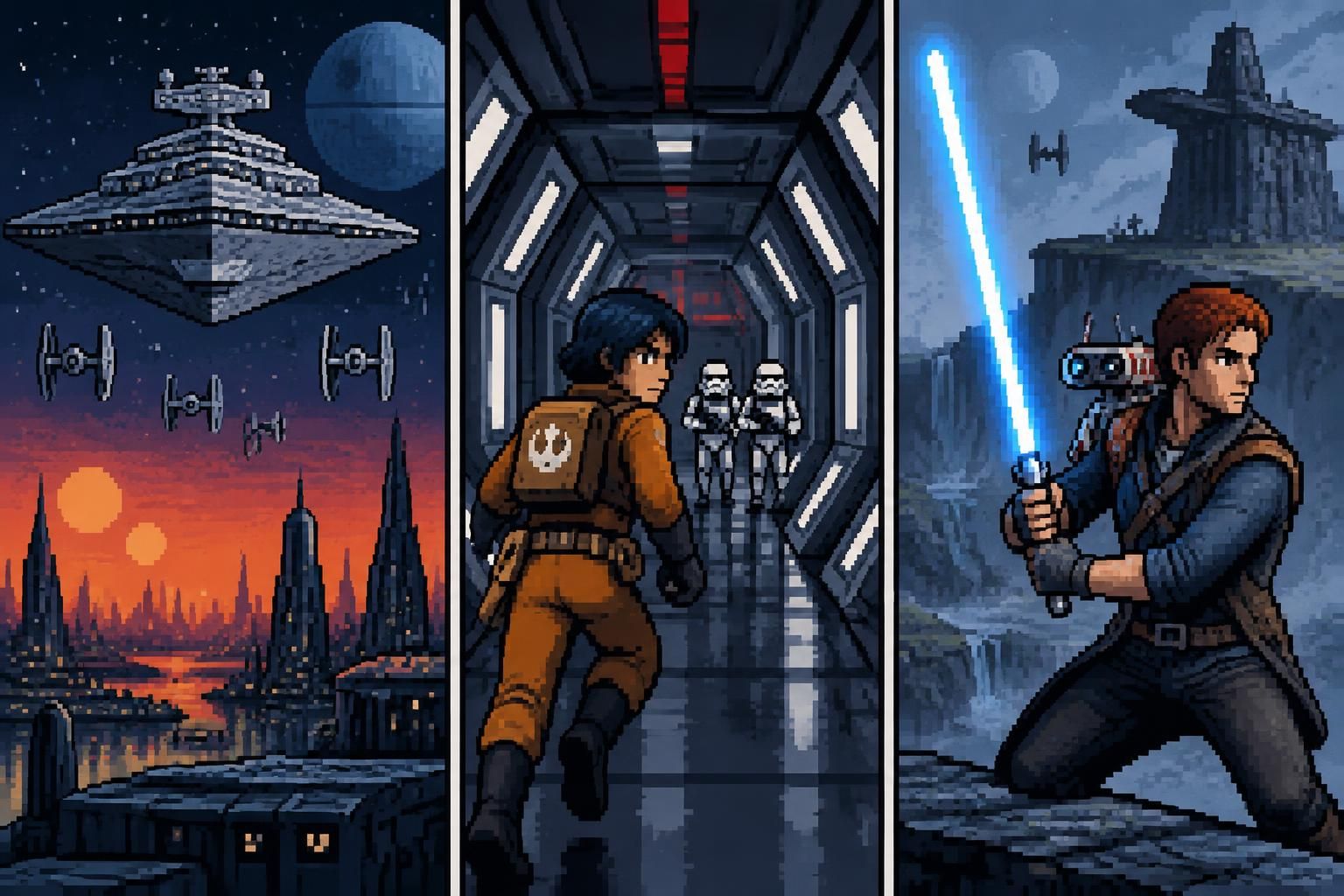
The supplied solicitations identify Hope Assembles #1, Ahsoka: Escape from Thrawn #1, and Jedi: Fallen Order Manga Vol. 1 as the principal releases. Their proximity on the calendar should not obscure their separate purposes: one introduces an extraordinary encounter, another fills a narrative gap, and the third translates interactive storytelling into sequential art.
| Release | Listed January 2027 Date | Primary Reading Objective |
|---|---|---|
| 🌌 Star Wars/Marvel: Hope Assembles #1 | January 13 | Follow the collision between the original trilogy’s opening conflict and Earth-616. |
| 🚀 Ahsoka: Escape from Thrawn #1 | January 20 | Examine Ezra Bridger’s concealed passage aboard the Chimaera. |
| ⚔️ Jedi: Fallen Order Manga Vol. 1 | January 26 | Read Cal Kestis’s struggle against the Inquisitorius in manga form. |
I use January 13 for the crossover because that date appears in the detailed monthly solicitation and the supplied issue reference. An isolated listing gives January 3, but repeating both without distinguishing their sources would create an avoidable purchasing error; you should confirm the final shipping date with your retailer.
The same discipline applies to the crossover’s length. Early promotional material describes five installments, while the later preview report expands the project to six issues; I treat those statements as successive stages of publication planning, not as two simultaneous formats.
You can compare the broader schedule through the January solicitation coverage at Mynock Manor. I would use that overview to establish priorities, then consult the individual listings for creators, formats, and ordering details rather than assuming that every announcement remains unchanged.
How the January 2027 Releases Divide Your Reading Time
I would assign the crossover to readers interested in narrative disruption, the Ahsoka companion to those studying continuity between screen events, and the manga to readers examining character development through adaptation. You need not pursue all three merely because they share a publishing month.
A useful comparison lies in the difference between a fleet engagement, a boarding action, and an intelligence report. Each demands attention, but each answers a different question: who controls the battlefield, who survives within it, and how the events are subsequently understood.
For a reader following Ezra’s journey, the middle release has the clearest immediate relevance. For someone collecting anniversary material, the crossover occupies the stronger position; for a reader who knows Cal through gameplay, the manga offers the most direct opportunity to compare narrative methods.
The anniversary context also requires precision. Star Wars reaches its fiftieth anniversary in 2027, making a large publishing event strategically understandable; the significance comes from the franchise’s 1977 debut, not from a claim that every January release belongs to one coordinated storyline.
I would also distinguish an announced release from a delivered product. Solicitations establish expectations months before publication, and the material supplied here already demonstrates why dates, issue counts, and descriptions should be checked against later notices.
If your budget supports only one purchase, identify the question you want answered before comparing cover prices. Do you want a transformed version of a familiar conflict, an unseen movement between established scenes, or a new reading experience built from a game?
That decision reduces unnecessary purchases without diminishing the range of the month. The most useful reading plan begins with narrative purpose, not the size of the promotional campaign.
Hope Assembles #1 Places the Death Star Plans Above New York
I assess the premise of Star Wars/Marvel: Hope Assembles #1 as an interruption of an existing military pursuit rather than a meeting arranged on neutral territory. According to the supplied preview description, a reality-altering spell relocates the conflict surrounding the Death Star plans to Earth-616.
You should notice the point of entry. The Tantive IV and the Devastator arrive above New York while local superheroes are already confronting Skrulls in Central Park; the newcomers therefore enter an active engagement whose participants have neither prepared for Imperial intervention nor agreed on its meaning.
This creates three overlapping problems. The Galactic Empire seeks to recover stolen intelligence, the Rebel vessel seeks to preserve it, and Earth’s defenders must determine whether either arriving faction threatens the population below.
I would not equate the appearance of a warship with immediate control of the battlespace. A Star Destroyer supplies overwhelming conventional force, but its commander initially lacks reliable information about local capabilities, defensive infrastructure, and the relationship between costumed combatants and civilian authorities.
The opposing heroes possess the reverse advantage. They understand their environment, yet their familiarity with fictional Star Wars does not automatically explain why an Imperial vessel has appeared or which parts of their prior knowledge remain operationally useful.
Why the Opening Changes More Than the Location
The Death Star plans remain the central intelligence asset, but their strategic value now depends on who can receive, interpret, and act upon them. You cannot assume that the transmission route, rebel support network, or eventual attack will proceed as they did in A New Hope.
Consider Princess Leia’s immediate problem. In the original sequence, preserving the plans requires transferring responsibility while under pursuit; above an unfamiliar planet, the same objective now includes judging possible allies whose strength, loyalties, and political commitments are unknown.
For Darth Vader, intervention by local heroes complicates an operation that previously depended on a clear imbalance of power. Capturing a smaller ship is one task; containing several independent actors with unfamiliar abilities while securing sensitive data is another.
I would watch how Kevin Smith handles that escalation. The announced cast includes Luke Skywalker, Han Solo, the Avengers, Spider-Man, and Doctor Doom, but the presence of recognizable figures does not itself explain how their interests converge.
A coherent encounter requires each participant to pursue a legible objective. Spider-Man might respond first to immediate danger around civilians, while an Imperial commander prioritizes the stolen material; the dramatic mechanism emerges from those different priorities, not simply from exchanging references.
The official crossover announcement provides the central publishing premise. I distinguish that announcement from later preview details, because the latter describe how the first confrontation develops rather than merely which franchises participate.
You should apply the same distinction to the spell behind the collision. The supplied material identifies a magical cause, but it does not establish every rule governing the displacement; attributing the event to a particular villain without supporting information would confuse deduction with invention.
There is also a useful cultural contrast. Imperial naval design communicates hierarchy through scale, repetition, and disciplined geometry, while New York’s superhero landscape displays competing symbols and independent identities; the visual disorder reflects a genuinely decentralized defensive system.
A commander accustomed to identifying one bridge, one superior officer, and one chain of command could misread that arrangement. Defeating one prominent defender would not necessarily suppress the others, because their capacity for action does not depend on a single command node.
I would therefore evaluate the opening issue by the consequences it establishes, not by the number of introductions it accommodates. The crossover becomes strategically interesting when familiar objectives survive the displacement but familiar solutions no longer work.
Hope Assembles Continuity: Earth-616 Canon and Star Wars Boundaries
I separate continuity status from narrative importance because the two are frequently confused. The supplied reporting describes Hope Assembles as belonging to Marvel’s Earth-616 continuity while remaining outside the principal Star Wars continuity; those positions are compatible because the franchises maintain different narrative boundaries.
You can therefore follow the story as consequential within its stated Marvel setting without treating its events as a revision to the established history of the Galactic Civil War. An encounter with Earth’s superheroes does not, on that basis, replace the familiar route from the Tantive IV to the Battle of Yavin.
This distinction protects the reading experience from an unnecessary question. Instead of asking how every scene fits into the primary galactic timeline, you can examine how the displaced characters respond when the conditions surrounding their original decisions are altered.
I regard that arrangement as a controlled narrative experiment. Preserve the participants’ initial knowledge and objectives, change the environment, and observe which decisions remain consistent; the result can illuminate characterization without becoming a missing historical episode.
Marvel’s Knowledge of Star Wars Creates an Intelligence Imbalance
The more unusual element is the difference in prior knowledge. According to the supplied preview reporting, characters on the Marvel side recognize Star Wars as a fictional franchise, while the arriving galactic participants have no corresponding understanding of the universe they have entered.
That imbalance matters more than a passing joke. If an Earth-based character recognizes Vader, Leia, or an Imperial vessel, that recognition could shape threat assessment before a formal exchange takes place; the displaced characters receive no equivalent briefing.
Yet recognition is not omniscience. You may know how a recorded battle ended, but once another force intervenes, the sequence that produced that result has changed; knowledge of the original story becomes a model to test rather than an order of events guaranteed to recur.
Suppose a defender knows that the stolen data concerns a battle station. That knowledge could accelerate a conversation with Leia, but it would not automatically establish where the station is, whether it has also crossed realities, or how any weapon should be confronted under the new conditions.
I would also distinguish accurate knowledge from confidence based on popular memory. A character who remembers a striking image may still misunderstand its context, just as an analyst who recognizes a uniform may misidentify the authority held by its wearer.
The reported preview discussion at IGN is relevant to that asymmetry. You should read such material as an explanation of the crossover’s operating premise, not as permission to assume that every character possesses complete franchise knowledge.
Humor follows naturally from the imbalance, but it can also weaken tension if used without restraint. If every threat is answered with a reference, the participants cease to respond to danger; if recognition informs a difficult decision, the same device becomes useful storytelling.
There is a parallel in the treatment of Jedi legends within the galaxy itself. Cultural knowledge can preserve recognizable symbols while losing practical understanding, so knowing what a lightsaber represents is not the same as understanding the person carrying it.
The supplied material contrasts this project with crossover arrangements using alternate versions of Marvel’s setting. I would retain the specific distinction without extending it into a claim that all earlier inter-company events followed one model; continuity mechanisms vary between publications.
For your reading list, the operational rule is straightforward: keep the crossover separate from the primary Star Wars chronology while following its internal cause and effect carefully. That prevents a continuity label from replacing actual analysis of what happens on the page.
The six-issue expansion may provide additional room for these consequences, but length alone does not establish their quality. Foreknowledge creates an advantage only when the characters understand where prediction ends and changed circumstances begin.
Hope Assembles #1 Creators, Cover Variants, and Visual Strategy
I evaluate a crossover’s artwork as an information system. Kevin Smith writes Hope Assembles #1, David Marquez provides the interior art, and Marquez also supplies the principal cover; their task is not merely to place famous characters together, but to make unfamiliar relationships readable.
You should be able to identify the immediate danger, the relative positions of the participants, and the direction of an action without consulting explanatory dialogue. This becomes particularly important when spacecraft, street-level defenders, and supernatural causes share the same opening scenario.
The scale problem is substantial. A figure standing in Central Park and a capital ship above Manhattan operate at very different visual dimensions, so an effective sequence needs intermediate references: buildings, clouds, shadows, or reactions that connect the human viewpoint to the vessel overhead.
I would look for establishing panels before judging individual spectacle images. A dramatic close-up can communicate resolve, but it cannot tell you where the Tantive IV sits relative to the pursuing destroyer or which civilians lie beneath their approach.
How Star Wars Design Can Organize a Crowded Crossover
Star Wars already supplies a disciplined visual vocabulary. Imperial surfaces favor repetition and institutional control, while Rebel craft and equipment often communicate practical adaptation; these differences allow a reader to infer allegiance and working conditions before a caption identifies them.
Marvel’s participants introduce another system of visual identification. Costumes frequently function as personal emblems, which means the artist must coordinate many individual focal points against the large, comparatively uniform mass of Imperial hardware.
That contrast can serve the narrative rather than overwhelm it. A rigid formation crossing a skyline full of independently moving defenders immediately communicates opposing organizational principles; you see centralized force encounter distributed initiative before either side explains itself.
The listed alternative covers extend the issue’s presentation through several separate approaches. The supplied solicitation names an Alliance variant by Alex Ross, a Battle variant by Kaare Andrews, a Crossover variant by Rafael Albuquerque, and a Retro variant by Dan Jurgens.
I would treat those labels as ordering identifiers, not as reliable evidence of interior events. A cover may summarize the project’s appeal, emphasize a thematic alliance, or arrange participants symbolically; it need not depict a scene that occurs exactly as shown.
- 🎨 For reading: prioritize a clearly identified edition containing the complete first issue.
- 🛡️ For display: choose the composition whose characters and visual arrangement suit your collection.
- 📋 For ordering: ask your shop whether a selected variant has special availability conditions.
- 💳 For budgeting: separate the cost of following the series from the cost of collecting additional covers.
That last distinction prevents a common error. Several editions of one installment do not advance the story further than one readable copy; if your objective is narrative continuity, securing subsequent issues matters more than duplicating the opening chapter.
The issue reference for Hope Assembles #1 can assist with identifying an edition. I would still confirm the exact product with a retailer, particularly when a catalog entry distinguishes a regular printing from incentive or later versions.
No supplied information establishes future scarcity or resale performance. You should therefore reject any purchasing argument that transforms an anniversary label into a guaranteed investment; collecting preference is a valid reason to buy a cover, but financial certainty requires evidence not present here.
For the interior narrative, lettering and page rhythm also deserve attention. When several characters recognize different parts of the situation, dialogue placement must guide you through those discoveries in the intended order rather than force repeated rereading.
The strongest visual result would preserve each universe’s recognizable identity while clarifying their collision. In a crowded crossover, readable relationships are more valuable than a crowded inventory of recognizable faces.
Ahsoka: Escape from Thrawn #1 Gives Ezra Bridger an Unseen Battle
I approach Ahsoka: Escape from Thrawn #1 as a confined survival operation. Scheduled in the supplied material for January 20, the issue follows Ezra Bridger after his departure from Peridea aboard the Chimaera, where reaching the vessel does not automatically mean reaching safety.
The announced credits name Dave Filoni and Rodney Barnes as writers, Andrea Di Vito as artist, and Phil Noto as the principal cover artist. The description emphasizes a story by Filoni and positions the comic as a companion to Ahsoka’s second season, rather than simply another rendering of scenes already shown.
You should distinguish that promise from a direct adaptation of the coming season. The supplied premise concerns an unseen passage connected to established events; its immediate purpose is to show the danger contained inside a transition that screen storytelling could move past quickly.
The operating environment makes the difference. A fugitive aboard an enemy flagship has limited routes, unfamiliar security procedures, and no dependable refuge outside the hull; escape requires managing time, concealment, and access rather than merely winning a confrontation.
Why Ezra’s Experience in Star Wars: Rebels Matters
Star Wars: Rebels established Ezra through improvisation, cooperation, and adaptation under unequal conditions. Those traits are directly relevant here because the Chimaera is not an arena designed for a fair duel; it is a functioning military asset organized to restrict unauthorized movement.
I would therefore look for decisions that express learned resourcefulness. A convincing escape need not make every guard incompetent; it can instead show the fugitive recognizing an overlooked routine, exploiting a brief distraction, or understanding which confrontation would expose him unnecessarily.
The difference is important to you as a reader. When survival results from a visible choice, the protagonist retains agency; when every obstacle disappears through convenient coincidence, the setting loses its credibility and the escape becomes a sequence of permissions.
The solicitation identifies Captain Enoch, the Nightsisters, and Grand Admiral Thrawn as threats. These are not interchangeable obstacles: an officer can organize a search, practitioners of dark magick can introduce unfamiliar hazards, and a senior strategist can interpret the pattern left by evasive action.
I would resist assuming that the issue must contain a prolonged face-to-face duel to justify its premise. A showdown can occur through competing decisions, with one participant narrowing possible routes while the other alters the evidence used to identify them.
Known survival does not eliminate suspense. You can know that a character eventually reaches another location and still find uncertainty in what he discovers, what he risks, and what he must abandon during the passage.
This is where the comic can contribute something specific. A corridor sequence can spend several panels on a pause, a suspicious sound, or a choice between two routes, expanding a few implied minutes into a sustained account of pressure.
Di Vito’s spatial clarity will matter because the reader needs enough information to understand constraints. If a door closes, a patrol turns, or a passage becomes unusable, the consequence should be visible rather than dependent on a caption declaring that the situation has worsened.
The monthly preview discussing Ezra’s escape supplies the central setup. I would avoid extending that description into claims about unannounced encounters, revelations, or outcomes within individual issues.
For your reading order, familiarity with the first season’s Peridea material provides the most useful immediate context, while earlier animated adventures explain the habits Ezra brings into the operation. Neither background should excuse the new story from clearly establishing its own immediate objective.
The measure of this companion is therefore not how much larger it makes the conflict. A successful unseen chapter makes an established arrival feel earned by revealing the difficult decisions that preceded it.
Ezra Versus Grand Admiral Thrawn: Security, Deception, and Cultural Intelligence
I would analyze the Chimaera pursuit through information control before considering combat strength. The ship’s defenders can possess superior numbers and weapons while still failing if they cannot distinguish a genuine sighting from an inference, or a useful clue from a deliberate diversion.
You can understand the problem through three requirements: determine where the intruder could be, identify what he needs next, and deny those resources without disrupting essential operations. A search that ignores any one of those requirements can appear energetic while producing little usable progress.
Sealing every compartment, for example, sounds decisive but may interfere with personnel movement and shipboard duties. A functioning flagship must preserve command, engineering, and navigation while handling the intrusion; indiscriminate restrictions can create the very confusion a fugitive needs.
I distinguish this tactical analysis from confirmed plot information. The solicitation establishes pursuit aboard the vessel, but it does not reveal the precise search procedures, escape route, or countermeasures; the following principles describe what would make the contest credible.
What the Chimaera Search Must Account For
A disciplined defender would prioritize access points, transport options, equipment storage, and locations where a disguised intruder might blend into routine movement. The objective would be to reduce uncertainty systematically rather than send identical patrols through the same corridors.
A capable fugitive would study those priorities in return. If every obvious exit is watched, remaining briefly within an apparently unimportant area could be safer than moving directly toward escape; motion is useful only when it improves position.
Force abilities complicate the model without removing the need for practical choices. A Jedi may possess unusual perception or influence, but the story still needs intelligible limits, otherwise locked doors, patrol patterns, and physical distance cease to create meaningful obstacles.
The Nightsisters introduce a separate requirement: the defenders and their quarry may not share an understanding of every capability in play. You should look for how the narrative establishes those abilities before relying on them to reverse a situation, because surprise is strongest when its consequences remain comprehensible.
I also examine how Ezra’s background affects his priorities. His attachment to allies and his history of resisting occupation can suggest likely objectives, but reducing him to a fixed psychological formula would be an analytical failure; experience changes behavior.
This is where cultural intelligence becomes useful. Lothal’s resistance is associated with local identity, shared symbols, and attachment to place, so an interpretation based only on individual self-preservation would overlook motivations that have repeatedly influenced its fighters.
Art provides evidence of those collective priorities. Murals, emblems, and recurring creatures can preserve a community’s memory in a form that official reports dismiss as decoration; understanding why a symbol matters can explain why someone accepts a risk that appears irrational in purely material terms.
However, I would not turn that principle into supernatural certainty. Studying an opponent’s culture offers hypotheses about behavior, not direct access to every intention; a strategist must compare those hypotheses with current evidence and revise them when the facts change.
Captain Enoch’s role can make that distinction tangible. Security work requires dependable reporting from personnel close to the search, while senior command interprets the wider pattern; if information is filtered merely to match expectations, the system becomes less accurate as it climbs the hierarchy.
For Ezra, the corresponding danger is leaving a pattern too consistent to ignore. Repeatedly using one kind of distraction, favoring the same type of passage, or pursuing an obvious resource could allow an opponent to predict his next move even without knowing his present position.
The most convincing confrontation would therefore allow both sides to adapt. You should not need one participant to become foolish for the other to demonstrate skill; changing decisions can produce reversals while preserving the competence of the opposing forces.
The decisive contest aboard the Chimaera is not simply who can strike harder, but who can make the other side act on an incomplete picture.
Jedi: Fallen Order Manga Vol. 1 Brings Cal Kestis to a Different Battlefield
I place Jedi: Fallen Order Manga Vol. 1 in a different category from the two January debuts. Listed for a United States release on January 26 after availability in international markets, it adapts an existing game rather than introducing a crossover or filling the same kind of screen-story gap.
You should not interpret a new regional edition as an entirely new narrative campaign. Its value lies in access and adaptation: readers receive Cal Kestis’s struggle in a format with its own pacing, visual priorities, and demands on characterization.
The supplied description identifies Cal as a surviving former Padawan pursued by the Imperial Inquisitorius. His effort to help restore the Jedi brings him into conflict with the Second Sister and Ninth Sister while making cooperation with new companions essential to survival.
I would frame that premise as a problem of exposure. A survivor who remains hidden may preserve himself, but any effort to recover knowledge, find others, or rebuild an institution creates activity that a pursuing force can detect.
What Changes When Fallen Order Leaves the Controller Behind
In a game, the player experiences vulnerability through action: missed timing, restricted resources, repeated attempts, and the difficulty of movement under pressure. A manga cannot reproduce those interactions directly, so it must make danger legible through composition, sequence, and consequence.
A difficult leap illustrates the difference. Gameplay asks whether you can execute it, while a printed sequence must establish the distance, the risk, Cal’s decision, and the result; the obstacle becomes dramatic through presentation rather than through the reader’s physical input.
Combat requires the same translation. An extended encounter that works through interactive variation may become repetitive on the page, so an adaptation benefits from selecting moments that reveal changing advantage, character intention, or a meaningful cost.
I would judge the result by whether Cal remains an active decision-maker. If the book merely connects famous locations and recognizable opponents, you receive an illustrated itinerary; if it clarifies why he moves forward despite the risks, you receive a coherent character narrative.
The two named Inquisitors also serve more than a recognition function. Their pursuit represents organized pressure from an institution that can investigate, intimidate, and deploy resources, which distinguishes Cal’s danger from a series of disconnected encounters with hostile individuals.
That institutional dimension links the adaptation to the larger Galactic Empire. Control is maintained not only through fleets but through the expectation that surviving rivals can be found; a fugitive’s public action challenges the apparent completeness of that control.
Cal’s reliance on companions counters that pressure through a smaller network. Trust distributes information and capability, but it also creates responsibility: accepting help means that another person can be exposed by the same pursuit that threatens him.
You can compare that structure with Ezra’s shipboard escape without treating the stories as duplicates. One concerns a broader journey toward renewed purpose, while the other concentrates danger within a particular transit; their shared interest is how isolated survivors regain options through judgment and connection.
Manga’s use of pauses can make that distinction especially clear. A quiet panel between threats may show the weight of a decision more effectively than another exchange of dialogue, provided the visual sequence gives you enough context to interpret the silence.
The supplied information does not identify the adaptation’s full creative team, publisher, page count, or complete volume schedule. I would not borrow those details from another edition or infer that the first volume contains the game’s entire storyline merely because it introduces the central quest.
For purchasing purposes, confirm the language, regional edition, and volume designation. That is particularly relevant when an adaptation has already circulated elsewhere, since an imported copy and the new United States release may appear together in search results.
The adaptation earns its place when it converts the experience of surviving as Cal into a readable chain of choices, rather than attempting to imitate every action available to a player.
Ordering January 2027 Star Wars Comics Without Losing the Campaign
I would organize your purchases around verified editions, reading dependencies, and a manageable budget. The January lineup contains enough variation that a single standing instruction to buy every Star Wars item may produce duplicates, unwanted formats, or expenses unrelated to the stories you intended to follow.
Begin with the three listed dates, then ask your retailer when orders must be placed. A shipping date tells you when a title is expected to arrive; it does not tell you the deadline for requesting a particular cover or ensuring that a shop reserves your copy.
For Hope Assembles #1, identify the edition before comparing prices. For the Ahsoka companion, specify the full series title rather than merely asking for an Ahsoka comic; for the manga, include the volume number and the intended regional release.
I would also distinguish collecting from reading in your budget. Additional covers, premium editions, and replacement copies may be reasonable choices, but they should not consume the funds needed to obtain later chapters if completing the narrative is your primary objective.
Print, Digital Access, and the Wider Publishing Transition
The supplied reporting describes a forthcoming Marvel and Webtoon application arrangement with revised subscription levels, including a higher-priced option offering new issues thirty days after print publication. You should verify the final service terms before treating that report as a guarantee for any particular title.
A waiting period changes the practical reading calendar. If an installment arrives digitally after print, avoiding spoilers may require muting discussion or delaying related coverage; paying less is not automatically better if immediate participation is the main reason you follow monthly releases.
Conversely, a reader focused on completed stories may benefit from waiting. That approach reduces the need to track individual shipping changes, although it also means that specific print covers could become less convenient to obtain later.
For perspective on how the line has shifted, you can compare the January 2026 Star Wars comics coverage with the May 2026 release overview. I would use earlier schedules to understand changing priorities, not as evidence that a particular series must continue unchanged into the anniversary year.
The supplied wider-news notes also mention a Star Wars: Starfighter tie-in miniseries by Marc Guggenheim. That announcement belongs in a forward-looking watchlist, but it should not be inserted into your January order unless a specific January issue is actually listed.
The same restraint applies to Triple Take, described as an April 27 release revisiting A New Hope through Luke, Han, and Leia. Its multiple viewpoints offer a useful comparison with the crossover’s altered circumstances, yet a later publication should remain separate from the month’s confirmed shopping priorities.
There is an important publisher transition in the supplied report as well. It identifies The High Republic Adventures: Pathfinders #6 as the closing issue of Dark Horse’s second period publishing Star Wars comics; that context explains why readers may be reconsidering where their preferred characters and age ranges will appear next.
I would avoid treating a licensing transition as proof that one storytelling approach has been replaced everywhere. Different publishers, formats, and audiences can require different tracking methods, so you should follow named projects rather than assume that one subscription captures the entire franchise.
Solicitations also contain spoilers by design. If discovering an adversary or escape premise matters to you, ask a retailer to manage your reservation without reading every promotional description; informed purchasing does not require inspecting every preview page.
Finally, keep a short record of the title, issue or volume number, selected edition, expected date, and order status. That modest administrative step is more reliable than memory when several similarly branded releases arrive within two weeks.
Your reading campaign remains under control when every purchase has a defined purpose, every edition is identified, and every new announcement is separated from an actual shipping commitment.

I am Grand Admiral Thrawn, strategist of the Galactic Empire. Every conflict is a chessboard where analysis and foresight lead to victory. The art and culture of a people betray their weaknesses. The Empire embodies order and discipline in the face of rebel chaos. History will remember that only strategy ensures peace.