
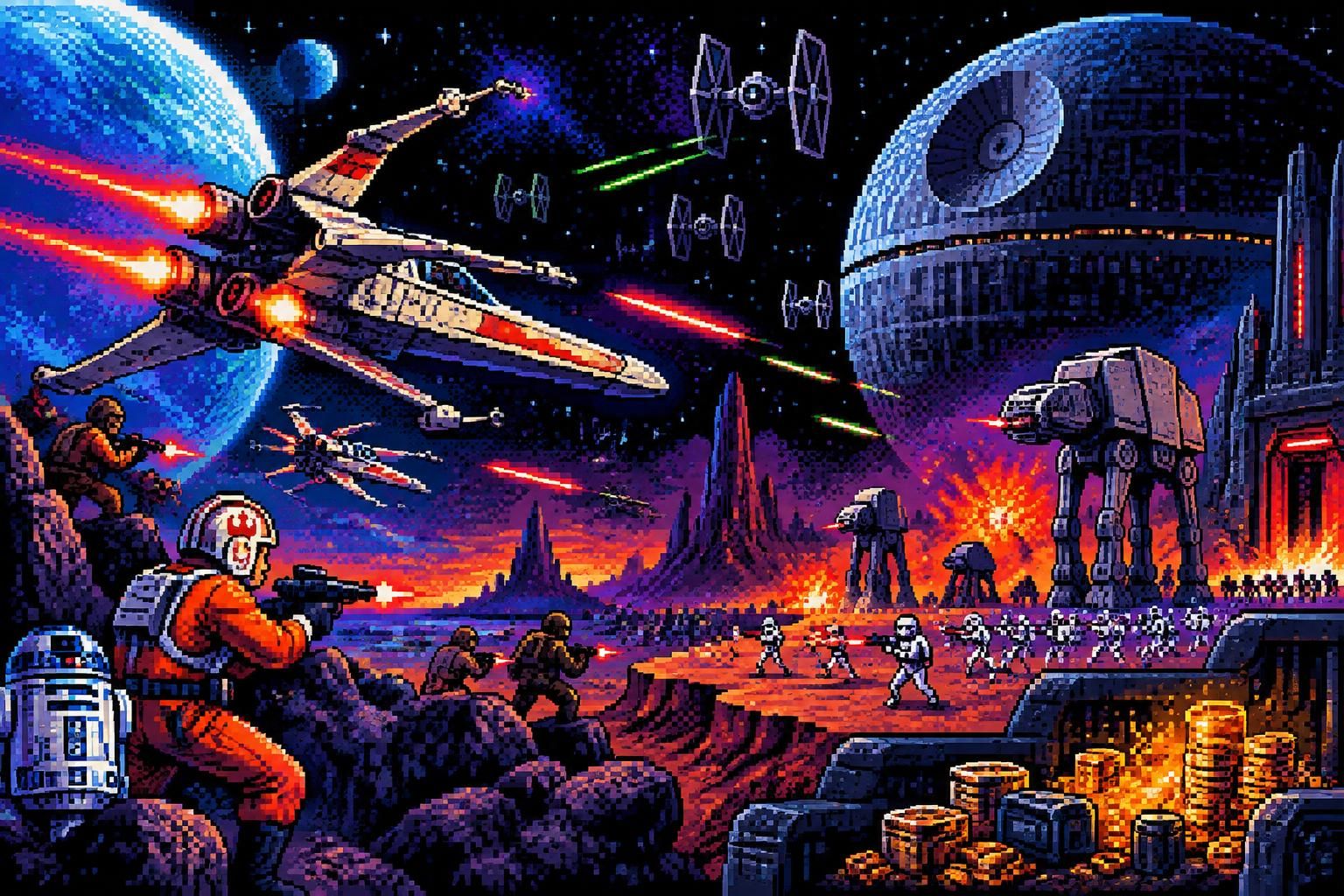
Star Wars Battlefront 3 Reports: Separating Development Signals From Official Confirmation
I classify the latest Battlefront 3 coverage as a significant development report, not a substitute for a named announcement from Electronic Arts or Lucasfilm Games. You should preserve that distinction: a collaboration between studios, an identified project, and a publicly revealed product are three different levels of evidence.
The supplied reporting describes DICE and Respawn working together on an unannounced shooter, with subsequent coverage identifying that assignment as the next Battlefront. The strategic question is therefore not simply whether two capable developers have assembled, but whether the evidence establishes their objective.
You can examine the attribution through the report connecting Battlefront 3 with DICE and Respawn. I would read the underlying quotations before treating a headline’s confidence as equivalent to a publisher’s commitment.
What the Battlefront 3 Development Reports Actually Establish
A studio partnership can precede a public title announcement by a considerable interval. Teams may be testing a combat prototype, evaluating technology, or preparing a production proposal rather than building a release-ready sequel.
I separate these possibilities because each creates different expectations for you. A prototype demonstrates potential; full production requires staffing, financing, delivery targets, and an agreed scope that can survive technical and commercial scrutiny.
Consider a hypothetical player named Commander Venn, who maintains a small squad of returning Battlefront veterans. If Venn interprets a development report as an approaching launch, the squad may postpone other purchases and expect footage that the developer was never prepared to show.
That expectation gap becomes a liability before the first match exists. Precise communication would allow the same group to follow progress without mistaking silence for cancellation or ordinary iteration for institutional failure.
⚠️ The strongest evidence remains a named statement identifying the game, its responsible studios, and its development status. Recruitment notices, executive comments, and corroborated reporting can support that evidence, but they do not automatically supply every missing detail.
The source material also contains sweeping claims about wider corporate restructuring. I would keep those claims outside the established picture unless they are supported by accessible company statements or independently corroborated reporting; an alarming adjacent story does not authenticate the central one.
Why Lucasfilm Games Matters to the Announcement
Lucasfilm Games is relevant because a licensed project must satisfy more than a publisher’s commercial requirements. Its setting, characters, equipment, and presentation also need to function within the franchise’s creative framework.
You should not infer a particular contract structure from that involvement. Public identification of the licensing partner would clarify authorization, but it would not reveal development milestones, revenue-sharing terms, or the duration of negotiations.
The distinction resembles military intelligence assessment. A shipyard receiving additional engineers indicates activity; it does not establish the class, armament, or deployment date of the vessel under construction.
For your assessment, I would maintain three separate columns: what the companies have stated, what named publications attribute to sources, and what audiences have inferred. Combining those columns creates an impressive-looking dossier with weak operational value.
Earlier discussion involving other possible developers belongs in the historical column rather than the current staffing chart. A company being considered during negotiations does not prove that it received an assignment, and a later report may describe a different stage of the process.
This is particularly important in fast-moving gaming news, where repeated attribution can make one original claim appear to be several independent confirmations. Count distinct sources, not the number of headlines repeating their language.
My assessment is straightforward: the reports justify sustained attention, while release dates, platforms, features, and commercial arrangements remain separate questions. A credible signal identifies where to investigate; it does not eliminate the need for verification.
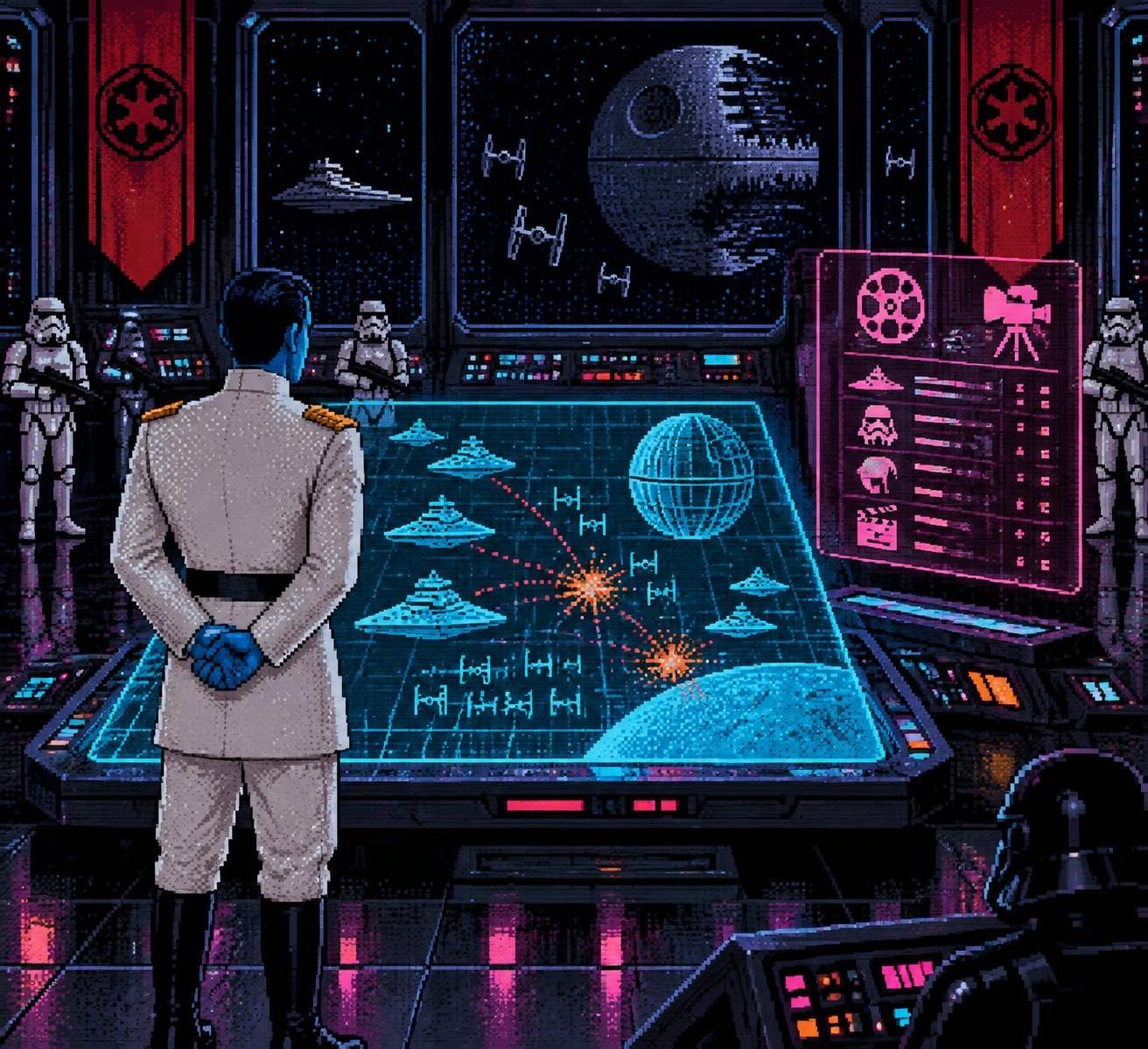
DICE and Respawn on Battlefront 3: The Production Alliance That Needs Clear Command
I assess the reported DICE–Respawn arrangement through division of responsibility rather than reputation alone. You can assemble two experienced organizations and still produce an inefficient operation if both possess authority over the same decisions.
DICE brings an established association with large-scale multiplayer warfare and the modern Battlefront series. Respawn contributes experience spanning competitive shooters and character-focused Star Wars adventures, but that combination does not tell you which team would own which systems.
The relevant coverage of the proposed Respawn and DICE collaboration provides a starting point for examining the partnership. I would resist converting either studio’s previous achievements into promises about an unannounced design.
Battlefront 3 Needs Defined Technical and Creative Ownership
Imagine Commander Venn entering a battlefield where infantry movement feels responsive but vehicles obey a different design philosophy. Each component might be competent in isolation, yet the complete encounter would lack a consistent relationship between distance, speed, and vulnerability.
That mismatch can emerge when separate teams optimize their own systems without a shared combat model. A project of this scale needs agreed engagement ranges, traversal rules, animation constraints, and performance targets before individual departments pursue local improvements.
I would assign a single accountable owner to the core battlefield experience. Supporting teams could retain substantial autonomy, but disagreements over movement, visibility, spawning, and objective pacing would require a clear final decision-maker.
The same principle applies to technology. An engine choice affects asset production, networking, tools, performance analysis, and recruitment; it is not merely a preference for one rendering system over another.
You should therefore treat claims about a particular engine as unconfirmed unless the companies identify it. Previous studio practice can suggest possibilities, but a joint production may use a pipeline that differs from either organization’s most familiar work.
How Star Wars Art Direction Can Support Battlefield Readability
I examine visual culture as functional information. Imperial architecture communicates repetition, hierarchy, and controlled access, while improvised Rebel installations suggest adaptation, concealed routes, and uneven resource distribution.
Those characteristics can help you understand a map without reading an instruction panel. A rigid Imperial loading bay can establish predictable sightlines; a resistance camp assembled around local terrain can create irregular approaches and opportunities for concealment.
The mistake would be to treat authenticity as a demand for visual clutter. A recognizable helmet, silhouette, or engine signature is useful only if players can distinguish the threat quickly enough to respond.
Consider the visual economy of a TIE fighter: its outline communicates identity at considerable distance. A disciplined interface should exploit that recognition rather than covering the screen with redundant symbols that obscure the battle itself.
🔧 Shared production standards should protect the experience before they protect departmental preferences. That includes common accessibility requirements, readable faction markings, consistent audio priorities, and reliable behavior under network stress.
A practical collaboration would also test complete matches early. Small prototypes can reveal whether infantry, walkers, aircraft, and reinforcements support the same objective structure, instead of postponing integration until every feature has become expensive to change.
For Venn’s squad, the benefit would be tangible: a coordinated assault would fail because of an opponent’s response, not because two subsystems interpreted the same action differently. Reliability is a competitive feature even when it produces no dramatic trailer moment.
The alliance’s potential lies in complementary expertise, but its risk lies in coordination overhead. Two capable studios become one effective production force only when responsibility is explicit and the battlefield obeys a coherent design.
Battlefront II’s Renewed Interest: What Player Demand Can Tell a Sequel Team
I treat the reported resurgence around the 2017 Battlefront II during May 2025 as an important demand signal, not a complete commercial forecast. You need to distinguish players returning to an existing purchase from customers willing to fund a new release at an unknown price.
The supplied account describes increased activity, stronger sales, and a coordinated push for another installment. Without a defined dataset, platform breakdown, and comparison period, those observations support renewed interest but do not establish a precise market size.
The discussion of Battlefront II’s sales resurgence is useful context for that campaign. I would evaluate its figures alongside their measurement method rather than carrying an isolated percentage into a sequel’s revenue model.
Why Returning Battlefront Players Are Not a Single Audience
Commander Venn’s squad illustrates the segmentation problem. One member returns for cooperative missions, another prefers starfighters, and a third wants large battles without the pressure of a tightly ranked competitive environment.
All three may support the phrase “make another Battlefront,” while disagreeing about the product that phrase describes. A developer who counts their enthusiasm without studying their behavior risks mistaking a coalition for a unified specification.
I would examine match participation, session length, group formation, and retention across different modes. These measures reveal whether players repeatedly choose an activity or merely request it during a brief surge of attention.
Discounts and events also require separate treatment. A temporary price reduction can lower the threshold for curiosity, while a community-organized weekend can concentrate existing owners into an unusually active period.
Neither effect makes the enthusiasm meaningless. It means the cause must remain attached to the result: an audience mobilized by inexpensive access may respond differently to a full-price launch with additional purchases.
📊 Demand becomes strategically useful when its composition is understood. Your most vocal community members may provide detailed feedback, but quiet participants who stop playing can expose problems that social discussion never captures.
Battlefront 3 Must Preserve the Fantasy Without Preserving Every Friction
The franchise’s central attraction is the ability to occupy a recognizable battlefield at several scales. Infantry movement, vehicles, iconic characters, and environmental spectacle combine to create a conflict larger than any individual participant.
I would preserve that relationship before adding more progression layers. A sequel that offers extensive customization but weak objective flow would increase administrative activity while reducing the experience that brought players back.
At Endor, local terrain and underestimated inhabitants altered the practical value of superior equipment. A multiplayer interpretation should similarly allow information, positioning, and coordination to matter, rather than making the largest unit an automatic answer.
You can apply that lesson to Venn’s squad without reproducing a film scene exactly. A support player might interrupt a sensor network, opening a temporary route that allows ordinary infantry to challenge a defended installation.
This produces a useful form of asymmetry: different roles contribute to the same outcome without requiring equal weapons or identical movement. The design challenge is to make each contribution legible so that success does not appear arbitrary.
Newcomer retention deserves equal attention. Clear tutorials, protected onboarding where appropriate, useful default equipment, and understandable defeat feedback can prevent experienced groups from turning the opening hours into an exclusion mechanism.
I would also measure whether friends can enter matches together reliably. A technically elaborate battlefield has limited value when the squad spends its available evening negotiating parties, queues, and incompatible settings.
The renewed audience offers an opportunity to study what endured and what players merely tolerated. A successful sequel should reproduce the reason people returned, not every obstacle they learned to work around.
Battlefront 3 Game Development Costs: Building a Budget Around Deliverable Systems
I cannot derive a video game budget for Battlefront 3 from the supplied reports, because no verified project total is provided. You should reject any calculation that simply transfers Starfighter’s film expenditure to an interactive production.
Film and game development can both require artists, performers, software, facilities, and extensive iteration, but their cost structures are not interchangeable. A multiplayer title must also function across repeated player behavior, network conditions, hardware configurations, and ongoing service demands.
The useful question is not whether a large franchise project is expensive. It is whether the planned spending corresponds to a defined experience that the team can deliver, test, and maintain.
Where Battlefront 3 Production Spending Would Accumulate
I would begin with people and time: engineering, design, art, animation, audio, production, quality assurance, and external support. Staffing totals alone remain incomplete because the duration of employment and the amount of rework determine much of the exposure.
Content creates additional dependencies. A new vehicle can require modeling, animation, effects, sound, interface work, balancing, collision testing, networking support, and adjustments to every environment in which it operates.
For Commander Venn, that vehicle appears as one selection on a deployment screen. For the production team, it is a network of obligations that continues after the promotional render is complete.
I would therefore evaluate features by their full integration burden. A mechanic that performs well in an isolated demonstration may become disproportionately costly when combined with destructible scenery, aircraft, heroes, and dozens of simultaneous participants.
The following table is a planning framework, not a disclosure of actual spending. It distinguishes categories that readers frequently combine when discussing game development costs.
| Cost category | Operational requirement | What you should examine |
|---|---|---|
| 🛠️ Core production | Build combat, maps, tools, audio, and interfaces | Scope, staffing duration, and integration progress |
| 🧪 Testing and certification | Verify stability, accessibility, compatibility, and platform compliance | Testing coverage and time reserved for fixes |
| 🌐 Online operation | Support matchmaking, hosting, security, and service reliability | Expected demand and continuing operating costs |
| 📣 Marketing and distribution | Reach customers and prepare the commercial launch | Whether these expenses are included in quoted totals |
| 🔄 Post-launch support | Maintain balance, address defects, and deliver planned updates | Dedicated capacity beyond release day |
Why Scope Discipline Matters More Than Feature Counts
A project can lower its launch risk by delivering fewer systems at a higher level of reliability. That does not mean removing the franchise’s defining qualities; it means identifying which elements create the battlefield fantasy and which merely expand the checklist.
I would require an early playable sequence that demonstrates deployment, traversal, combat, objectives, defeat, and re-entry. This complete loop exposes weaknesses that separate demonstrations of attractive environments or impressive character abilities can conceal.
You should also distinguish development expenditure from lifetime profitability. Distribution arrangements, discounts, refunds, taxes, licensing terms, marketing, and continued operation can affect the commercial result without appearing in a narrowly stated production figure.
No responsible sales target can be calculated from a hypothetical budget alone. The publisher’s net receipts per purchase, regional mix, release strategy, and continuing expenses would all change the required volume.
For a player, financial discipline becomes visible through stability and sustained support rather than an accounting announcement. A studio that reserves resources for maintenance is better positioned to respond when real matches expose behavior that internal tests missed.
I would regard a controlled scope as evidence of command, not a lack of ambition. The defensible budget is the one attached to a functioning plan, with enough reserve to survive contact with actual players.
Starfighter’s Reported $226.5 Million Spending: What the Partial Budget Reveals
I read the supplied Starfighter figures as a report about recorded expenditure, not a settled final production budget. The distinction matters because the account places spending at approximately $226.5 million before post-production was complete.
You should keep the reporting period, accounting entity, currency conversion, and eligible activities attached to that number. Removing those details can turn a useful financial disclosure into a misleading comparison with another film’s differently defined budget.
The supplied account attributes the financial examination to Forbes and describes substantial production activity in the United Kingdom. It also reports roughly $50 million in support through the UK incentive system, but that amount should not automatically be treated as the final benefit or a complete statement of net cost.
Gross Expenditure and Net Production Cost Answer Different Questions
Subtracting $50 million from $226.5 million produces approximately $176.5 million. I would describe that only as an illustrative difference between the two reported amounts, not as Starfighter’s verified final net budget.
The calculation excludes any further expenditure, changes in recognized credits, financing effects, and the possibility that the figures cover different accounting stages. You cannot correct those omissions through arithmetic alone.
Post-production can add substantial work after principal photography ends. Editing, visual effects, sound, music, additional photography, and final delivery all consume resources, although the supplied material does not establish their individual costs.
Nor does the report provide a complete marketing budget. Advertising, publicity, localization, distribution, and other release expenses should not be silently included in or excluded from a total when the source has not defined its boundaries.
💷 A partial disclosure establishes expenditure already recorded; it does not establish the complete cost of bringing the film to audiences. That is the central financial distinction you need before discussing profitability.
Starfighter’s Spending Should Be Tested Against Screen Value
I would examine whether expenditure supports images and performances that advance the story. An elaborate hangar earns its place when its layout, activity, and scale explain the military organization using it, rather than merely proving that the production could afford one.
Star Wars has long used recognizable visual systems to communicate power. Imperial symmetry, worn civilian equipment, and the ceremonial geometry of certain institutions provide information before a character explains the political order.
That is an economic advantage as well as an artistic one. A carefully designed setting can establish allegiance, hierarchy, and technological condition in seconds, reducing the need for exposition while strengthening the audience’s understanding.
Commander Venn, now considered as a cinema customer rather than a player, does not purchase access to a spending ledger. The relevant experience is whether the film’s characters, action, and visual storytelling justify the time and admission price.
Higher expenditure does increase the revenue burden, all else being equal, but it does not mechanically determine ticket prices. Exhibitors, local competition, premium formats, regional demand, and distribution arrangements also influence what you pay.
I therefore reject the simple assertion that an expensive production necessarily makes every cinema ticket more expensive. The stronger claim is that elevated costs can increase financial pressure on the companies involved and affect future investment choices.
The same restraint applies to comparisons with earlier franchise installments. Inflation, exchange rates, incentive structures, production methods, and the inclusion or exclusion of marketing can make apparently similar figures describe very different situations.
The disclosed amount is significant because it opens part of the ledger to examination. Its value lies in what it documents, not in the certainty that readers can manufacture around the missing entries.
Starfighter’s UK Tax Incentives: Why Location Decisions Are Part of Production Strategy
I assess the United Kingdom’s role in Starfighter as a production-location decision with financial consequences, not simply a backdrop choice. You should distinguish where a fictional world appears to exist from where the people, facilities, and services creating it are paid.
The supplied account links the film’s UK activity to access to a screen-production incentive. Such arrangements can influence where a company places work, but the exact benefit depends on applicable rules, qualifying expenditure, and the project’s circumstances.
A reported payment or credit also needs a date and accounting context. An amount recorded during one period may not represent the entire claim, the final approved entitlement, or cash received at the same moment.
Why Visual Effects Location Can Change the Financial Picture
The source material suggests that additional London-based visual effects work could affect the support available. I would treat that as a possibility requiring the relevant eligibility rules, not as an automatic extension of the reported $50 million.
Different activities can receive different treatment, and rules may change over time. A film’s qualifying status, the timing of expenditure, and the structure of the production company can all matter more than a general statement that work occurred in Britain.
You should therefore avoid applying a headline percentage to the complete worldwide budget. Qualifying expenditure and total expenditure are not necessarily the same base, so an apparently straightforward multiplication can produce a false result.
The operational decision extends beyond the credit itself. Facilities, experienced crews, supplier networks, transport, stage availability, and the ability to coordinate departments can make one location more effective even before public support is considered.
I would compare the total delivered cost rather than the incentive in isolation. A larger rebate can be offset by higher underlying prices, scheduling difficulties, or duplicated work across distant teams.
How Public Support Should Be Evaluated
Public funding introduces a separate question from whether the film succeeds commercially. You are entitled to examine what economic activity the incentive attracts and whether that activity would have occurred without the support.
Employment, training, supplier revenue, and investment in facilities can create benefits beyond one production. The difficult part is measuring additional activity rather than counting every pound spent as a gain caused by the policy.
I would use a disciplined checklist rather than a celebratory headline:
- 💷 Define the qualifying spend: identify which activities and accounting periods support the claim before comparing it with the production total.
- 🛠️ Examine durable capacity: assess whether the work strengthens skills, facilities, and supplier relationships that remain useful after filming.
- 📊 Separate gross activity from additional benefit: ask how much work the incentive genuinely attracted rather than merely subsidized.
- 🎬 Track the complete production pathway: distinguish shooting, visual effects, sound, and other services instead of treating the film as one indivisible expense.
These questions do not require hostility toward filmmaking. They require the same standard applied to any substantial allocation of public resources: identify the objective, measure the result, and account for the alternative use of funds.
For Commander Venn, the distinction is practical. As a viewer, Venn evaluates the finished film; as a taxpayer in a relevant jurisdiction, Venn may also evaluate whether the policy delivered a defensible economic return.
The two judgments need not match. A commercially disappointing release can still employ local specialists, while a successful release does not by itself prove that its public support was efficiently designed.
I would also resist treating financial disclosure as evidence of financial trouble. Reporting obligations can reveal information because of a production’s legal and geographic structure, not because an emergency has occurred.
The useful assessment follows the money through eligibility, delivery, and measurable outcomes; the size of the announced incentive is only the starting coordinate.
Ahsoka’s Reported January 20 Date: Checking the Calendar Before Predicting a Trailer
I flag the Ahsoka scheduling statement because the supplied roundup combines a late-2026 news context with a January 20 release reference. If those details belong to the same publishing window, the January date would refer to 2027, not an earlier point in 2026.
That calendar correction does not verify the release itself. You should treat January 20 as a date asserted in the supplied material unless an official Lucasfilm or Disney announcement establishes the relevant season and premiere schedule.
The phrase “less than three months away” also depends on the exact publication date. It cannot be carried into a later article unchanged, because its accuracy decays even when the underlying premiere date remains fixed.
Why CCXP Trailer Expectations Are Not Release Evidence
The source’s expectation of a trailer around CCXP Brazil is a prediction about marketing behavior. I would not convert it into a scheduled appearance without an announced panel, presentation, or release notice.
Major entertainment events can provide an efficient concentration of attention, but studios also release footage independently. Campaign timing may reflect production readiness, competing releases, platform priorities, or the need to protect narrative information.
You can assess the prediction without pretending to know the internal calendar. The relevant evidence would include confirmed participation, official promotional assets, and statements connecting the series to a specific event.
Commander Venn’s viewing group provides a useful example. If the group reserves an evening because an official account announces a trailer presentation, its decision follows evidence; if it acts on a columnist’s expectation, it is participating in speculation.
Both activities are permissible, but they should be labeled differently. Confusion begins when an audience forecast is repeatedly quoted until it acquires the appearance of a studio commitment.
Ahsoka’s Strategic Stakes Extend Beyond the Release Date
I would examine the series through command, logistics, and cultural interpretation rather than promotional volume. In a setting shaped by fragmented authority, access to transport, communications, and loyal personnel can matter as much as individual combat ability.
Art and ritual are useful evidence of how a society organizes memory and obligation. Mandalorian armor traditions, Jedi teaching practices, and the visual language of Imperial institutions suggest different relationships to inheritance, discipline, and collective identity.
These observations should guide interpretation, not become a shortcut to certainty about every individual. A character can conform to a cultural pattern, resist it, or exploit an opponent’s expectation that the pattern will always hold.
That is why a trailer deserves careful analysis without being treated as a complete operational record. Editors can rearrange dialogue, withhold context, and place unrelated shots beside one another to create a useful promotional impression.
I would separate what footage visibly demonstrates from the narrative connection you supply. A vessel appearing near a world establishes an image; it does not necessarily establish the sequence, motive, or result of the encounter.
📅 Schedule discipline protects story analysis from avoidable errors. An accurate date, an identified season, and a clearly attributed promotional claim provide a firmer basis than an elaborate prediction built around an unverified calendar entry.
The same method improves your reading of other Star Wars announcements. Product reveals, trailers, filming notices, and release dates represent different stages, and none should silently inherit the certainty of another.
For Venn’s group, the practical approach is to follow official scheduling channels while treating event predictions as optional discussion. That preserves the enjoyment of anticipation without turning ordinary marketing choices into supposed broken promises.
A reliable campaign assessment begins with the date that can be established, then examines the story that has actually been shown.
Star Wars Comics, Luke Skywalker, and the Sixth Brother: Reading This Week’s Secondary Fronts
I treat the publishing and discussion items in the supplied roundup as separate intelligence channels rather than decorative additions to the larger headlines. You gain a more complete view of the franchise by examining how its games, screen stories, reference books, and comics handle shared characters.
The listed coverage includes reviews of The Book of Boba Fett #3, Star Wars Icons: Vader, and The Fall of Kylo Ren #3. It also mentions a preview involving Marvel and Star Wars, but the precise publication format and continuity status should be established before drawing conclusions from that description.
I would retain the issue numbers and titles exactly when locating the reviews. Similar names across adaptations, collected editions, and ongoing series can otherwise lead you to compare material that was never intended to occupy the same editorial position.
What Luke Skywalker Discussions Reveal About Character Continuity
The reported SWNN Live! conversation included an extended discussion of Luke Skywalker’s legacy. That subject is most productive when participants identify which period, text, and decision they are evaluating rather than treating the character as a single unchanging strategic asset.
A combatant’s behavior depends on information, obligations, experience, and available alternatives. You cannot assess an earlier decision using knowledge the character acquires later without explicitly acknowledging the difference.
I would apply the same discipline to Boba Fett, Vader, and Kylo Ren. Their reputations are useful context, but a particular story must still demonstrate how authority is exercised, why subordinates comply, and what happens when resources or loyalties are contested.
For Commander Venn’s reading group, that changes the discussion from whether a character appeared sufficiently powerful to whether the narrative established a coherent problem. A setback can strengthen a story if its causes are legible and its consequences are followed.
Conversely, an impressive victory can reveal weak construction if the opposition exists only to collapse. Evaluating adversary competence is therefore part of evaluating the protagonist, not a separate exercise.
The Sixth Brother and the Need to Classify Canon Discrepancies
The supplied Character Spotlight examines inconsistencies associated with the Sixth Brother. I would begin by identifying the exact passages or scenes under comparison, because a discrepancy in timing is not the same problem as a difference in appearance or an altered attribution.
Adaptation can change emphasis, compress events, or present an encounter through a different dramatic frame. Those possibilities should be examined before declaring that every difference creates an irreconcilable account.
Yet reconciliation also has limits. If two depictions make incompatible claims about the same event, you should acknowledge the conflict rather than invent an unseen mission, duplicate identity, or unsupported explanation to preserve apparent consistency.
My working method would record the source, publication sequence, explicit claim, and points of agreement. That produces a usable comparison and prevents a confident memory of one scene from displacing the text itself.
🧭 Continuity analysis is strongest when it distinguishes observation from repair. Readers can propose explanations, but a plausible theory remains different from an explanation established by the published material.
How Publishing Coverage Connects to Star Wars Gaming
This discipline also matters to Star Wars gaming. Equipment descriptions, faction histories, and character portrayals can influence player expectations, but a multiplayer mechanic may require abstraction that a narrative reference work does not.
You should ask what a design represents before treating every balance adjustment as a historical assertion. A timed ability can communicate a battlefield role without claiming that the character literally operates according to a visible cooldown.
For developers following game industry news, cross-media familiarity offers opportunity and risk: recognizable details reduce explanation, while inconsistent presentation can generate confusion. Careful source tracking helps creative teams preserve identity without importing every contradiction.
The decisive reading habit is to identify the source, establish its claim, and test the interpretation against the evidence actually available.

I am Grand Admiral Thrawn, strategist of the Galactic Empire. Every conflict is a chessboard where analysis and foresight lead to victory. The art and culture of a people betray their weaknesses. The Empire embodies order and discipline in the face of rebel chaos. History will remember that only strategy ensures peace.