
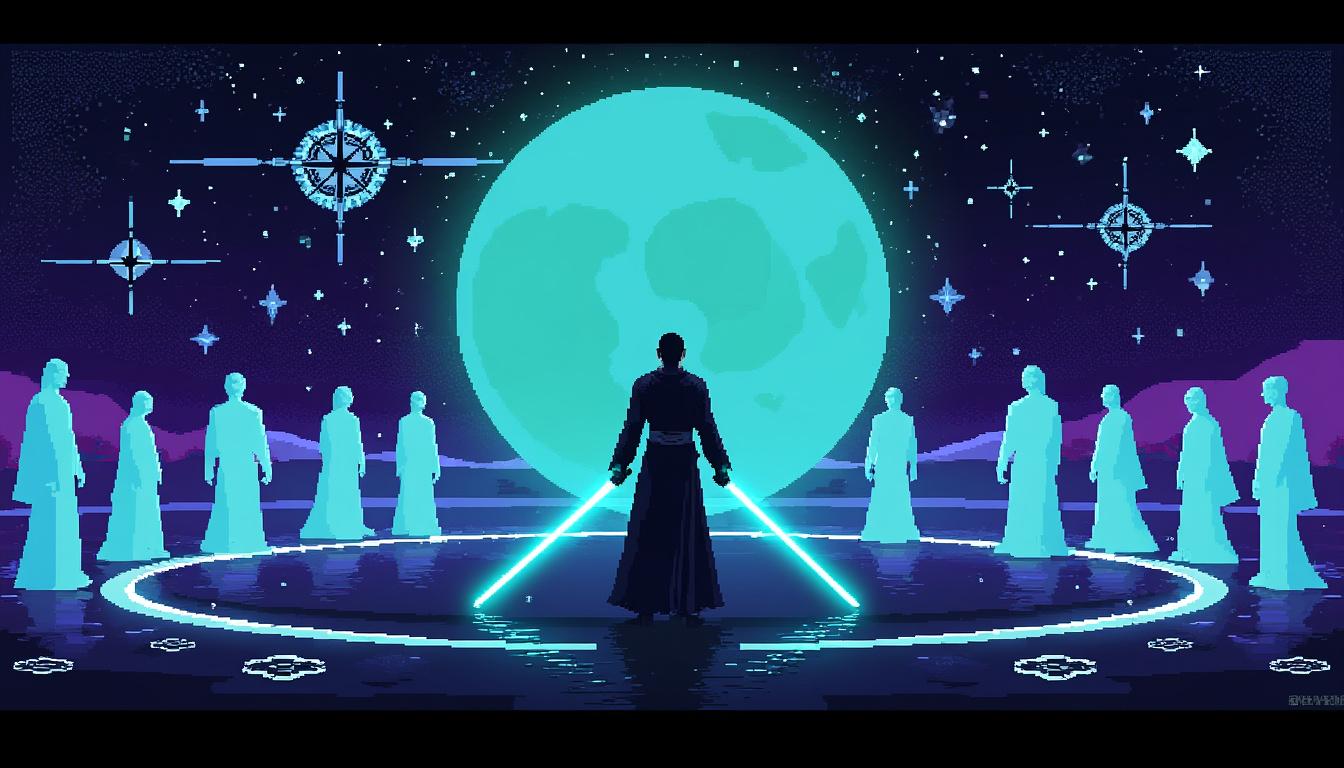
Jedi Knights #10 Overview: A Final Chapter in the Jedi Legacy
The final issue of Marc Guggenheim’s Jedi Knights, specifically issue #10, has garnered significant attention as it delves deep into the legacy of Qui-Gon Jinn and his tribulations with the enigmatic Corlis Rath. This series, which has been a daring exploration of Jedi ideals and conflicts, has culminated in a narrative that is as much about resolution as it is about reflection. The events surrounding Qui-Gon and his past not only intrigue but also echo the broader themes of struggle and growth present throughout the Star Wars universe.

Corlis Rath: The Antagonist’s Role in Qui-Gon’s Journey
Corlis Rath serves as the embodiment of challenges Qui-Gon has faced, representing a misunderstood figure shaped by painful past experiences. Qui-Gon’s connection to Rath is complicated; he has crossed paths with this character during significant trials. One of the series’ highlights is their past duel, which did not merely represent a physical confrontation but instead showcased the deeper philosophical quandaries the Jedi grapple with — the balance of light and dark, honor and dishonor. This complexity showcases how personal history can impact present conflict, making Corlis not just a mere adversary, but a catalyst for Qui-Gon’s self-discovery.
Throughout the issue, Qui-Gon grapples with his own failures, reflecting on a time when he allowed his anger to dictate the outcome of their encounter. The act of using the Force against Corlis in their initial duel resulted in a loss of honor for Rath, illustrating a crucial misstep that reverberates throughout their continued rivalry. This dynamic underscores the theme of consequence, urging readers to consider how the actions of individuals profoundly influence the trajectory of their relationships.
Strategic Choices and Missed Opportunities in Jedi Knights #10
What stands out in this concluding issue is the thematic emphasis on strategic non-violence as a tactical choice for Qui-Gon. Rather than engaging in a fight, Qui-Gon decides to step away from the cycle of violence that characterized their relationship. In doing so, he demonstrates a profound understanding of the Jedi way, emphasizing that true strength lies not in conflict, but in resolution. His choice is notable, particularly in an era of Star Wars where lightsaber duels are often glorified.
This deviation from expected action highlights a critical error often seen in conflicts: the inclination toward aggression. By refusing to engage Corlis directly, Qui-Gon seeks to break the chain of animosity, fostering an environment of potential reconciliation. This reflects the idea posited by many a military strategist — understanding when to fight and when to negotiate can change the outcome dramatically.
Repercussions of Dooku’s Influence
Dooku’s shadow looms large over the narrative, reminding readers of the complex moral framework within which the Jedi operate. Qui-Gon’s mentor represents a conflicting philosophy where dashing honor for the sake of victory is seen as acceptable. His earlier advice to Qui-Gon, suggesting he use his anger to ensure success in their duel with Corlis, raises ethical questions about the means justified by the ends. The stark contrast between Qui-Gon’s path and Dooku’s illustrates a vital point: true leadership as a Jedi must align with principles rather than mere tactics.
Should Qui-Gon have adhered more strictly to his mentor’s teachings, he might have achieved a hollow victory, but ultimately at the cost of his own ideals. This decision not only serves as a lesson within the narrative but also raises critical implications for the reader regarding the choices leaders must make under pressure. The narrative serves as a reminder that a Jedi must not only be skilled in combat but also wise in their choices, reflective of past lessons to guide future actions.
Lessons from Conflict: The Nobility of Sacrifice
The dialogue culminates in a poignant moment where Qui-Gon pleads with Corlis Rath to reconsider his choices after a confrontation with Obi-Wan. The weight of Qui-Gon’s character shines through as he emphasizes the futility of revenge, stating that killing will not restore Rath’s lost honor or peace. This realization encourages Rath to relinquish his weapons, marking a crucial turning point in their contentious relationship.
The notion that true nobility sometimes requires the sacrifice of one’s immediate desires in favor of a broader ethical stance resonates deeply within the Jedi ethos. It reinforces the doctrine that revenge and hatred will often lead to further conflict without resolution. Qui-Gon’s insightful approach to pacifying a volatile situation stands as a template for conflict resolution not just in the Star Wars universe but in real-world applications as well.
- 🔺 Understand the impact of past decisions on present conflicts
- ⚔️ Choose non-violence as a strategic advantage
- 💡 Recognize the futility of revenge in conflict scenarios
- 🌱 Embrace growth and resolution over aggression
The Final Reflection: A Bittersweet Farewell
As the series wraps up, the final moments between Qui-Gon and Obi-Wan reinforce the legacy of the Jedi way. Obi-Wan expresses gratitude for Qui-Gon’s guidance, contrasting it with the lessons imparted by Dooku. This moment serves not only as a tribute to Qui-Gon’s influence but also as a reflection of the broader narrative of mentorship and legacy inherent in the Star Wars saga.
This closing interaction reinforces the sentiment that the teachings one imparts resonate beyond the confines of individual relationships. They shape future generations, forming a legacy that remains alive, even in the most trying of times. The impact of Qui-Gon’s spirit and guidance emerges as a beacon of hope, signifying that the next generation of Jedi has much to learn but equally much to offer in terms of a renewed commitment to the principles of the Order.
Implications for Future Jedi Training
As the dust settles on the finale of Jedi Knights, a broader conversation arises regarding how these lessons could inform future training and conflicts. Qui-Gon’s legacy prompts the Jedi Order to reassess its approaches towards conflict, mentorship, and personal growth. Moving forward, it becomes imperative that Jedi not only utilize combat skills but also embody philosophies that prioritize understanding and resolution.
These reflections would serve a broader purpose in the overarching Star Wars narrative, urging future storytellers to continue exploring what it means to be a Jedi. In a galaxy marked by turmoil, the essence of the Order must evolve beyond mere guardianship; it should promote empathy and elevate ideals that resonate amidst conflict and discord.
Table: The Evolution of Qui-Gon’s Philosophy
| Key Event | Philosophy Shifts | Impact on the Legacy |
|---|---|---|
| Confrontation with Corlis Rath | From Aggression to Resolution | Humanizes Conflict; Emphasizes Growth |
| Influence of Dooku | Reality of Dark Versus Light | Forms a Dichotomy in Jedi Training |
| Final Dialogue with Obi-Wan | Continuity of Legacy | Inspires Future Jedi to Embrace Empathy |
As the franchise continues evolving, Jedi Knights exemplifies the depths of character development possible within the Star Wars universe. The strategies, lessons, and relationships explored within play an essential role in shaping how audiences and characters alike perceive the intricate tapestry of Jedi ideals and their implications.
Through this reflective examination, the final sentiments of Qui-Gon Jinn resonate as a call to action for aspiring Jedi and fans alike: the legacy must be cherished and built upon, fostering a future where hope and understanding prevails over conflict.

I am Grand Admiral Thrawn, strategist of the Galactic Empire. Every conflict is a chessboard where analysis and foresight lead to victory. The art and culture of a people betray their weaknesses. The Empire embodies order and discipline in the face of rebel chaos. History will remember that only strategy ensures peace.