
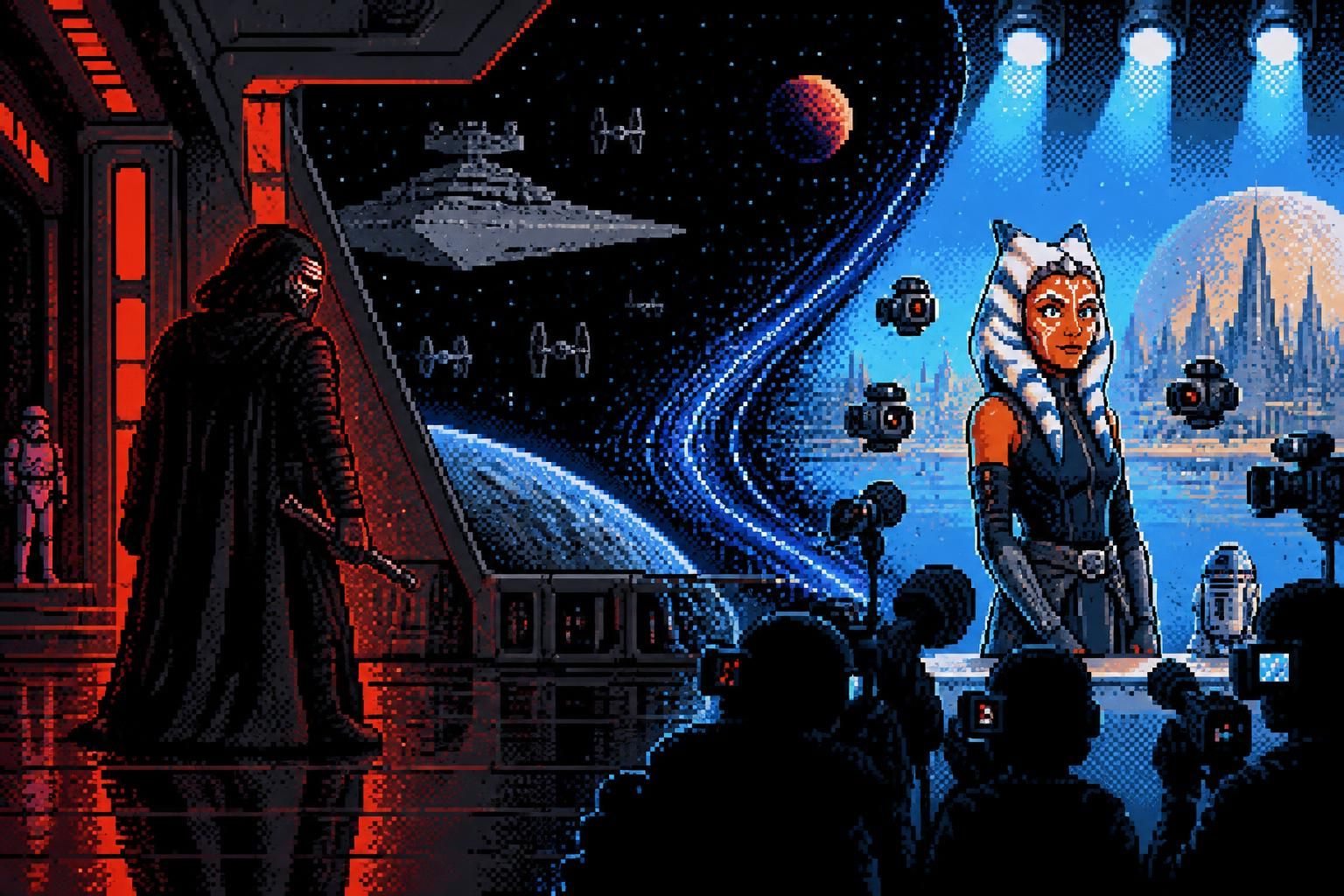
Adam Driver’s Star Wars Return: Why the Actor’s Answer Matters
Adam Driver has made his position on returning to Star Wars clear: the actor who played Kylo Ren and Ben Solo has indicated that his time in the franchise is over. I read that as a statement about his present intentions, not as a binding order on every future creative decision. For you, the practical distinction is simple: a return should not be treated as an active plan merely because the character remains popular. 🚫
Driver’s three-film arc began with The Force Awakens, continued through The Last Jedi and ended in The Rise of Skywalker. Kylo Ren entered the story as an antagonist defined by his allegiance to the First Order and his conflict with his family. Ben Solo emerged as the identity he reclaimed before his death, after helping Rey confront Emperor Palpatine.
The report on Driver’s latest comments places the emphasis on his own lack of interest in another appearance. I would not translate that into a claim that Lucasfilm has formally prohibited further stories about the character. An actor’s decision and a studio’s options are related, but they are not identical.
Consider the available narrative routes. A story set before Ben’s death could explore his training, his relationship with Luke Skywalker or his movement toward the dark side. A posthumous appearance could instead invoke memory or the Force. None of those possibilities establishes that Driver has agreed to participate, or that a production is being prepared.
There is also a strategic difference between recasting and return. Animation, novels and games can explore a character without requiring the same performance arrangement as a live-action film. Yet Driver’s physical presence, voice and restrained delivery are central to how audiences recognize Kylo Ren on screen. Substitution would solve one production problem while creating another creative challenge.
His performance often conveyed conflict through posture rather than explanation: the rigid mask and deliberate movements of Kylo Ren gave way to a less guarded Ben Solo. I would expect any successor medium to preserve that distinction. Simply reproducing a costume would provide visual recognition without necessarily carrying the character’s dramatic history.
For Lucasfilm, the lesson is not that a familiar name must be abandoned everywhere. It is that audience interest cannot be mistaken for an actor’s availability. The studio can develop stories around Rey, the surviving Resistance or the wider consequences of the First Order’s defeat without presenting Driver’s involvement as inevitable.
You may encounter headlines that frame his remarks as a permanent verdict on every conceivable appearance. I would use a narrower reading: Driver has ruled out a return as he describes his plans now, and no provided evidence establishes a reversal. That restraint becomes especially important when examining the more elaborate Ben Solo project claims circulating alongside the interview.
The Hunt for Ben Solo Claims: Separating Star Wars News From Speculation
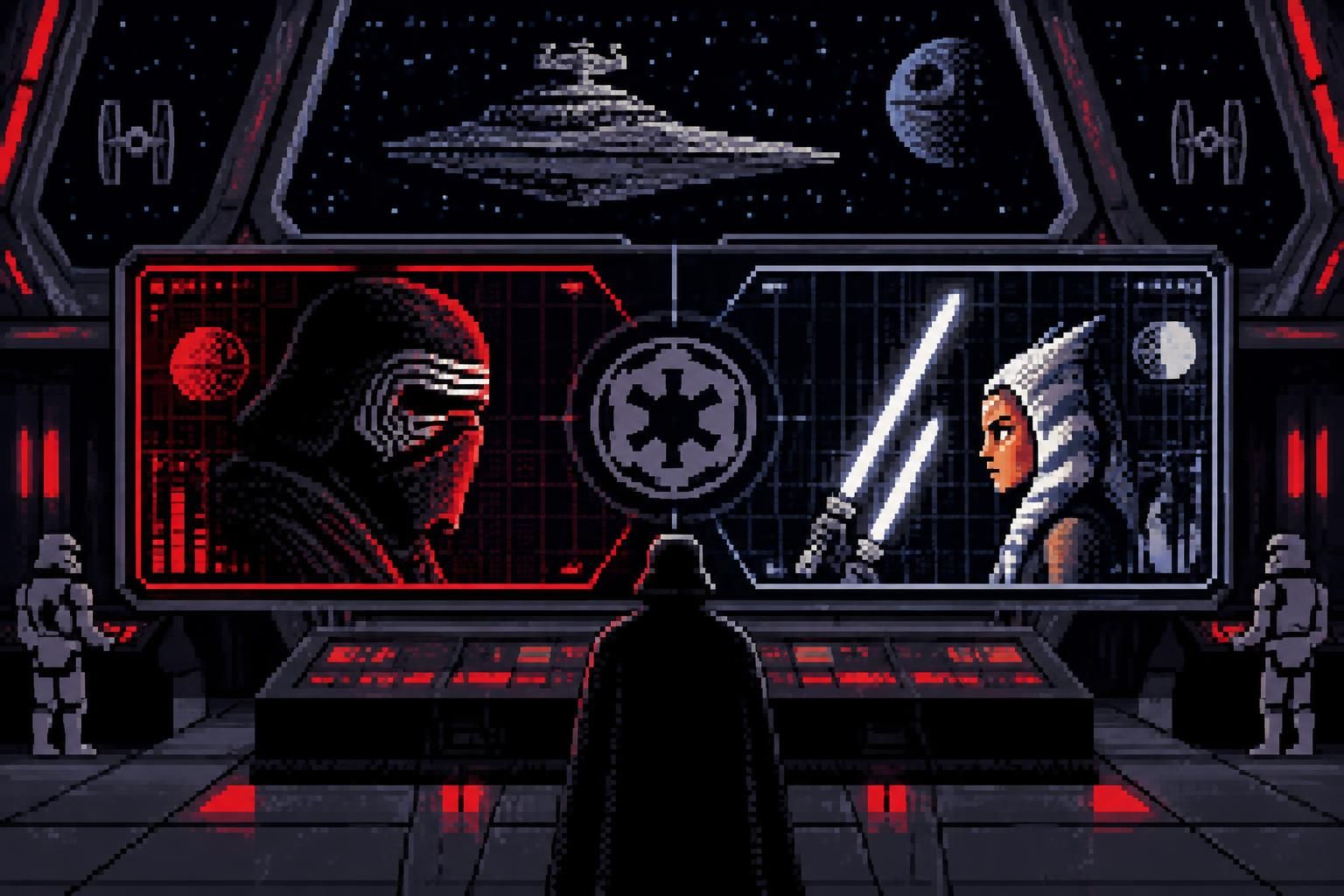
A separate claim holds that a project called The Hunt for Ben Solo was stopped shortly before it could proceed. I would treat that story differently from Driver’s reported remarks: the supplied material does not establish the project, its production status or the reason for any cancellation through an official announcement. A precise title can make an account sound settled without supplying the evidence needed to confirm it. 🔎
The distinction matters because readers are being asked to assess two propositions at once. The first is that Driver does not intend to return; that is attributed to an interview. The second is that Disney executives halted a particular production; that requires separate documentation, including who developed it, when it was authorized and what stage it reached.
Coverage discussing Driver and the alleged Ben Solo project provides a starting point for examining the claim, while another article considers a supposed Disney decision about the production. I would not treat the existence of either article as independent proof that a film was officially commissioned. Related reports can repeat the same original allegation.
You can test a project report with the same method used to assess an uncertain intelligence dispatch. Identify the original speaker, distinguish a pitch from an approved production, and look for a public statement from the studio or the people directly involved. A proposal discussed in a meeting is not automatically a film that entered pre-production.
The title itself also raises a narrative question. Ben Solo dies at the end of The Rise of Skywalker, so a story about searching for him would need to explain its chronology or the object of the search. It could concern the man before his death, his legacy afterward, or something else entirely. Without a verified premise, assigning any one of those meanings would be invention.
I would also separate a filmmaker’s interest from an agreed directing assignment. Discussions can occur without contracts, casting commitments or a release slot. If a report names a director, that name is useful only when accompanied by a reliable account of the person’s actual role. Otherwise, it adds scale to the rumor without clarifying its status.
There is a cultural reason these claims travel. The sequel trilogy left viewers with strong attachments to the Skywalker family, and Ben’s redemption invites debate about what might have followed under different circumstances. Speculation fills an understandable gap, but it does not transform an imagined continuation into a canceled production.
A useful editorial approach is therefore to label the allegation, link to its source and avoid building further claims upon it. I would not describe executives as having killed a film at the last minute unless that sequence is independently established. The verified question for the audience remains Driver’s own answer; the next question concerns a different campaign, where cast activity is being read as a signal of what comes next.
Ahsoka Season 2 Press Tour: What Cast Interviews Can Reveal
Reports place several cast members in Los Angeles for interviews connected with Ahsoka Season 2. I regard an Ahsoka press tour as evidence of promotional activity, not as proof that a particular trailer will arrive on a particular day. Interview sessions can be recorded well before publication, and a campaign may release different material across several weeks. 🎬
That distinction is useful when the observable activity is real but the schedule is not public. A cast interview can produce short clips for television, longer conversations for entertainment outlets and quotations held until an agreed publication date. Those materials support a release campaign, yet they do not reveal the exact order in which Lucasfilm intends to deploy them.
In the supplied account, a trailer is suggested as a possibility within the following weeks, with Brazil’s CCXP and a date around the twentieth offered as potential windows. I would classify both as predictions rather than announcements. The account does not give a year for every timing reference, so attaching a firm calendar date to those guesses would create an unnecessary error.
For a practical comparison, consider a convention panel and an ordinary online release. A convention offers a concentrated audience, live reaction and opportunities for cast appearances. An online premiere offers broader immediate access and allows the studio to choose its own timing. Either route could serve the series; neither becomes confirmed simply because it is commercially plausible.
Rosario Dawson’s Ahsoka Tano, Lars Mikkelsen’s Grand Admiral Thrawn and the other principal characters give the campaign several possible angles. A trailer could emphasize the separation between Peridea and the familiar galaxy, the struggle against an Imperial remnant or the personal cost of Ahsoka and Sabine’s decisions. Those are informed possibilities, not a description of footage that has yet to be identified.
I would advise you to examine each promotional item for three kinds of information: what it shows, what its accompanying text confirms and what viewers infer. A shot of a character in danger establishes a scene in promotional footage. It does not establish the scene’s final context, the outcome of a confrontation or the entire season’s chronology.
The official Ahsoka Season 2 coverage is the appropriate place to check confirmed promotional announcements. Entertainment reporting can add interviews and useful context, but an independently repeated release date should still be traced to the source that announced it.
An interview campaign can also reveal priorities without disclosing plot. If the cast repeatedly discusses a relationship, a location or a conflict, that emphasis may show how the series is being presented to the public. I would still wait for the finished episodes before treating promotional emphasis as a complete map of the story.
The immediate signal is therefore limited but meaningful: cast interviews indicate a campaign, while the next trailer’s timing remains a separate question. To interpret that campaign responsibly, you must also place its release claims against a calendar that contains conflicting information.
Ahsoka Season 2 Release Date and the A New Hope Anniversary
The supplied reports do not offer one consistent schedule for Ahsoka Season 2. Some describe a January arrival, another says the series was moved to 2027, and the weekly account refers to a premiere less than three months away without supplying enough dated context to reconcile every claim. I would not turn those competing descriptions into a single confirmed premiere date. 📅
One date can be established from the history of the films: Star Wars, later subtitled A New Hope, opened in the United States on May 25, 1977. Its fiftieth anniversary falls on May 25, 2027. That anniversary is a historical calculation; a theatrical rerelease around it is a separate event whose exact plans should be checked against an official announcement.
The weekly account places the prospective rerelease a little more than three months after its publication. Without a reliable publication date in the supplied text, I cannot use that interval to establish when the account was written. Nor can the interval establish the exact day on which a rerelease will begin.
I find it useful to keep four categories separate when you read scheduling coverage:
- 📌 Historical anniversary: the fiftieth anniversary of the original film’s U.S. opening is in May 2027.
- 🎟️ Theatrical plans: a rerelease requires its own confirmed dates, venues and distribution details.
- 📺 Series premiere: the date for Ahsoka Season 2 should be taken from the latest official announcement, not inferred from a press junket.
- 🎞️ Trailer timing: convention appearances and promotional intervals are possibilities unless a release is announced.
This separation prevents a common tactical error: using one credible fact to validate a neighboring claim. The anniversary is real because the original release date is documented. It does not, by itself, verify a particular Disney+ schedule or a cinema booking.
The report discussing a possible schedule change illustrates why timing claims should be read in their publication context. A schedule can change, and an older article may describe plans that were later revised. The date on a report and the date of the underlying announcement both matter.
There is a broader programming issue for Lucasfilm. A theatrical anniversary reaches an audience through cinemas, while a streaming season reaches subscribers through a different distribution system. Coordinating the two could generate attention across the franchise, but a coordinated campaign should not be assumed before it is announced.
You may also see claims about whether a calendar year will contain a new live-action Star Wars series on Disney+. Such claims depend on the complete release slate and can change when a show moves. I would evaluate them against the latest full schedule rather than treating one delayed title as conclusive evidence.
The reliable position is a disciplined one: the original film’s anniversary has a fixed date; the promotional and premiere schedules must be verified separately. With that boundary established, the next subject is what the first season actually placed on the board for Ahsoka and her opponents.
Ahsoka Season 2: Thrawn’s Return and the Imperial Remnant
At the end of the first season of Ahsoka, Grand Admiral Thrawn escapes Peridea and returns to the familiar galaxy aboard the Chimaera. Ahsoka Tano and Sabine Wren remain behind, while Ezra Bridger reaches home separately. I regard that arrangement as the series’ clearest strategic division: the people seeking to stop Thrawn are no longer all operating in the same theater.
The Imperial remnant gains a commander with experience, but the first season does not establish that every surviving Imperial faction will immediately submit to him. Leadership requires communications, resources and agreement among groups with their own interests. A return is a significant event; automatic control of a unified fleet would be an additional claim.
Thrawn’s departure also changes the New Republic’s problem. Before his return, the authorities must assess warnings about a potential threat. Afterward, they face the possibility that an experienced Imperial officer can coordinate forces within reach of established worlds. I would expect the difference between warning and response to matter more than the size of any single confrontation.
Hera Syndulla’s position illustrates the institutional difficulty. She recognizes the danger and has personal reasons to pursue it, but she must operate within a government that weighs political constraints and competing priorities. Her efforts in the first season show the cost of delayed authorization without proving that every New Republic official is indifferent or incapable.
Ezra’s return creates another source of information. He has direct experience of Peridea and of Thrawn’s exile, but intelligence becomes useful only when it is communicated, assessed and acted upon. You should distinguish what a character knows from what an institution knows: a warning carried by one witness is not yet a coordinated defense.
The Chimaera itself is a useful visual example. Its damaged hull records a long absence from ordinary Imperial supply lines. The repairs, markings and condition of the vessel tell you something about adaptation under constraint; they do not reveal every resource Thrawn possesses after reaching home.
I would also pay attention to the imagery surrounding the Nightsisters of Peridea. Their ritual practices and visual culture represent a power structure distinct from the naval hierarchy of the Empire. An alliance between those traditions may be useful to both parties, but shared immediate interests do not prove that their long-term objectives are identical.
For Ahsoka and Sabine, the problem is different. Remaining on Peridea means surviving in an unfamiliar environment and finding a route forward without the same access to allies in the New Republic. Their choices at the end of the first season preserved their relationship, but they also left Thrawn’s return to be addressed by others.
None of these positions requires a prediction about the second season’s ending. I would assess new footage and episodes by asking whether each side can convert its advantages into action: Thrawn has reached the galaxy, Hera has a warning, Ezra has returned, and Ahsoka and Sabine face distance. Those conditions also determine how the series can fit around the better-known history of the sequel trilogy.
Ahsoka Season 2 and Star Wars Canon: Does the Sequel Trilogy Change?
Some coverage asks whether Ahsoka Season 2 could alter established sequel-trilogy canon. I would begin with chronology rather than speculation. The series takes place after Return of the Jedi and before The Force Awakens, leaving a substantial period in which new conflicts can occur without automatically contradicting the later films.
A story can add information to that interval, reinterpret a familiar event or directly contradict an established fact. Those are different operations. The appearance of a new Imperial threat, for example, does not by itself erase the First Order; the question is whether the series later makes claims incompatible with what the films establish.
The discussion of Ahsoka and sequel-era continuity identifies the concern worth watching. I would apply it scene by scene once the relevant material is available. A trailer’s suggestion of danger is not sufficient evidence that a trilogy has been rewritten.
Consider Luke Skywalker, Leia Organa and Han Solo. Their absence from a particular mission does not inherently create a contradiction: people can be occupied elsewhere, lack information or have limited authority over an event. A continuity problem would require a more specific conflict between what one story establishes and what another depicts.
That does not mean every explanation is equally satisfying. If a threat becomes large enough to affect the entire New Republic, viewers may reasonably expect the series to explain how important figures and institutions respond. The scale of the event determines the burden of explanation. A local crisis needs less accounting than a galaxy-wide war.
I would also distinguish a perceived omission from an error. Ahsoka’s own story may follow characters who do not cross paths with the original-trilogy heroes. That choice can preserve focus, provided the surrounding events remain credible within the established setting. A familiar face is not a substitute for a coherent chain of cause and effect.
The franchise’s cultural geography offers another way to examine continuity. Different worlds possess their own political traditions, histories and artistic forms; a development on one planet need not be known instantly across the Republic. The distance between communities can explain why information travels unevenly, although a story must still show how its most consequential events reach the people responsible for responding.
Reports about changing George Lucas’s original “galaxy far, far away” convention raise a related but separate issue. A production’s presentation, imagery or geographic scope can be debated as a stylistic choice. I would not call it a canon contradiction unless it conflicts with a specific established fact, rather than with a viewer’s understanding of a familiar creative convention.
For you, the most useful test is proportional: identify the exact claim, locate the earlier material it supposedly contradicts and determine whether both can coexist. Until then, the possibility of tension is a question for future episodes, not proof that the sequels have been erased. The same distinction between a proposed idea and an announced product applies to the gaming stories circulating this week.
Star Wars Games, EA and Battlefront III: The Questions Behind the Debate
The weekly report points readers toward two gaming discussions following recent BioWare and Electronic Arts news: an argument that Lucasfilm should reconsider its relationship with EA, and a list of worlds that could make engaging Battlefront III maps. I would separate those editorial proposals from confirmed production news. A list of desired maps does not establish that Battlefront III has been announced. 🎮
The relationship is worth examining because EA has published several prominent Star Wars games, including Star Wars Battlefront, Star Wars Battlefront II, Star Wars Jedi: Fallen Order and Star Wars Jedi: Survivor. Those titles demonstrate different approaches: large-scale multiplayer combat in one series, and a story-led single-player adventure in another.
It would be too simple to evaluate that history as an uninterrupted success or failure. The second modern Battlefront drew substantial criticism around its original progression and monetization systems, then received changes and additional content. The Jedi games show that a different design and publishing approach can serve players looking for exploration and a sustained narrative.
Lucasfilm’s licensing decisions also extend beyond one publisher. Other companies have developed or published Star Wars games, so a discussion of the future should distinguish the end of exclusivity from the end of a particular commercial relationship. More partners can provide variety; they also create a need for consistent quality control and coordination.
What would make a world effective in a hypothetical Battlefront map? I would begin with terrain and movement rather than recognition alone. A visually famous location needs routes, cover, sightlines and objectives that support the intended match. An attractive battlefield that funnels every player through one exposed corridor may produce spectacle but little tactical variety.
Consider three examples as design exercises, not announced content:
| World | Possible battlefield feature | Design question |
|---|---|---|
| 🌲 Endor | Forests, elevated walkways and an Imperial installation | Can infantry use cover without making objectives impossible to contest? |
| 🏙️ Coruscant | Dense urban levels and multiple vertical routes | Can players navigate height changes without losing sight of the objective? |
| 🏜️ Peridea | Open terrain and the ruins seen in Ahsoka | Can long sightlines be balanced with safe approaches? |
Each setting brings cultural context as well as geometry. Endor’s forest is not empty military terrain; it is home to the Ewoks, whose knowledge of the environment proved decisive against Imperial forces. A map that includes their structures can communicate that history while giving players meaningful routes and defensive positions.
Coruscant presents the opposite problem: its immense built environment can make a battle feel anonymous unless architecture gives each area a recognizable purpose. A senate district, transit hub or industrial level would suggest different relationships between civilians, government and military power. Visual storytelling should support the match rather than obscure it.
Peridea offers another opportunity because its landscape and ancient structures are tied to the Nightsisters’ history. I would not assume a game will use the planet, but it shows how a newer screen location could inspire a distinct playable space. The same analytical discipline applies to the week’s character spotlight: examine the person’s established actions before expanding the legend.
Kelleran Beq, A New Hope and the Star Wars Stories Worth Watching
The weekly selection also highlights Jedi Master Kelleran Beq. I consider him a useful case study because his importance rests on a specific action rather than a long catalogue of battlefield victories: during Order 66, he helps Grogu escape the assault on the Jedi Temple, as shown in The Mandalorian.
Ahmed Best plays Beq, and that casting carries its own place in Star Wars history. Best also performed Jar Jar Binks in the prequel films. The two roles differ sharply in function and tone, but both connect the performer to major periods of the franchise. I would treat that continuity as a production fact rather than as evidence that the characters share a hidden narrative connection.
The rescue sequence demonstrates a narrow objective under extreme pressure. Beq does not attempt to defeat every attacker or hold the Temple indefinitely. He moves Grogu toward an escape route, uses available transport and accepts help from others. The mission’s success depends on extracting one vulnerable survivor, not on winning the larger battle.
For you as a viewer, the distinction matters because Order 66 is often discussed in galaxy-wide terms. The purge reshapes institutions and destroys much of the Jedi Order, but an individual account makes the consequences tangible: one child survives because several people act within a collapsing security environment. Their intervention is consequential without reversing the larger event.
Beq also appears in Star Wars: Jedi Temple Challenge, a children’s competition series. That context gives the character a different function from the escape sequence: he guides young participants through trials rather than responding to the fall of the Republic. I would not force those appearances into an identical dramatic mode; each serves the format in which it appears.
The approaching anniversary of A New Hope provides a useful comparison. In the original film, the survival of the Rebellion depends partly on information carried through a chain of people: Leia, the droids, Obi-Wan Kenobi and eventually Luke. The plans alone do not destroy the Death Star; they must reach a force capable of using them.
Beq’s escape follows a different route through the same principle. A survivor must be moved, protected and handed over to the next part of a network. The sequence becomes more intelligible when you watch the transitions between Temple, transport and departure instead of treating the rescue as a single duel.
That focus on movement also links the character spotlight to the current Star Wars news cycle. Ahsoka’s allies are separated across an extraordinary distance, Driver has closed the door on his own immediate return, and Lucasfilm’s promotional plans will become clearer through official releases. Each story turns on what is established, who can act and which route remains available.
The weekly live discussion mentioned in the supplied report frames seven questions about the franchise’s future, while the Beq feature examines one character’s past. I would use both scales without confusing them: broad questions can identify the direction of a franchise, but a close reading of one scene shows how its stories make consequences credible.
For the next dispatch from a Galaxy far, far away, the most useful evidence will be concrete: an official trailer, a dated premiere announcement, a direct interview or a finished episode. Until then, Kelleran Beq’s escape offers a precise example of how a limited objective, clear timing and effective allies can determine the outcome of a much larger conflict.

I am Grand Admiral Thrawn, strategist of the Galactic Empire. Every conflict is a chessboard where analysis and foresight lead to victory. The art and culture of a people betray their weaknesses. The Empire embodies order and discipline in the face of rebel chaos. History will remember that only strategy ensures peace.