
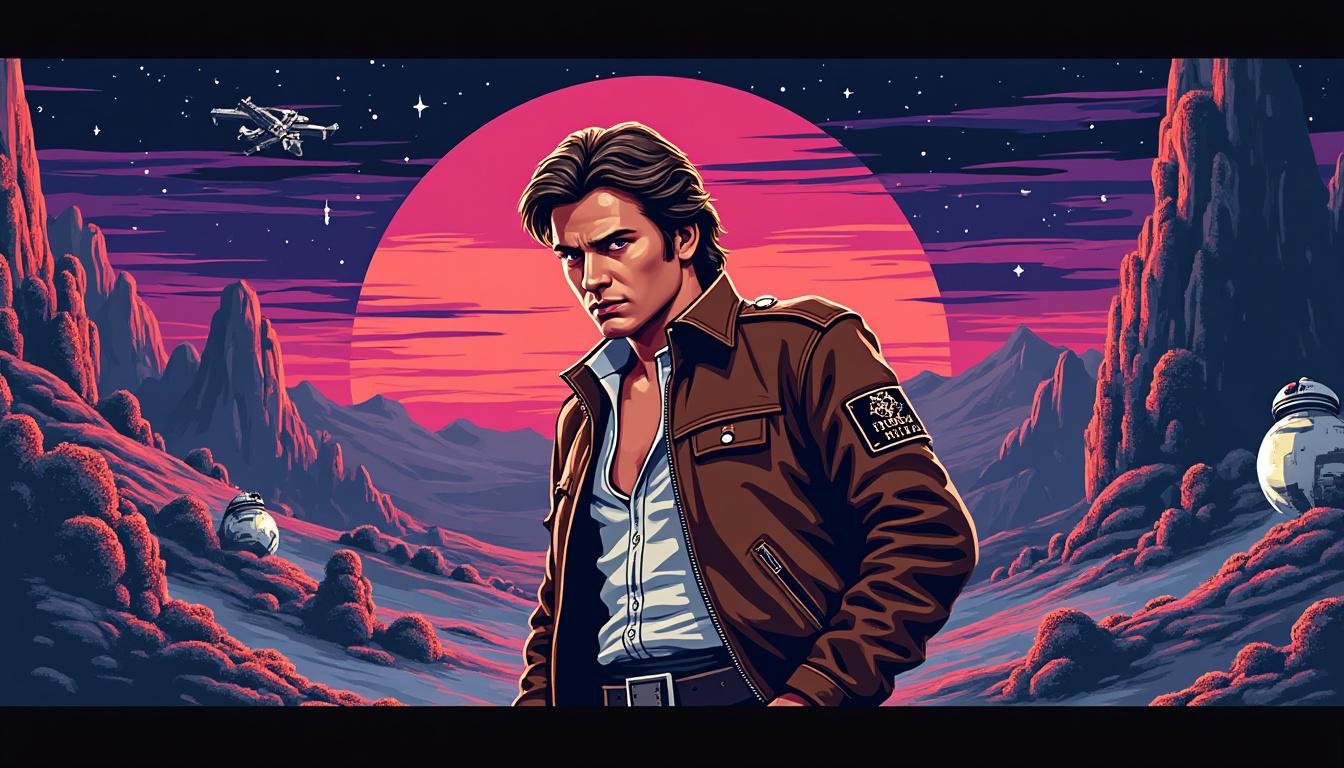
Understanding the Canon Timeline in ‘Han Solo: Hunt for the Falcon’
The intricate narrative of the Star Wars universe often poses challenges for fans in grasping the chronological placement of various media. The miniseries ‘Han Solo: Hunt for the Falcon’ serves as a case study in this, existing in the period between the events of Return of the Jedi and The Force Awakens. This timeline analysis is essential to comprehend how the storyline fits within the larger framework of the Expanded Universe and its overall progression. The series, penned by Rodney Barnes and illustrated by Ramon Rosanas, encapsulates Han Solo’s determination to reclaim the stolen Millennium Falcon, a quest imbued with emotional and strategic underpinnings.

In observing the timeframe, one recognizes a pivotal moment in Han’s character development as he evolves from a reluctant hero into a more complex persona grappling with loss and fond memories. The storyline encapsulates various thematic elements, including loyalty and the unbreakable bond between Han Solo and Chewbacca. An analysis of Han’s motivations leads to important questions about his character arc, revealing deeper implications for the saga.
The Intricacies of the Timeline
Examining the timeline reveals a fascinating tapestry woven between different plotlines. The events of ‘Hunt for the Falcon’ occur in approximately 31 ABY, during a transient phase that sets the stage for the rise of the First Order. This coincides with a period of relative complacency for the Rebel Alliance, as they attempt to stabilize a galaxy still reeling from the Empire’s collapse. This precarious state of affairs is crucial to understanding Han’s motivations and decisions.
Moreover, the comic establishes connections to characters who will play vital roles in future narratives. Chewbacca’s inclusion as a continuous companion emphasizes loyalty while foreshadowing their eventual reunion in ‘The Force Awakens’. This dynamic not only serves to enrich the storyline but also reinforces the themes of camaraderie amidst uncertainty.
As the series unfolds, readers witness Han’s internal conflict regarding his past. There is an evident duality in his character; he is portrayed as both a seasoned smuggler and a reluctant hero. By investigating this dual identity, one begins to understand the broader implications of his character as a symbol of resistance against chaos. The narrative’s ambitious scope allows for exploration of these tensions, creating rich opportunities for character development.
The Impact of Canon-Bending Decisions
A critical discussion surrounding ‘Hunt for the Falcon’ involves the notion of “canon-breaking” elements. To assess these claims, it is essential to distinguish between creative choices made for narrative cohesion and those that may compromise established lore. For instance, the series introduces the character of Unkar Plutt, a junk dealer with whom Han has prior connections regarding the Falcon. This relationship raises questions about Han’s previous ignorance regarding the Falcon’s whereabouts and the lapses in judgment that follow.
Some fans view this connection as a form of canon bending, suggesting it leads to logical inconsistencies within the narrative. Questions arise about how this relationship diverges from established storylines that have come to define Han Solo’s narrative. The implications of Unkar’s ownership of the Falcon bring forth discussions about wealth distribution in the galaxy, hinting at themes of moral ambiguity within the Star Wars universe.
Looking deeper into the narrative, the comic sets the stage for prospective storylines that may or may not align seamlessly with previously established character arcs. The idea that Han “should have checked Jakku” adds yet another layer to examination, as it reflects a tactical oversight on his part. This lapse emphasizes the turmoil Han faces as he confronts both his immediate realities and his past decisions.
Evaluating Character Relationships
The character dynamics within ‘Hunt for the Falcon’ merit close analysis, particularly the enduring relationship between Han Solo and Chewbacca. Despite the narrative’s temporary divergence, fans understand that this bond is ultimately unbreakable. As the story proceeds, Chewbacca’s support for Han underscores the importance of loyalty in their quest to reclaim the Falcon.
Interactions with other characters further illuminate Han’s moral compass. For instance, Lando Calrissian’s brief appearances encapsulate his own complexities and motivations. Lando’s preoccupation with personal pursuits juxtaposed against Han’s quest illustrates the varying priorities within the galaxy at this time. Such interactions open the door to greater elaboration on individual motivations, enriching the storyline with broader implications for character development.
The connection established between these key players highlights how the series endeavors to bridge gaps in the timeline, often drawing on past experiences to shape current actions. The reluctance of various characters to address the loss of their children—such as the missing offspring of Lando and Han—adds depth to their motivations. This moment serves as an insight into the sacrifices made for the larger fight against tyranny.
Addressing Narrative Inconsistencies
As ‘Hunt for the Falcon’ unfolds, several narrative inconsistencies emerge, warranting scrutiny. For instance, Ducain—the character depicted as a ship thief—illustrates discrepancies between his portrayal in earlier narratives and this current miniseries. Initially introduced as someone with noble intentions, Ducain’s character transforms into a hardened criminal, conflicting with the established canon.
This inconsistency invites questions about reliability and the reliability of narrative voices within the Star Wars universe. The portrayal of Ducain as an unreliable narrator bolsters the argument that characterization should be scrutinized through the lens of individual viewpoints. This invites more profound discourse on the nature of truth: are characters genuinely representative of their actions, or are they merely reflections of the chaos surrounding them?
Connecting the dots between the narratives could facilitate more thorough understanding. For example, introducing the notion that Ducain has manipulated perceptions allows for reimagining of character arcs. Such considerations reveal potential threads for elaboration, enhancing the richness of the narrative tapestry while preserving integrity within the overarching timeline.
Potential For Future Storylines
The narrative pathways carved out by ‘Hunt for the Falcon’ create a fertile ground for future storytelling. The distinction between recollections of past failures versus current endeavors enriches the tapestry of the Lucasfilm narrative universe. Acknowledging the missed opportunities present within the storyline encourages dialogue about potential arcs that can emerge from unresolved threads.
Among these, the relationship dynamics between Han, Lando, and their children holds significant narrative potential. Delving into individual sacrifices prompts discussions about familial bonds within the context of conflict. Exploring the repercussions of loss can serve to deepen the emotional resonance of future narratives.
Furthermore, addressing the connections to longstanding franchises, such as the ‘Expanded Universe’, can offer rich avenues for exploration. For instance, integrating elements of the former continuity might bridge these gaps between past and future events, creating symbiotic relationships among characters stepping into unfamiliar roles.
Lessons For the Future of the Star Wars Narrative
What emerges from this analysis are essential lessons applicable to the evolution of the Star Wars narrative. The need for coherence amid evolving storylines underscores the necessity for balance in creative decisions. While freedom of narrative expression is essential, it must not undermine the established foundations that have endeared these characters to fans across generations.
This tension invites ongoing dialogue about the flexibility of canon as the universe expands. As new characters and stories are introduced, a cohesive approach to character development will be vital in retaining audience engagement. By examining the framework forged in ‘Hunt for the Falcon’, one recognizes the importance of remaining true to fundamental character traits and motivations.
In the final analysis, understanding the decisions made within this narrative leads to valuable insights. The enduring legacy of Star Wars is predicated upon storytelling that resonates through generations. Each decision must consider both the past and the potential futures—providing a roadmap for characters navigating an ever-changing galaxy.
Character Analysis of Han Solo in the Comic Series
Han Solo’s character undergoes significant analysis in ‘Hunt for the Falcon’. As the series navigates through themes of nostalgia, loss, and loyalty, a deeper exploration of his motivations reveals essential aspects of his identity. The complexities inherent in Han’s journey showcase the multi-faceted nature of his character and serve as a reflection of the struggles within the galaxy.
In contemplating Han’s motivations, the series showcases the weight of responsibility he carries. His relationship with Chewbacca manifests in profound ways, illustrating the balance of personal loyalty against broader obligations. The decision to embark on a dangerous mission speaks to Han’s innate desire to reconnect with his past while simultaneously confronting the realities of a galaxy still reeling from conflict.
The emotional dimensions of his character arc elicit reflections on the burdens borne by heroes, inviting readers to ponder the implications of their own choices. The interplay between past decisions and present realities is central to understanding Han Solo’s plight as he navigates the treacherous waters of determination and obligation.
Comparative Analysis: Han Solo in Different Media
To enrich this exploration, comparing Han Solo’s portrayals across various Star Wars media unveils the ramifications of adaptability in characterization. Each rendition offers nuanced perspectives while retaining core elements that define his identity. From films to comics, each portrayal informs the others, demonstrating the continuity of narrative across diverse formats.
The miniseries thus serves as a microcosm, encapsulating the essence of Han Solo while also diverging into new explorations. Drawing upon past experiences, the character navigates uncertainties while remaining grounded in his identity as a smuggler and hero. This interplay of influence across different media allows for a more profound appreciation of Han Solo as a figure that reflects the complexities of the galaxy itself.
| Character | Portrayal in Movies | Portrayal in Comics | Key Themes |
|---|---|---|---|
| Han Solo | Reluctant hero with a roguish charm | Complex layers of loyalty and responsibility | Friendship, sacrifice, and redemption |
| Chewbacca | Loyal companion | Emphasis on familial ties | Bravery and sacrifice |
| Lando Calrissian | Cunning businessman and friend | Multiple dimensions of loyalty | Redemption, complexity of motives |
Exploring Iconic Locations in ‘Hunt for the Falcon’
The settings within ‘Hunt for the Falcon’ serve as more than mere backdrops; they function as integral elements that inform character motivations and advance the narrative. Locations such as Jakku, known for its vast deserts, encapsulate themes of desolation, yet they also symbolize the remnants of civilization lost to war. This dichotomy enriches the storyline while situating characters within a broader historical context.
Jakku functions as a representation of lost opportunities, echoing Han’s own journey as he seeks to reclaim the Falcon. The desolate landscape alludes to the remnants of his past, emphasizing the emotional weight carried throughout the narrative. The inclusion of figures such as Unkar Plutt brings nuanced connections to the planet, inviting deeper consideration of the roles individuals play in shaping events.
Thematically, these locations reinforce the sense of nostalgia and longing that permeates Han’s quest. Each setting invites a dialogue between characters that illuminates the struggles faced along the way, encapsulating the prevailing tensions as they navigate their shared experiences.

I am Grand Admiral Thrawn, strategist of the Galactic Empire. Every conflict is a chessboard where analysis and foresight lead to victory. The art and culture of a people betray their weaknesses. The Empire embodies order and discipline in the face of rebel chaos. History will remember that only strategy ensures peace.