
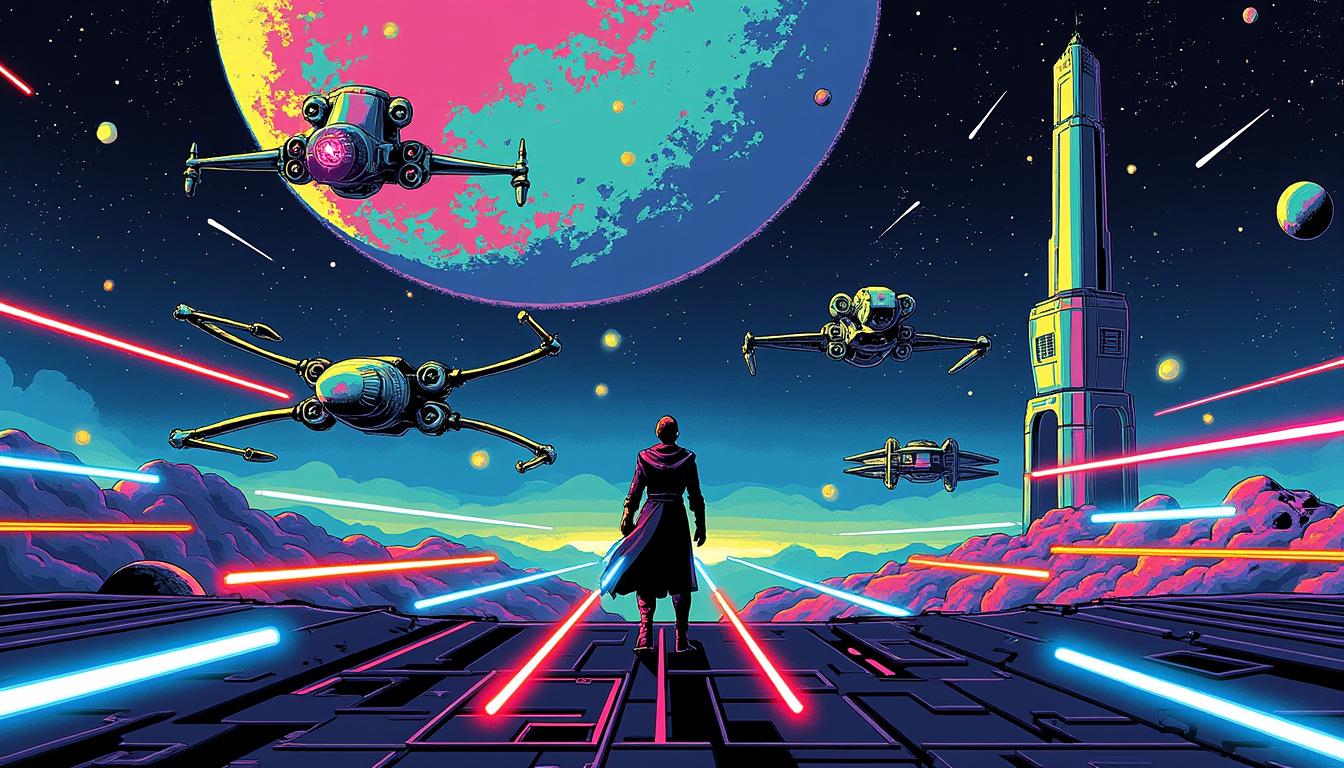
The Nagai Revolution: An Overview of Star Wars #10
The conclusion of the Nagai Revolution saga in Star Wars #10 represents a significant milestone in this ongoing sci-fi saga. The plot intricately weaves together the threads of conflict between the New Republic and the Nagai, particularly focusing on Reyna Oskure’s manipulative schemes. This final issue encapsulates the complexity of galactic dynamics while solving critical questions left unanswered in earlier installments. As the saga culminates, characters both prominent and obscure find resolution within a narrative that struggles yet succeeds to connect the overarching themes of rebellion, loyalty, and redemption.

Key Characters in the Conflict
Throughout the series, the conflict primarily revolves around figures such as Luke Skywalker, Han Solo, and Leia Organa. Yet, issue #10 shifts considerable focus onto characters like Jesrit and Rynn, who were previously sidelined. This distribution of attention raises questions about character development and reader engagement, particularly when legacy characters are overshadowed. In contrast, the underdevelopment of key figures may hinder the emotional resonance that one expects from a series conclusion.
The hurried introduction of numerous supporting characters has blurred their backgrounds and relationships, thereby alienating readers who require deeper context to care about the conflicts at stake. Jesrit’s heroic moments seem less impactful due to the lack of established stakes, culminating in a finale that feels abruptly satisfying rather than richly earned.
Analyzing Tactical Errors in the Nagai Revolution
A tactical analysis reveals that the New Republic’s approach to the Nagai conflict was riddled with oversights. The reliance on traditional strategies and well-known figures ultimately created gaps where new thoughts and tactics could have thrived. Ignoring the necessity for quick adaptations in strategy undermined their position, particularly as Reyna Oskure’s machinations evolved.
The inconsistency in portraying the gravity of Oskure’s threats, such as suggesting her plans to cause planetary destruction, only to retract them moments later, illustrates a narrative that lacks coherence. A strategically sound opponent recognizes the danger and adjusts their reactions accordingly. The failure to anticipate Oskure’s movements serves as a case study in the importance of dynamic intelligence in military tactics.
Understanding the Forces at Play
Evaluating the Nagai and their motivations reveals a spectrum of complexities. The portrayal of their internal conflicts and loyalties highlights themes of betrayal intertwined with a quest for power. Jesrit’s interrogation of a fellow Nagai explorer not only raises ethical questions but also echoes real-world complexities faced in various military conflicts. However, the shortfall in emotional payoff is significant, resulting from insufficient backstory elaborated upon in previous issues.
One stark realization is that the rush to resolve the narrative had a detrimental effect on comprehending the motivations of newer characters who possess compelling stories. While previous issues offered glimpses into these depths, the finale’s fast pace diminished these contributions to mere background noise.
Missed Opportunities for Greater Character Engagement
The absence of the main trio—Luke, Han, and Leia—steals emotional weight from the storyline in issue #10. While their participation serves a purpose, the most impactful elements arise from Rynn and Jesrit, and their struggles lack significant buildup. A series finale should create lasting impressions, providing readers with the resolution they crave without feeling forced.
Rynn Zenat’s role is particularly interesting. The usage of the Crown of Verity to reverse the life-draining effects of Oskure’s powers provides a mystique to an otherwise predictable finale. However, the revelation of such a pivotal element at the last moment raises concerns about its placement in the narrative flow, presented as a last-minute solution rather than as a developing element throughout the series.
What Could Have Been Done Differently
To enhance reader engagement in the final issue, a more gradual building of relationships and character arcs would have enriched the narrative significantly. Instead of introducing multiple new faceless antagonists, focusing on deepening the connections between existing characters could have provided a more satisfying resolution.
Additionally, revisiting the threads from earlier issues that highlight character motivations would have granted deeper emotional layers to their climactic confrontations. Rather than relegating the final moments to merely resolving conflicts, exploring unresolved tensions would have transformed the issue into a thoroughly fulfilling conclusion.
A Final Evaluation of Narrative Quality
The overall quality of the Nagai Revolution saga may be summarized as inconsistent. The concluding issue delivered resolutions yet fell prey to rushed pacing and insufficient emotional depth. Readers deserve a final confrontation that synergizes past themes while providing closure, rather than scurrying to tie up loose ends.
A critical look at Reyna Oskure’s fate demonstrates this. Although she receives her comeuppance, the act feels like a resolution just for the sake of it, lacking a solid foundation. A series that could have forged lasting memories instead feels like a temporary sensation, landing just below expectations.
Addressing the Critique of Character Investment
The criticism regarding character arcs converges on the same theme across the series—the weight and significance of relationships matter. The finale serves as a cautionary tale in the construction of narratives, particularly in the realm of visual storytelling like comics or graphic novels. Readers crave investment in characters, and deviation from this can lead to disengagement.
Ultimately, characters like Jesrit and Rynn, designed to establish deeper connections with the audience, struggled to leave an imprint. The need for well-timed reveals intertwined with a sustainable buildup is evident, emphasized when legacy characters do not dominate the concerns of a series that seeks closure.
Lessons for Future Conflicts in Galactic Battles
A retrospective analysis reveals significant lessons applicable to future conflicts within the expansive Star Wars universe. The strategy executed in the Nagai Revolution serves as a prime example of the importance of adaptability in war. Realizing that failure to evaluate the long-term consequences of specific strategies hampers results should become a central tenet for future factions engaged in galactic warfare.
As new stories unfold, it becomes critical to address character development, creating a compelling narrative that complements the action. Ultimately, combining tactical intelligence with meaningful emotional arcs will yield deeper engagement from the audience in future installments of the Star Wars franchise.
Final Thoughts on the Series Finale
In summary, the series finale stands as a mixed bag, compounded by stellar moments that shine through shortcomings. The frustrations felt by some readers derive from an abandoned opportunity to fully realize the potential of a critically poised narrative. A stronger adherence to character depth and narrative consistency could elevate future issues beyond the constraints of inconsistency, providing a more enriching experience for a devoted audience seeking compelling stories in the vast tapestry of the Star Wars universe.
| Character | Role | Key Moments |
|---|---|---|
| Luke Skywalker | Hero | Final showdown with Reyna Oskure |
| Han Solo | Strategist | Identification of tactical flaws |
| Jesrit | Rebel Voice | Challenge to fellow Nagai |
| Rynn Zenat | Key Player | Utilization of the Crown of Verity |

I am Grand Admiral Thrawn, strategist of the Galactic Empire. Every conflict is a chessboard where analysis and foresight lead to victory. The art and culture of a people betray their weaknesses. The Empire embodies order and discipline in the face of rebel chaos. History will remember that only strategy ensures peace.