
Stunning Artwork and Immersive Storytelling in Star Wars Jedi: Fallen Order Manga Adaptation
The adaptation of video games into manga format presents unique challenges and opportunities, particularly when it involves a franchise as rich as Star Wars. In the case of Star Wars Jedi: Fallen Order, the manga adaptation delivers stunning artwork that captivates the audience, making it an object of intrigue. However, this adaptation also reveals notable flaws in the narrative structure and pacing that merit closer examination. The interplay between this visual brilliance and its narrative shortcomings provides a fertile ground for analysis.
The Essence of Cal Kestis’ Journey
The narrative follows Cal Kestis as he navigates a galaxy where the Empire ruthlessly hunts down the remaining Jedi. For those familiar with the video game, this story mirrors his fight for survival and growth. However, the pacing in the manga adaptation detracts from the depth of his journey. Key moments that foster emotional connections and character development often fall flat, robbing readers of the opportunity to experience thematic depth.
A specific example can be seen in the interactions between Cal and Cere Junda. Their dialogue, laden with subtext in the game, loses much of its nuance in the manga. The condensed storytelling sacrifices layers of emotional context that are crucial to understanding Cal’s motivations.
Visual Mastery: The Artwork that Speaks Volumes
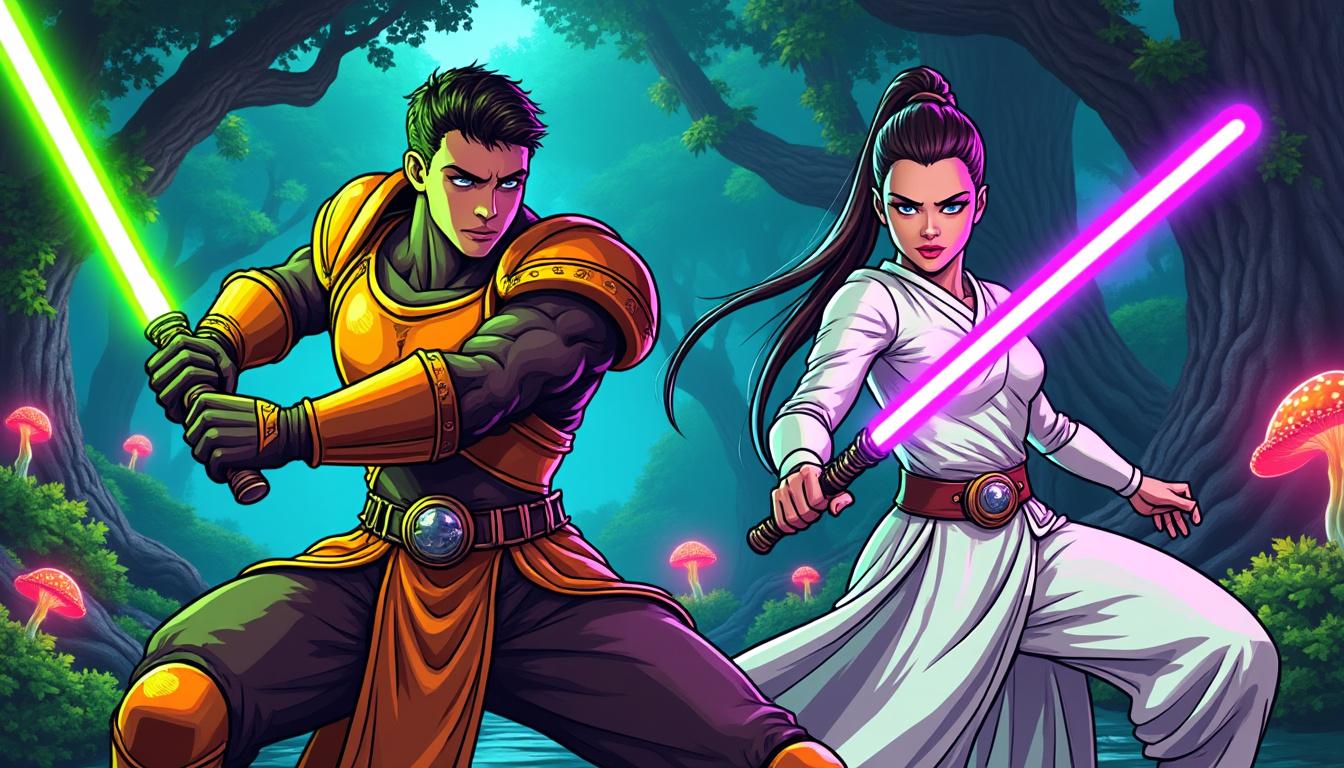
Despite the narrative challenges, the illustrations by studios Mangado and Sideranch are undeniably exceptional. Each page is filled with meticulously crafted visuals that bring iconic characters and settings to life. The expressive designs encapsulate the essence of Star Wars, with Cal Kestis and the Second Sister showcased in breathtaking detail.
The vibrant colors and dynamic lines serve as a visual feast, akin to experiencing high-stakes moments in a well-crafted battle sequence. Readers might appreciate the way the art captures the tension and emotion of pivotal encounters, even if the story itself does not always match the same level of intensity.
Identifying the Flaws in Narrative Adaptation
The adaptation faces a fundamental issue: it attempts to condense a rich narrative into a format that is inherently limited by its own nature. In a video game, the player journeys through moments that unfold organically, engaging with the gameplay mechanics and environmental storytelling. However, the manga format strips away these layers and presents a streamlined view that, while visually engaging, lacks the substance found in the original.
In particular, gameplay moments that define character arcs—such as Cal’s flashbacks or discussions with allies—are absent or truncated. This alteration simplifies the narrative, resulting in a linear progression that fails to resonate with the complexity of Cal’s character development.
Furthermore, the engagement with minor characters is also stunted. The presence of supporting characters adds texture to the story, but without adequate development, they become mere placeholders in the saga.
Pacing Issues: From Gameplay to Page
Pacing is another key issue; moments that would have benefitted from slower reveal and detail are rushed. For example, Cal’s internal struggles often manifest in reflective gameplay segments, allowing the player to explore his psyche. However, in the manga, this introspection is either minimized or omitted entirely, leading to sudden transitions that can confuse readers.
This abrupt pacing fosters confusion, as transitions between scenes are not always smooth. In one instance, a chapter may show Cal at one location in the galaxy, only for him to “teleport” to a different context in the next panel. Such inconsistencies disrupt immersion and detract from the story’s coherence.
Analysis of Audience Expectations
The success of a manga adaptation hinges on its understanding of audience expectations. Fans of Star Wars Jedi: Fallen Order are likely to possess a strong emotional attachment to the characters and storylines presented in the original game. Therefore, the manga adaptation has both an opportunity and a challenge: how to honor the original source while conveying its essence in a different format.
- 🎨 Character Design: Fans want to see their favorite characters reimagined in a new artistic style.
- 📖 Story Fidelity: Expectations are high for the narrative to maintain core themes and character arcs.
- ⚔️ Epic Battles: Readers anticipate thrilling illustrations of major conflict moments
These elements highlight expectations that remain unmet in various aspects of the adaptation. While the art succeeds brilliantly, the loss of key emotional beats does a disservice to both the narrative and the characters involved.
What Could Have Been Done Differently
To correct the narrative pitfalls, greater attention should have been given to pacing. Incorporating more flashbacks or internal dialogues could enrich character arcs significantly. Likewise, including minor but pivotal moments could bolster emotional resonance. The adaptation could strive to mirror key gameplay moments and engage readers in the same thoughtful manner.
By crafting pacing that aligns with the emotional beats of the storyline, the manga could maintain the richness of the original while allowing for the necessary changes that the medium demands.
Strengths and Opportunities: Evaluating the Adaptation
Despite the issues identified, the manga adaptation does present several strengths. The stunning artwork undoubtedly draws in a wider audience, particularly those who may prefer visual mediums over interactive gaming experiences. This adaptation opens new doors by expanding the Star Wars universe to those who might not have engaged with video games.
The character art is especially compelling, capturing evocative moments where readers can immerse themselves in the universe. The expressive eyes and dynamic poses not only appeal visually but also present opportunities for fans to further engage with the lore.
Critically, readers should approach Star Wars Jedi: Fallen Order—The Manga with the awareness that the adaptation confines itself to specific narrative structures. This understanding allows for a more constructive reading experience.
Future Lessons in Adaptation
Lessons can and should be taken from this adaptation for future projects within the Star Wars franchise. A keen focus on narrative integrity while maintaining visual strengths can lead to more enriching projects. Furthermore, engaging with audiences about their expectations can refine the adaptation process, ensuring that future offerings resonate with legacy fans.
Exploring adaptations like Star Wars: The High Republic and Star Wars: Path of the Lightsaber serves as a comparative model. These works tend to balance narrative structure and visual sophistication more successfully. By studying successful strategies in these adaptations, future manga projects can refine their own methodologies.
A Comparative Overview of Manga Adaptations in Star Wars
| Title | Release Date | Art Style | Narrative Strength |
|---|---|---|---|
| Star Wars Jedi: Fallen Order | 2026 | Vibrant and dynamic | Weak in pacing and character depth |
| Star Wars: The High Republic — Edge of Balance | 2021 | Stylized and atmospheric | Strong with thematic depth |
| Star Wars: Path of the Lightsaber | 2025 | Classic inspired | Emotionally resonant |
The varied experiences in these adaptations exemplify the potential paths forward for the Star Wars franchise in the manga realm. Each title has its own strengths and areas for development. As the franchise continues to explore and expand, these considerations should remain top-of-mind.

I am Grand Admiral Thrawn, strategist of the Galactic Empire. Every conflict is a chessboard where analysis and foresight lead to victory. The art and culture of a people betray their weaknesses. The Empire embodies order and discipline in the face of rebel chaos. History will remember that only strategy ensures peace.