

Understanding Rosario Dawson’s Transformation into Ahsoka Tano
The journey of Rosario Dawson embodying Ahsoka Tano has been a multifaceted process that extends beyond mere physical representation. Initially, Ahsoka emerged as a vibrant character within the Star Wars franchise through the voice work of Ashley Eckstein. When Dawson transitioned to a live-action format, the implications of this switch required a thorough examination of Eckstein’s legacy and its impact on the character’s evolution.
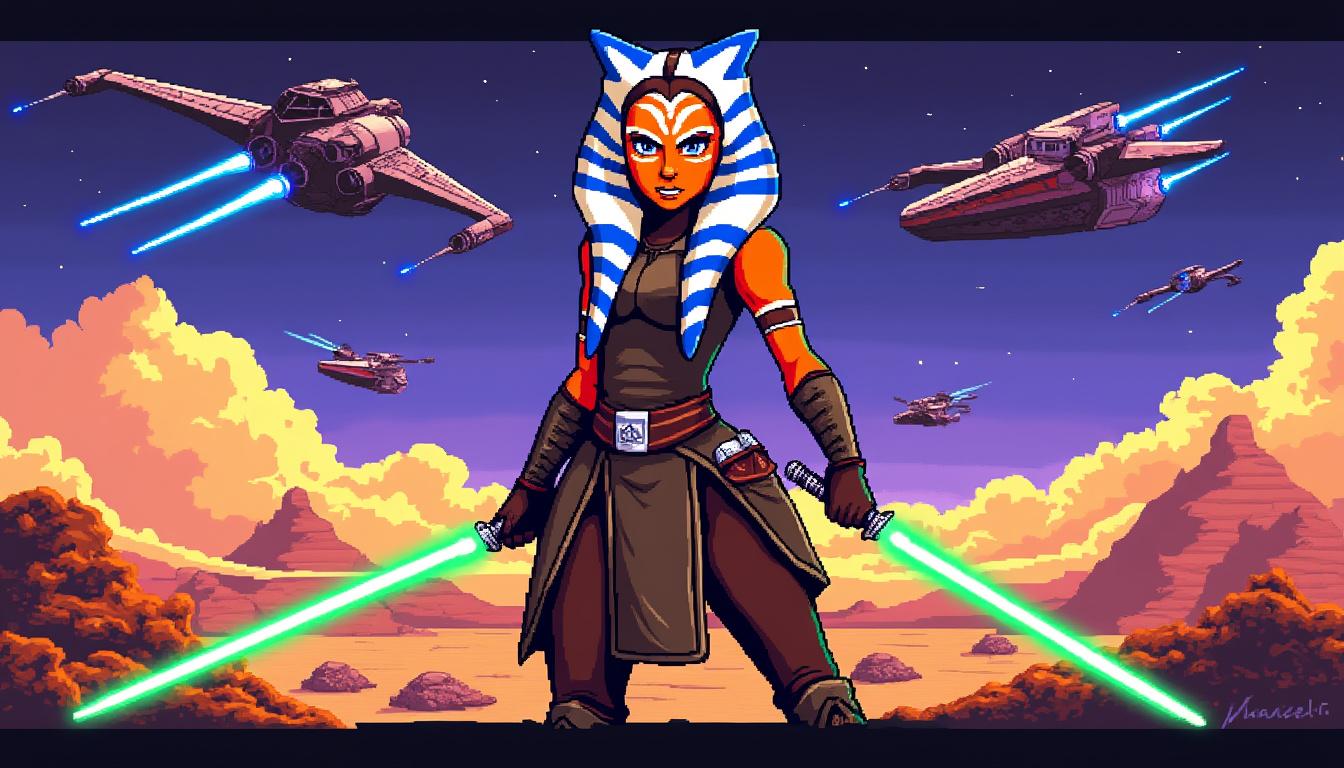
Dawson’s portrayal of Ahsoka is not just a representation; it is a reconstruction influenced heavily by her predecessor. The character’s transition from animated features to live-action introduced layers of complexity. In her discussions, Dawson has acknowledged the importance of Eckstein’s voice acting as a cornerstone in her role preparation. This awareness reflects a strategic engagement with the character that recognizes existing narratives while also paving new paths.
The Influence of Ashley Eckstein’s Performance
The initial portrayal of Ahsoka by Ashley Eckstein laid a solid foundation for the character’s voice, inflection, and emotional depth. Dawson recognized these elements during her preparation, stating how she initially sought to reflect Eckstein’s performance closely. However, she realized the necessity of adapting this performance to suit Ahsoka’s evolving narrative arc within the Star Wars universe.
Ahsoka’s journey spans from a young Padawan to a key rebel figure, embodying themes of growth and resilience. Dawson’s strategy also involves interpreting these qualities through a contemporary lens, ensuring that Ahsoka resonates with the audience in a live-action format. This conscious adaptation showcases an understanding of both the original character’s essence and the requirements of live-action storytelling.
Character Development: A Collaborative Process
The role of Ahsoka Tano in the upcoming series represents not just an individual performance but a collaborative amalgamation of influences, traditions, and innovations. Dawson has pointed out that her relationship with Ashley Eckstein has significantly shaped her understanding of Ahsoka. Their friendship has fostered a mutual respect and acknowledgment of the character’s legacy, setting the groundwork for a nuanced performance.
This dynamic has culminated in a rich tapestry of character development that extends from the animated series into the live-action realm. Ahsoka’s transition from a supporting role in The Clone Wars to a central figure in her own series speaks volumes about her growing significance within the Star Wars narrative.
The collaborative aspects of this development are evident in Dawson’s reflections about the shared understanding between herself and Eckstein. Their discussions and interactions have reinforced the emotional layers embedded in Ahsoka’s character, enhancing the depth of the portrayal.
Strategic Value of Legacy in Role Preparation
Dawson’s preparation process can be viewed through the strategic lens of military tactics often reflected in the Star Wars narratives. The intricate dance of acknowledging legacy while creating new interpretations parallels the military strategies seen in battles of the galaxy. When assessing the nature of Ahsoka’s role, her relationships with characters like Anakin Skywalker and Sabine Wren illustrate a tactical approach to emotional engagement that has direct implications for storytelling.
Consider the strategic missteps often encountered in battles: neglecting the strengths and vulnerabilities of allies can lead to discussions filled with regret. Dawson’s approach deliberately avoids these errors by honoring the past while also exploring new frontiers for the character. She articulates this well when she states that Ahsoka’s portrayal maintains an aspect of lightness, remembering the optimism Eckstein infused into the character.
Ahsoka’s Legacy: From Animated Roots to Live-Action Complexities
The legacy left by Ashley Eckstein can be viewed as an essential counterweight to the challenges Dawson faces. The task of breathing life into a beloved animated character requires navigating a landscape rich with expectations and predefined narratives. Dawson’s acknowledgment of this legacy reflects a methodical approach wherein she seeks to respect the foundations while exploring new emotional territories.
The transition of Ahsoka from animation to live-action necessitates that Dawson remains aware of the character’s multifaceted journey. In adapting her performance, it is crucial to maintain continuity with the established storytelling while integrating layers unique to the live-action format. This is a delicate balancing act that reflects strategic foresight similar to a commanding officer guiding troops into unknown terrain.
Evolving with the Character: A Reflection of Growth
As Ahsoka evolves, so too must Dawson’s portrayal evolve. The aim is not mere imitation but an informed interpretation grounded in respect and reflection. This evolution becomes particularly vital as audiences are drawn to the character’s journey, blending elements of nostalgia with new adventures that require an agile approach from the actress.
The character development evident in both cinematic representations and ongoing narrative arcs serves as a reminder of the importance of strategic adaptation. A reflection on progress means reassessing the foundations laid by previous portrayals and understanding how those elements mesh with ongoing character narratives.
Key Moments from Ahsoka’s Narrative Arcs
Throughout her journey, Ahsoka Tano has encountered numerous pivotal moments that define her character. From her debut in The Clone Wars to her development in Rebels, these moments reflect a rich narrative complexity. For both Dawson and the audience, understanding these milestones serves as a critical element in effectively portraying Ahsoka.
- 🌟 Introduction in The Clone Wars: The establishment of Ahsoka as Anakin’s Padawan
- 🔄 Transformation in Rebels: Evolving from Fulcrum to a leader in her own right
- ⚔️ Confrontation with her past: Engaging in battles that test her resilience and adaptability
The milestones not only serve as echoes of her development but also as strategic reference points that inform Dawson’s performance. Recognizing these pivotal moments allows for a performance that is rich in detail and deeply respectful of the character’s legacy.
Integrating the Past: Lessons for Future Conflicts
To adequately prepare for the role, embracing the legacy of Ahsoka serves as more than a historical acknowledgment; it offers critical lessons applicable to future challenges. Just as commanders must assess past conflicts to avoid repeating mistakes, Dawson’s integration of Eckstein’s legacy elevates the portrayal to new heights.
This strategic approach can be applied to future story developments within the Star Wars universe. Given Ahsoka’s rich narrative fabric, lessons from her past can impact how the character engages with contemporary issues, whether they be interpersonal conflicts or larger cosmic battles. Dawson’s role must reflect the impacts of these experiences, thus ensuring that the portrayal remains rooted in authenticity while resonating with audiences.
Conclusion: Reflecting on Ahsoka’s Journey
The path that Rosario Dawson has taken in embodying Ahsoka Tano eludes the simplicity of direct imitation. Instead, it represents a complex interplay between legacy, self-discovery, and the ongoing evolution of narrative forms within the Star Wars universe. Through her collaboration with Ashley Eckstein, Dawson has positioned herself to honor the character’s history while also navigating the uncharted terrain of live-action performance.
Thus, Ahsoka’s legacy serves not merely as a historical marker but as a vital compass guiding Dawson’s portrayal into the future. The lessons learned from past narratives will resonate powerfully as she steps into roles filled with complexity, strength, and the integral spirit of what it means to be Ahsoka Tano.

I am Grand Admiral Thrawn, strategist of the Galactic Empire. Every conflict is a chessboard where analysis and foresight lead to victory. The art and culture of a people betray their weaknesses. The Empire embodies order and discipline in the face of rebel chaos. History will remember that only strategy ensures peace.