
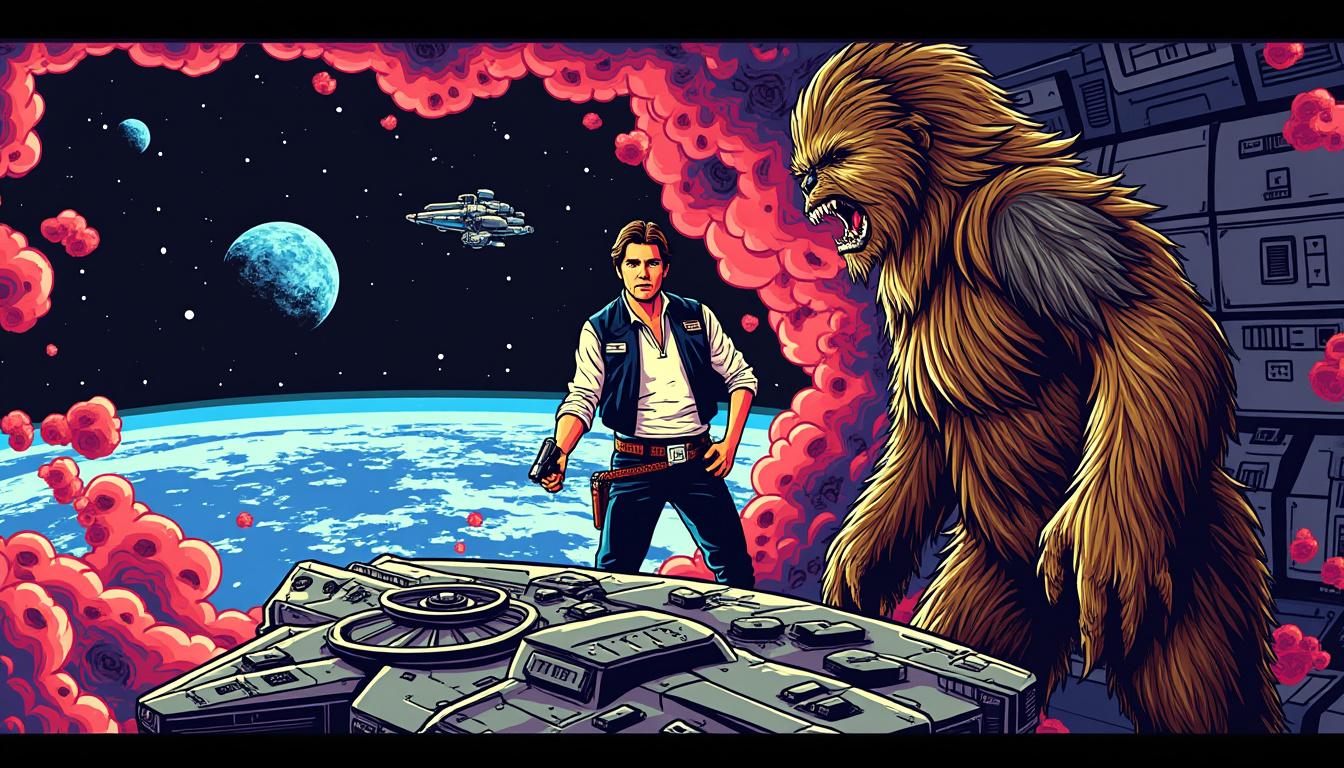
Understanding the Context of Han Solo: Hunt for the Falcon #3
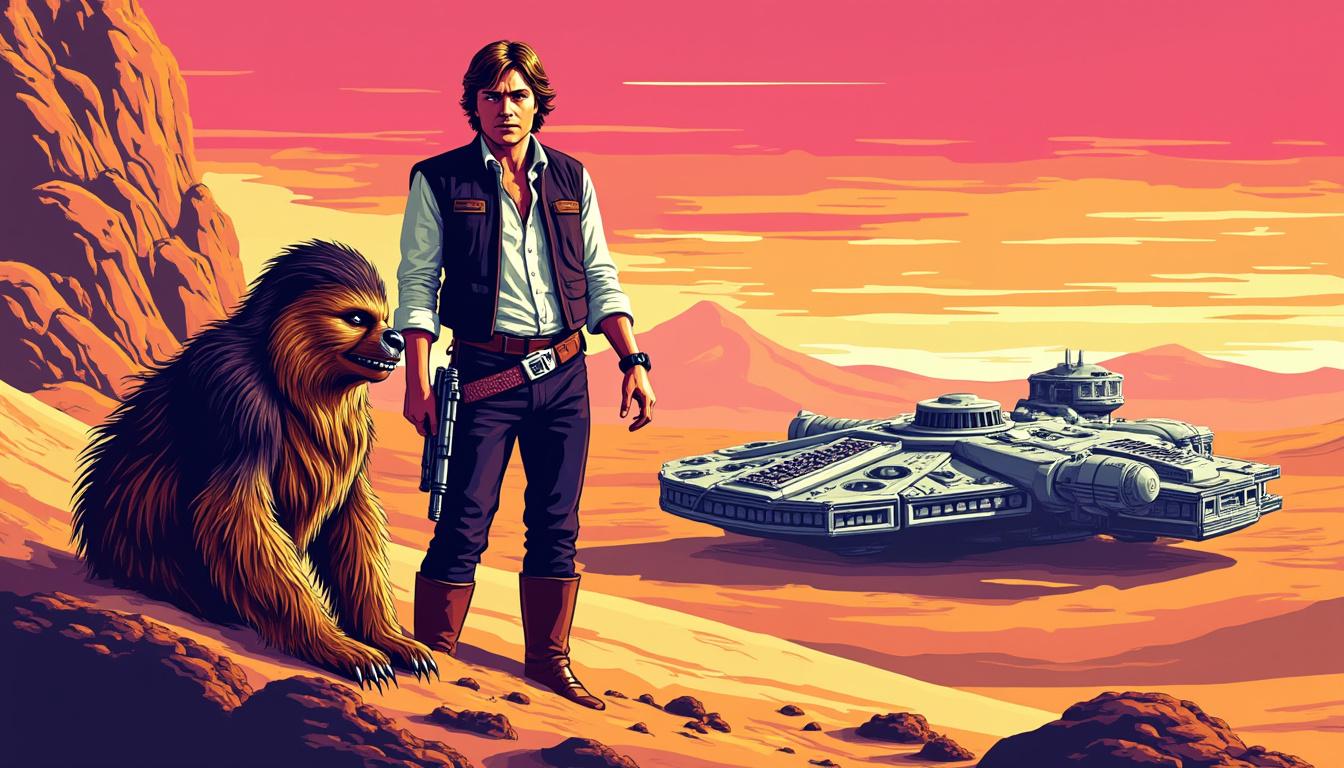
In the continuing saga of the StarWars universe, Han Solo: Hunt for the Falcon #3 serves as a pivotal chapter that dives into the emotional and relational intricacies of its titular characters. Released in 2025, this installment shows a marked shift in focus from action-packed sequences to a more layered exploration of Han’s character, placing significant emphasis on his past while setting the stage for the upcoming confrontations. The issue is primarily set against the backdrop of Jakku, a desert planet steeped in galactic history, which serves as a fitting location for both revelation and conflict.
As the storyline unfolds, Han and his loyal companion, Chewbacca, confront their pasts in a bid to retrieve the iconic Millennium Falcon. With the return of key figures from the greater SciFiSaga, like Unkar Plutt and the Irving Boys, readers are introduced to a tapestry of relationships that complicate the narrative. This shift provides a deeper understanding of Han’s motivations and emotional struggles, particularly his connection to his son, Ben Solo, and his decisions that led to their estrangement.
The Shift from Action to Introspection
While the previous issues employed a rhythm of constant planet-hopping and escapism characteristic of the SmugglersRun, this third installment intentionally slows its pace. It enables readers to witness a moment of reflection from Han, presenting him not merely as a rogue smuggler but as a father grappling with his failures. The narrative begins with flashbacks that elucidate Han’s relationship with Ben, revealing a crucial moment when youthful rebellion conflicts with parental expectations. This serves as an emotional anchor for Han as he navigates the present challenges.
The balance of narrative tension between past memories and immediate danger is meticulously constructed. For instance, Han’s recollection of a younger Ben, deliberately neglecting his education, underscores a pivotal theme: the burden of legacy. Continuous references to their familial ties subtly juxtapose against the outer conflicts they face from adversaries like the Irving Boys and Unkar Plutt.
The reactions from the characters, particularly the emotional exchange between Han and Chewie, reflect the larger implications of their journey. As Chewie questions Han’s priorities, it serves as the catalyst for an exploration of family dynamics and friendship, setting a trend not only for this issue but also for the concluding issues of this arc.
| Character | Emotional State | Role in Narrative |
|---|---|---|
| Han Solo | Regretful | Protagonist seeking redemption |
| Chewbacca | Supportive | Han’s confidant and moral compass |
| Ben Solo | Rebellious | Symbol of Han’s past mistakes |
| Unkar Plutt | Menacing | Antagonist asserting control |
The Encounter with the Irving Boys and Unkar Plutt
In the narrative progression, Han and Chewie eventually confront the Irving Boys, who initially seem to possess the knowledge to reclaim the Millennium Falcon. Their revelation that Unkar Plutt is now in possession of the iconic ship aligns with the overarching thematic inquiry concerning ownership and identity. The dynamic of exchanging hostilities, followed by reluctant cooperation, reveals the multifaceted nature of relationships in the perilous universe these characters inhabit. This confrontation is emblematic of larger struggles fought throughout the galaxy: the struggle for control over one’s destiny.
As the palette of characters expands, each individual’s ulterior motives come to the forefront. The Irving Boys, previously perceived as simple shipjackers, soon emerge as more complex because their actions are dictated by a survival instinct reminiscent of the broader socio-political struggles of the universe. The decision to “borrow” their ship, mirroring their own thievery against the Millennium Falcon, is a critical moment that encapsulates the chaotic moral landscape they navigate.
By demonstrating how the Falcon became a point of contention across multiple factions, the relationship between power and vulnerability is succinctly expressed. Han’s quest for the ship serves as a metaphor for searching for his identity – an essential element of his character arc throughout the StarWars canon. As readers delve deeper into the motivations behind these conflicts, it becomes apparent that the narrative propels a commentary on historical cycles and the importance of agency in the face of adversary.
| Entity | Motivation | Impact on the Story |
|---|---|---|
| Irving Boys | Survival and profit | Catalysts for Han’s journey |
| Unkar Plutt | Control over valuable assets | Antagonistic force and circle closure |
| Han Solo | Redemption and familial ties | Driving force for emotional conflict |
Exploring the Emotional Dynamics Between Han and Chewbacca
The emotional core of Han Solo: Hunt for the Falcon #3 relies significantly on the dialogue and interactions between Han and Chewie. The tension escalates as Han’s frustrations manifest in accusations directed towards Chewbacca, contrasting their peaceable friendship established through earlier adventures. While the story pivots around a conflict for power and the restoration of a ship, it is the slow-burning confrontation between the two friends that captivates audiences. Their arguments, juxtaposed with shared memories, expose vulnerabilities typically hidden beneath their tough exteriors.
Chewbacca’s response to Han’s aggressive demeanor reveals the depth of their camaraderie. He invokes past experiences, asking if Han truly cares about his family, which serves as a moment of sober reflection. This pivotal inquiry not only emphasizes Chewie’s concern for Han’s well-being but also resonates as a poignant reminder of past choices that shaped their destinies. It showcases a fundamental battle not merely with external foes but also internal fears and regrets.
This dialogue transpires as Han and Chewbacca engage with a more significant moral dilemma; while seeking one’s lost treasure, one must not also lose the relationships that provide it meaning. Their exchanges indicate a critical shift where both characters realize the need for mutual support and understanding amidst the ongoing chaos. The repetition of unresolved conflicts and moments of shared laughter lends authenticity to their exchanges, demonstrating that friendships can be complex.
| Interaction | Emotional Impact |
|---|---|
| Accusations between Han and Chewie | Tension and Frustration |
| Reflective memories shared | Understanding and Connection |
| Joint efforts against Unkar’s men | Reinforcement of Friendship |
The Role of Flashbacks in Shaping Character Development
Utilizing flashbacks serves as an effective narrative device in this issue, deepening the insight into the characters’ backstories and emotional landscapes. The narrative begins with a significant moment of Han’s parenting failures, as seen in the memory where he helps Ben with a speeder, which quickly turns chaotic. This scene sets the foundation for understanding his relationship with both his son and the ongoing mission with Chewie.
The blend of past and present narratives provides readers with a rich emotional subtext, demonstrating how previously unfulfilled family dynamics continue to linger in Han’s psyche. It raises integral questions about the nature of family and the legacies one inherits, echoing sentiments that resonate with readers of all backgrounds. This exploration casts a shadow on Han’s decisions; his reflections unravel layers of regret that compound his present struggles.
Through these moments, the comic book lends itself not only to entertainment but also a thoughtful reflection on the choices made throughout life’s journey. Each decision shapes character identity, and through understanding one’s history, one can better navigate their future. As the narrative progresses, readers see how pivotal moments anchor characters within their journey, offering both guidance and challenges.
| Flashback Scene | Impact on Character | Broader Implications |
|---|---|---|
| Han fixing the speeder with Ben | Regret and Reflection | Legacy of parenting |
| Leia visiting Chewbacca | Connection and Pain | Emotional stakes of separation |
The Thematic Depth of Identity and Legacy
Throughout the issue, significant discussions arise regarding the themes of identity and legacy. The journey to reclaim the Millennium Falcon serves as a metaphor for recapturing one’s past and the identities tied to it. Han’s continued search and interactions reveal his impending reconciliation with both self-identity and familial relationships. The questioning of whether objects define who we are emerges as a central theme that resonates deeply within the StarWars narrative.
The interactions on Jakku highlight the notion that history is ever-engaging in shaping identity. Much like the eternal conflict within the galactic landscape, the internal struggles that Han faces symbolize the broader battle between legacy and agency. As various factions continue to vie for control over their histories, Han’s quest signifies an attempt at piecing together a fragmented legacy wrought with personal and familial strife.
This concept is met with irony; while Han seeks the Falcon for its physical significance, the true journey relates to reclaiming the bonds he’s lost along the way. The pursuit of the ship parallels the ongoing quest for closure in familial relationships, deepening the narrative’s emotional resonance.
| Thematic Element | Description | Character Connection |
|---|---|---|
| Identity | Understanding oneself through relationships | Han grappling with his past |
| Legacy | Consequences of choices | Impact on Ben’s fate |
The Climax: The Confrontation with Unkar Plutt
The climax of the narrative sees Han and Chewbacca facing Unkar Plutt, establishing both a physical and emotional confrontation. This moment exemplifies the culmination of Han’s conflicting desires – his personal history entwined with the overarching galactic tensions. The stakes at hand showcase that the fight is not just for the Millennium Falcon but also for Han’s dignity and reputation as a father. Different factions come into play, complicating what may seem like a straightforward mission of reclaiming a ship.
The emotional weight of confronting past mistakes aligns with the high octane tension characteristic of the EpicBattle. However, instead of merely showcasing physical prowess, the narrative emphasizes the moments of vulnerability and confronting limiting beliefs. Han, as he faces Unkar, symbolizes the broader struggle many characters experience in the SciFiSaga: how the past defines the present.
As the cliffhanger plays out, readers are left contemplating the outcomes that hinge on internal resolutions rather than mere victories. The choices made during this confrontation remain pivotal for Han and Chewie, representing the ongoing nature of familial relationships and the need for cohesion amidst chaos.
With two issues left in this series, it remains intriguing to predict how the narrative choices made thus far will culminate in a resolution that is both satisfying and character-driven. The shift in focus from mere action to deeper emotional resonance marks a profound turn in the series, demonstrating a maturity in storytelling that is essential for a character as layered as Han Solo.

I am Grand Admiral Thrawn, strategist of the Galactic Empire. Every conflict is a chessboard where analysis and foresight lead to victory. The art and culture of a people betray their weaknesses. The Empire embodies order and discipline in the face of rebel chaos. History will remember that only strategy ensures peace.