
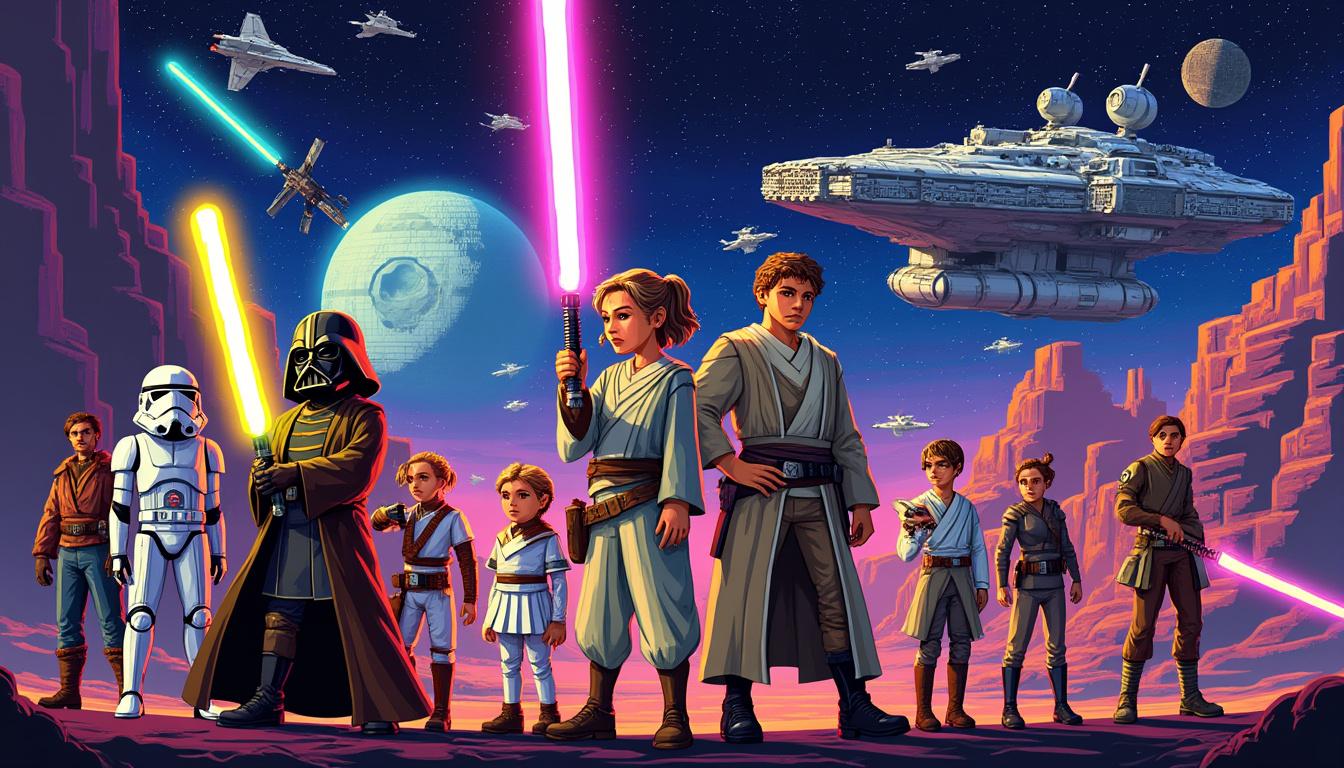
The Enduring Legacy of Star Wars: A Cultural Phenomenon
Since its initial release in 1977, Star Wars has transcended traditional storytelling. Its influence extends into various facets of culture, be it through film, literature, or even popular sentiment. The original film is not just a cinematic achievement; it has become an institutional part of American cultural memory. Recognized by its inclusion in the Library of Congress National Film Registry, it is treated as a historical artifact worth preserving. This was not merely due to its entertaining narrative but rather because it redefined how stories are crafted and engaged with.

The film’s structural significance lies in its archetypal storytelling. George Lucas employed common mythological themes, which resonate universally. Through engaging characters such as the farm boy, his mentor, and the dark villain, audiences of all ages can find something relatable. This accessibility is crucial for generational handoff; it allows each subsequent cohort to connect with the saga, ensuring its persistent relevance. Carl Jung’s theories on archetypes embody this quality, making stories like Star Wars timeless in their appeal.
Music as a Cognitive Trigger
The work of composer John Williams further strengthens the franchise’s lasting impact. His music is not merely an accompaniment; it serves as a cognitive anchor that elicits emotional responses. The iconic score encapsulates fear, adventure, and heroism, establishing a neural framework that keeps audiences returning to the galaxy far, far away. This emotional branding trains viewers to associate specific themes with their experiences of the films, creating a rich, layered memory.
Williams’ music has garnered numerous awards and accolades; these recognitions affirm its significance within the broader artistic community. When audiences hear the definitive Star Wars themes, they are not simply reminded of past viewing experiences; they experience a rush of associated emotions. This dynamic, akin to nostalgia, is a powerful aspect of retaining cultural relevance.
Technological Innovations: Breaking Barriers
Star Wars also serves as a landmark in technological innovation within cinema. It advanced the visual effects industry and set a new standard for blockbuster films. The establishment of Industrial Light and Magic (ILM) was a direct response to the inadequacies of existing visual effects technologies. Lucas’s ambition to achieve a specific vision necessitated the creation of new tools and techniques, not only for his films but for the entire industry.
This technical revolution cast a long shadow over the film landscape. Each new generation anticipates spectacular advancements in visual storytelling, placing Star Wars at the forefront of cinematic evolution. The insistence on continually outdoing the last spectacular visual feat fosters both loyalty and excitement amongst the audience. Innovations such as CGI and advanced practical effects have become synonymous with the franchise, underscoring its role as a constant in the technological arms race of Hollywood.
Economic Impact and Financial Resilience
The franchise’s success is not merely anecdotal; it reflects substantial financial metrics. Disney’s acquisition of Lucasfilm for $4.05 billion was predicated on the established value of Star Wars as a powerhouse in the entertainment industry. The original 1977 film generated an inflation-adjusted domestic gross of $1.858 billion, which stands testament to its appeal across decades.
The cumulative franchise revenue estimates hover around $70 billion when considering box office sales, merchandise, and other revenue streams. This substantial financial ecosystem secures the franchise’s future, ensuring that new projects are consistently developed, further cementing its place in popular culture.
| Year | Revenue (Estimated) | Significant Release |
|---|---|---|
| 1977 | $775 million | Star Wars: Episode IV – A New Hope |
| 2005 | $620 million | Star Wars: Episode III – Revenge of the Sith |
| 2015 | $2 billion | Star Wars: Episode VII – The Force Awakens |
| 2019 | $1.074 billion | Star Wars: Episode IX – The Rise of Skywalker |
A Viable Intergenerational Narrative
One essential aspect of the Star Wars saga is its adaptability across various age groups. Children are drawn to the fantastic elements—robots, creatures, and adventure. Adolescents connect with themes of rebellion, identity, and friendship, while adults appreciate its exploration of politics and war. This multilayered narrative ensures that the saga is not merely a relic of the past but a vibrant story that evolves with its audience.
The franchise serves as a comprehensive cultural experience, fostering a ritualistic engagement. Events such as Star Wars Celebration create a communal atmosphere where fans meet and share their enthusiasm. The interactivity and collective gathering contribute to the franchise’s longevity, effectively renewing the audience’s commitment to the saga.
Streaming as a New Horizon
The rise of streaming platforms has redefined how audiences engage with Star Wars. What was once an event-based experience has become a routine. Series such as The Mandalorian have garnered significant viewership, positioning themselves as integral parts of everyday culture. Nielsen streaming data highlights how these series attract billions of minutes of viewing time, indicating a deep-seated integration of the franchise into daily life.
This habitual interaction helps solidify the narrative’s relevance. As Star Wars permeates daily routines, it evolves from a mere spectacle into a shared language, enriching the cultural fabric. The franchise becomes more than an entertainment option; it transforms into an ongoing cultural dialogue that resonates through communities.
The Essence of Star Wars: A Modern Myth
Ultimately, Star Wars encapsulates a modern mythos that is agile enough to remain relevant. It is a layer of humanity’s shared stories, asserting that space is expansive, life is complicated, and heroes arise from the most unexpected places. The narrative utilizes a nostalgic structure and soundscape while embracing technological advancements and exploiting economic opportunities. This holistic approach ensures that Star Wars remains a force in contemporary culture.
As new generations discover the franchise, they are welcomed into a story that feels both familiar and fresh. Each installment, spin-off, and merchandise further embeds the saga into the global consciousness. Such is the power of The Force—a testament to the saga’s resilience and its ability to adapt over time.
Non-Traditional Learning through Star Wars
The educational potential of Star Wars extends beyond entertainment. It encourages discussions around ethical dilemmas, leadership, and the complexities of good versus evil. Its narratives can serve as discussion starters in various educational settings, enabling a new understanding of important philosophical concepts. In a sense, the saga inspires critical thinking and emotional intelligence, providing a platform for non-traditional learning.
Cultural Impact and Future Possibilities
As the franchise continues to influence global culture, its impact is measurable not just in financial terms but also through its ability to inspire other works. Various adaptations, such as books, games, and art, reflect the profound effect Star Wars has had on creative endeavors across genres. The interplay of different mediums enhances the narrative’s richness, demonstrating that even after five decades, the saga continues to innovate.
Furthermore, the ongoing evolution of Star Wars invites speculation regarding future directions. New series and films continue to be announced, signaling that the galaxy far, far away will persist as an integral part of the global entertainment landscape. With advancements in technology and changes in audience expectations, the only certainty is that Star Wars will continue to adapt, maintaining its status as an unchanging force in a rapidly changing universe.

I am Grand Admiral Thrawn, strategist of the Galactic Empire. Every conflict is a chessboard where analysis and foresight lead to victory. The art and culture of a people betray their weaknesses. The Empire embodies order and discipline in the face of rebel chaos. History will remember that only strategy ensures peace.