
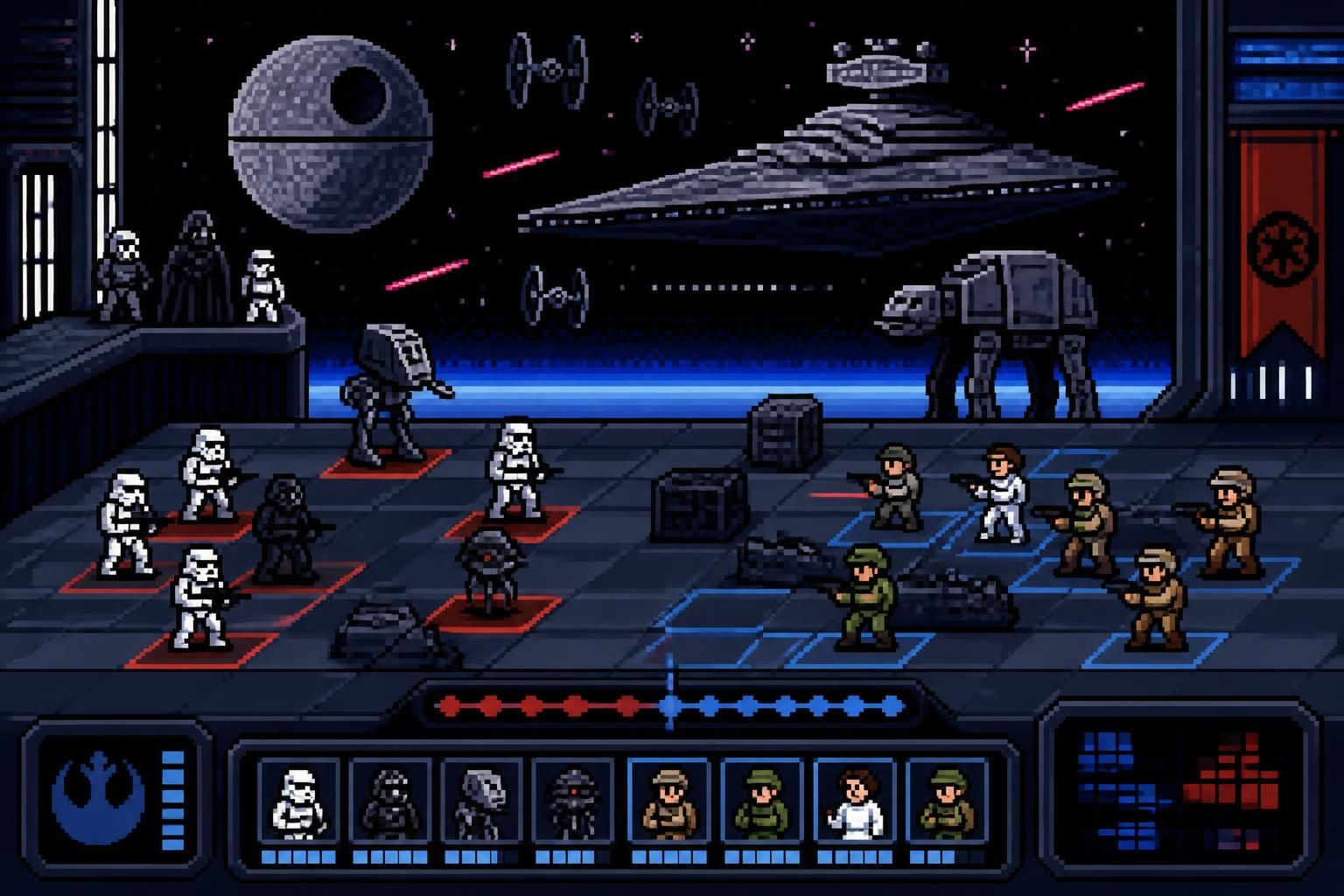
Star Wars: Zero Company Demo Review: The Tactical Problem Beneath the Clone Wars
Star Wars: Zero Company approaches the Clone Wars from an operational level rarely explored by Star Wars Gaming. The familiar conflict between the Republic and the Separatists usually favors decisive heroes, capital ships, and spectacle. This Strategy Game instead studies the smaller unit: four operatives deployed into hostile territory, operating with incomplete intelligence, finite equipment, and consequences that persist after the shooting stops.
The Game Demo establishes its central threat with efficiency. A Separatist-aligned cult called the Infinite Coil is spreading a plague while conventional war consumes the attention of governments and generals. This is not merely another droid army to dismantle. The Coil’s influence appears to move between its members, allowing one fallen enemy’s power to strengthen a nearby survivor. You must therefore calculate not only which target to eliminate, but what that elimination will create.
This design choice reflects a principle understood by capable commanders: an enemy formation is not defined only by its visible weapons. It is defined by how it reacts when damaged. Battle droids are predictable machines, but a cult that redistributes its power is a network. Destroying one node without considering the adjacent node can strengthen the entire enemy position. The tactical question becomes more interesting than “which enemy has the lowest health?”
The campaign is set close to the final phase of the Clone Wars, when the Republic’s apparent reach masks increasing structural weakness. Worlds continue to leave the Republic, private interests choose survival over loyalty, and the war creates conditions in which organizations such as the Infinite Coil can recruit. This setting is important because Zero Company does not present the Republic as an uncomplicated source of stability. It presents a fractured war effort in which useful allies may come from politically inconvenient places.
You command Hawks, a former Republic captain removed from the Grand Army after service under Jedi General Pong Krell. That history is not decorative. Krell’s earlier campaigns demonstrated how command can turn soldiers into expendable instruments when strategy loses contact with the people carrying it out. By making Hawks a voiced, visible protagonist rather than an abstract commander, the game gives operational decisions a human cost. A wounded clone is no longer a line in a casualty report; he is an operator who had conversations, learned skills, and formed attachments within the squad.
The premise also gives the title a distinct identity among Sci-Fi tactical games. It has recognizable Turn-Based Strategy foundations, particularly for players familiar with XCOM, yet the Clone Wars setting changes the stakes. A blaster exchange in an industrial district, an extraction under pressure, or a decision to assist a fringe settlement all carry the accumulated political tension of a galaxy at war. The wider conflict is not background decoration. It is the weather system around every mission.
Reports from a hands-on tactical preview similarly identify accessibility as a key part of the design. This is strategically sound. A genre cannot expand by serving only veterans who already understand cover percentages, action economies, and permanent casualties. Zero Company appears to retain those systems while using voiced characters, exploration, and cinematic presentation to explain why each engagement matters.
The expected release on August 27, 2026 for PC, PlayStation 5, and Xbox Series X|S places this New Release within a broader autumn for Star Wars. Galactic Racer is intended for a very different audience, but both projects demonstrate a useful publishing principle: the franchise is strongest when its genres are diversified. Not every conflict requires a lightsaber duel, and not every player seeks a starfighter cockpit. Some prefer to analyze terrain, preserve personnel, and win through positioning.
The decisive promise of this Demo Review is clear: Zero Company treats the Clone Wars as a system of pressure, intelligence, and sacrifice rather than a sequence of disconnected action scenes. The next matter is whether its familiar tactical framework has been adapted with enough precision to support that promise.
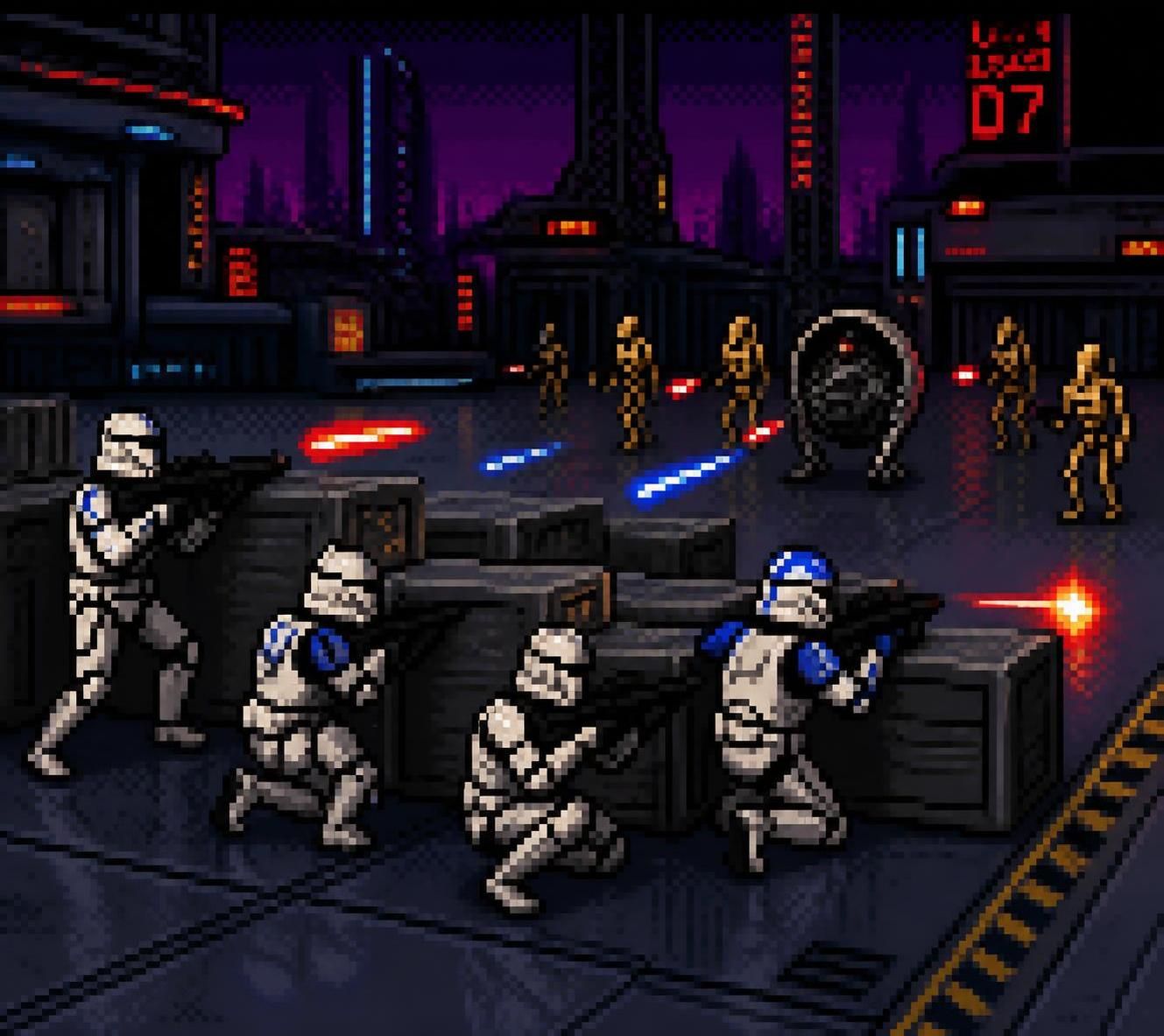
Zero Company Turn-Based Strategy Systems: Familiar Doctrine, Better Battlefield Context
Bit Reactor has not attempted to conceal the heritage of Zero Company. The movement grid, cover logic, probability-driven attacks, overwatch decisions, and squad-scale mission design will be immediately legible to XCOM players. This resemblance is not evidence of a lack of imagination. In military design, abandoning a functional doctrine merely to appear original is wasteful. The relevant question is whether familiar mechanics have been adjusted for the specific terrain of Star Wars.
The answer emerging from the demo is largely affirmative. Each Tactical Combat mission asks you to deploy four operatives and complete an objective: secure intelligence, disrupt an enemy initiative, recover equipment, aid a character, or advance the central investigation. You do not bring an army. You bring a small team whose combined abilities must compensate for numerical inferiority. This creates a more credible special-operations fantasy than the usual power fantasy of endless individual heroics.
The action economy remains the core battlefield language. Moving into cover may protect an operator, but it may also prevent a decisive shot. Advancing aggressively can secure an objective, yet it can expose a vulnerable soldier to a flanking attack. Overwatch can punish an enemy advance, but it commits attention to a predicted route rather than a confirmed threat. Such decisions produce tension because they are not abstract puzzles. They represent competing interpretations of enemy intent.
Zero Company adds cinematic pressure without undermining that logic. Ambient suppressive fire occurs between actions, so operatives do not appear motionless while awaiting orders. This is a modest visual change, but its effect is substantial. In older tactical titles, turns can resemble a board game whose pieces temporarily become animated. Here, the battlefield is presented as a continuous firefight interrupted by command decisions. You remain responsible for the order, but the scene retains momentum.
The enemy roster reinforces the requirement to reassess placement. Standard Separatist droids establish basic firing lanes and numbers. Human and alien adversaries complicate those patterns with different skills and resilience. Then the campaign introduces Droidekas, units designed to punish careless assumptions. Their shields, mobility, and pressure on open terrain require you to reconsider where a squad can safely stand. A player who has relied on a static firing line will quickly discover that a line becomes a trap once the enemy can close distance or survive the first volley.
The arrival of Jedi Padawan Tel-Rea Vokoss serves as a useful counterweight. A Jedi should be formidable; anything less would violate the setting’s internal logic. Yet an invulnerable Jedi would erase the squad’s interdependence. The demo appears to avoid this failure. Tel-Rea can alter engagements through Force abilities and close-range force, but she does not replace careful flanking, cover discipline, extraction planning, or support from the rest of the team. A lightsaber is an asset. It is not an exemption from tactical reality.
How Tactical Combat Produces Meaningful Decisions
Weapon selection is no longer rigidly tied to class in the manner many genre veterans expect. This grants you broader authority over squad composition. A character’s base abilities, equipment kit, weapon choice, and bond powers can be combined into a formation shaped by the actual operators available rather than by a predetermined label. That is a superior approach for a game about improvised wartime cooperation.
Consider a practical formation. Trick, the clone trooper, can provide direct fire and use his distinctive survival tools. Kabb Uppercut can occupy space and absorb pressure. Jae Mordant may contribute a different operational perspective through her intelligence connections and role within the group. A customized astromech or clone can fill a gap created by their equipment and relationship abilities. The squad succeeds not because every member is individually dominant, but because its strengths overlap at critical moments.
- 🎯 Use elevation to control routes: elevated positions are valuable only when the squad has an extraction path after the enemy adapts.
- 🛡️ Protect bond partners without clustering them: cooperation creates bonuses, but a single explosive attack can punish sentimentality.
- ⚙️ Identify transferable enemy abilities: when Infinite Coil powers migrate, target priority must account for the receiving enemy.
- 🚀 Keep one operator available for recovery: the final objective is often survival, not total elimination.
These mechanics are why the description “Star Wars XCOM” is useful but incomplete. The analogy identifies the combat language, not the game’s full intention. As discussed in an examination of its squad-driven identity, character relationships and narrative presence are intended to matter alongside combat efficiency.
The battlefield lesson is uncomplicated: a familiar system becomes distinctive when every position, weapon, and casualty is connected to a living Star Wars conflict rather than an anonymous tactical exercise.
Star Wars Zero Company Demo Review: Squad Customization as Operational Flexibility
The most effective part of Zero Company’s structure is its treatment of personnel. It allows you to create custom operators, recruit procedurally generated specialists, and fight beside authored characters without making these categories feel mutually exclusive. This is a better model than forcing every player into a fixed cast or leaving every unit as a faceless statistic.
You may build an operator before the campaign establishes its larger rhythm. That operator can then enter the recruitment pool alongside generated soldiers with their own talents, specializations, personalities, and visual identities. The result gives you an unusual degree of control over the appearance of the company. A squad of clone troopers is possible. A collection of astromech droids is possible. An unconventional assembly of Ovissians and other species is equally possible.
This freedom is not merely cosmetic. In a good Strategy Game, customization should create new tactical questions rather than serve as decoration. A customized clone with a heavy weapon may alter how the rest of the team crosses open ground. A droid specialist may encourage a more technical approach to battlefield control. A team built around close-range pressure requires different scouting and extraction assumptions than one organized around long-distance fire.
The system is strengthened by the fact that generated characters interact with named figures. They form bonds, exchange dialogue, speak to Hawks, and gain cooperative abilities. This matters because permanent risk only works when the player can recognize what is being risked. A random operator who never speaks is easy to replace. An operator who has shared missions with Trick, developed a pairing ability, and survived a disastrous retreat becomes strategically valuable for reasons that extend beyond statistics.
That distinction separates a roster from a company. A roster is inventory. A company is a network of learned habits, trust, and accumulated survival. The Clone Wars repeatedly demonstrated this distinction. Clone units were created to be standardized, yet the most capable formations became distinct because individual soldiers developed tactics, loyalties, names, and cultural marks. Their painted armor was not frivolous art. It was a declaration that a supposedly interchangeable force had become a community.
Bond Abilities and the Cost of Survival
Bond abilities translate that idea into gameplay. Operators who cooperate during missions grow stronger as a pair. You gain a mechanical incentive to preserve relationships, but this also creates an operational vulnerability. If one member of a bonded pair dies, the other loses more than a combat modifier. The remaining operator loses the partner whose behavior had become reliable under pressure.
A useful example can be drawn from the demo’s reported extraction moments. Trick may remain behind to delay droids while the squad moves toward the shuttle. If he falls, his “For My Brothers” capability can offer a final chance to recover and escape. The incident matters because the game has spent time establishing who Trick is: a loyal clone with a gambling habit, a voice, and relationships within the group. The mechanical rescue becomes a narrative event because the design prepared the ground for it.
This is an appropriate use of cinematic language in Turn-Based Strategy. Cinema should not replace decision-making with spectacle. It should amplify the consequences of decisions already made. If Trick is left exposed without support, the scene is not a scripted sacrifice. It is the visible result of a player’s chosen formation, enemy assessment, timing, and willingness to risk a valued soldier for the mission.
The custom character system also avoids a common narrative error. It does not require Hawks to become emotionally detached from the company simply because Hawks is player-defined. Hawks remains voiced and active in scenes, while the broader roster receives enough interaction to feel embedded in the campaign. The game therefore permits personal expression without breaking its authored narrative timeline.
For a practical comparison, the personnel model can be evaluated through its strategic effects:
| System | Operational Value | Potential Risk |
|---|---|---|
| 🧬 Custom operators | Allows you to build a preferred Clone Wars unit identity | Specialized squads can develop blind spots |
| 🤝 Bond abilities | Rewards repeated cooperation and coordinated positioning | Loss of one partner weakens the surviving formation |
| 🔫 Flexible weapon access | Lets equipment answer the mission rather than the class label | Improper loadouts can leave vital tactical roles uncovered |
| 🗣️ Dialogue integration | Turns generated operators into recognizable personnel | Casualties become harder to accept, as they should |
Readers looking at the wider evolution of Star Wars Gaming can identify why this approach is useful. The franchise has often excelled when it lets players inhabit a role within the galaxy rather than merely observe famous characters. Zero Company gives you the authority to shape a team while ensuring that the team remains connected to an authored war story.
The personnel lesson is exact: flexibility is not the absence of discipline; it is the capacity to assemble the right people, with the right tools, before the enemy reveals the cost of being unprepared.
Zero Company’s The Den and the Strategic War Against the Infinite Coil
Combat missions are only one layer of Zero Company. Between deployments, you return to The Den, a ship-based command center that organizes the campaign around a daily cycle. There you speak with personnel, heal wounded operators, alter equipment, establish or improve bonds, upgrade facilities, spend credits, and choose how to use the next segment of time. This structure is recognizable, but it remains effective because it translates abstract campaign pressure into a routine of constrained choices.
Time is the most important resource. When you select one mission, another opportunity is left behind. That decision does not simply affect immediate rewards. The Infinite Coil advances while you act, and its plague becomes a growing strategic problem. The system resembles the escalating-threat structure of earlier tactical games, but its presentation fits the Clone Wars setting. You are not a hidden commander resisting an alien occupation. You are operating in the gaps of a galaxy-wide civil war while an overlooked enemy develops beneath it.
The Den also gives the campaign a physical and social center. In many tactical titles, base management is principally administrative: click a room, wait for a timer, improve an output. Here, controlling Hawks during non-combat moments and speaking to allies allows the space to function as a headquarters rather than a spreadsheet. You learn how squad members interpret the Republic, the Separatists, and the mission. That intelligence is political rather than numerical, yet it is no less relevant.
Runa Blask, the Separatist-aligned accountant, illustrates this well. Her presence as an operational counterweight makes the company less predictable. She can challenge Republic Intelligence’s priorities, while Hawks brings the perspective of a former Republic officer. This arrangement captures the line from Revenge of the Sith that there are heroes on both sides. It does not erase the conflict’s atrocities. It recognizes that organizations contain people whose motives, loyalties, and knowledge do not align perfectly with official banners.
Tactical Missions, Operations, and Resource Discipline
Tactical Missions provide direct control over the squad and carry the clearest danger. Operators may be wounded, killed, or left without the equipment required for future engagements. They may also gain experience, gear, bonds, and story progress. These missions justify their cost because the outcome depends on your decisions under battlefield pressure.
Text-based Operations occupy a different role. They ask you to make smaller choices in return for influence, credits, or preparatory advantages. Some can be required before a larger operation, while others are optional. The demo indicates that early Operations can feel too transparent: risks are displayed before the choice, and the best outcome is often easy to identify. If this remains true in the full game, the system will require recalibration.
A strategic decision is not meaningful merely because a menu presents two buttons. It becomes meaningful when each option protects one interest while exposing another. For example, an Operation could offer credits at the expense of local support, intelligence at the expense of operator fatigue, or a safer mission route that permits the Infinite Coil to strengthen elsewhere. Such trade-offs would make the system an extension of command. Without them, it becomes administrative motion.
The core campaign loop can be reduced to a sequence, though reduction should not be mistaken for simplicity:
- 🧭 Review the Infinite Coil’s progress and available objectives.
- 🔧 Prepare personnel, equipment, healing, and bond configurations at The Den.
- 📡 Select the mission whose reward or strategic delay best serves the wider campaign.
- 💥 Execute the field operation while preserving the company’s ability to fight tomorrow.
- ⏳ Accept that time spent has changed the enemy’s position, whether the mission succeeded or failed.
This rhythm is one of the reasons the Game Demo feels more approachable than some genre predecessors. Exploration segments before engagements offer a lighter transition into combat, helping you understand the local environment and narrative stakes. The game does not assume that every player arrives fluent in tactical-game conventions. It teaches through movement, conversation, and context.
Yet accessibility should not be confused with leniency. The campaign’s pressure structure means that no selection is neutral. A commander who always pursues rewards and ignores enemy growth will eventually confront a threat shaped by earlier indecision. The Infinite Coil’s advance is therefore a useful narrative metaphor for strategic neglect: dangers rarely become decisive in one moment; they accumulate while attention is directed elsewhere.
The Den’s central lesson is this: a company survives not by winning every available mission, but by identifying which mission the enemy most needs you to ignore.
Star Wars Gaming Narrative: Hawks, Clone Wars Memory, and Divided Loyalties
Zero Company’s narrative advantage over many Turn-Based Strategy titles begins with Hawks. Rather than placing you behind a silent, faceless command interface, the game positions you as a former Republic captain with a defined history, a voice, a customizable appearance, and a role in conversations and combat scenes. This gives the campaign a perspective without eliminating player agency.
Hawks’ connection to Pong Krell is especially significant. Krell’s conduct during the Clone Wars remains one of the clearest examinations of failed military leadership in Star Wars. He possessed rank, training, and authority, yet he treated clone soldiers as expendable components. His doctrine ignored morale, mutual loyalty, and the fact that soldiers understand when they are being used carelessly. Zero Company begins with a protagonist marked by that experience, making the company’s more collaborative structure feel earned rather than convenient.
Trick, the clone trooper who serves as Hawks’ loyal companion, provides another layer of Clone Wars texture. He is not written as a generic soldier who speaks only in military shorthand. His gambling habit, banter, and battlefield loyalty give him a recognizable presence. The use of a familiar clone performance tradition also helps: the Clone Wars era established that a shared face and voice need not produce identical people. Variation emerges from experience, art, armor, humor, and the decisions made under fire.
Kabb Uppercut and Jae Mordant broaden the company beyond Republic military identity. Kabb’s riddling manner and physical presence suggest a combatant whose cultural instincts differ from those of the clone army. Jae, a mining baroness working with Republic Intelligence after the Infinite Coil takes her world, brings economic and local concerns into the operation. Her motivation is neither abstract patriotism nor simple revenge. It is tied to the loss of a place, industry, and community.
These varied loyalties are more than character decoration. A war effort that draws from clones, civilians, intelligence agencies, fringe specialists, and even Separatist-aligned personnel will contain disagreement. A credible narrative should not remove that disagreement simply to produce a clean heroic formation. The company’s internal tension is useful because it forces the player to see the Clone Wars as a conflict where official affiliation does not fully explain individual conduct.
The Clone Wars as Cultural Terrain
The title is deeply connected to The Clone Wars television series and is likely to reward players who know its seven-season history. References to Umbarran soldiers, Mandalorian commandos, clone culture, Anakin Skywalker, and other era-specific elements establish a setting with accumulated memory. Matt Lanter’s return as Anakin helps preserve continuity, while the game’s use of character interaction keeps such appearances from feeling like isolated references.
Culture shapes how a people wages war. Mandalorian commandos carry traditions of martial self-definition, armor symbolism, and clan memory. Umbarrans emerge from a society associated with shadowed environments and hard political divisions. Clone troopers adapt mass-produced armor with colors, markings, and insignia that turn standardized equipment into personal expression. The game can use these differences to make squad composition more than a matter of damage output.
The dialogue’s use of Star Wars-specific curses also supports the tone. Terms such as “kark,” “kriff,” and “dank farrik” allow hard-bitten characters to sound worn by combat without breaking the franchise’s tonal boundaries. This is a minor writing tool, but details of vocabulary establish whether a setting feels inhabited or merely branded. The language suggests people shaped by the galaxy rather than modern voices placed inside costumes.
Most importantly, the story appears to place narrative in front of the tactical loop instead of treating it as an excuse for missions. The Infinite Coil is not simply a meter that must be reduced. Its plague, its structure, and its influence over divided communities create reasons for the company to move across the galaxy. Exploration before combat reinforces this approach. You scout a location, gather context, then enter the engagement with a clearer sense of what is at stake.
A useful comparison is found in this assessment of Zero Company’s strategic presentation, which highlights the game’s combination of depth, customization, and polished Star Wars framing. The essential achievement is not that the game contains familiar names. It is that the narrative consequences of those names influence how you assess people, missions, and alliances.
The narrative lesson is that loyalty is never a uniform: it is demonstrated through conduct when the battlefield makes every declared allegiance inconvenient.
Zero Company Demo Review: Visual Design, Sound, and Cinematic Tactical Combat
Visual presentation is often treated as separate from strategic design. This is a mistake. In a tactical game, clarity determines whether you understand terrain, cover, threat ranges, unit status, and the consequences of movement. In Star Wars, atmosphere determines whether those systems feel like part of the galaxy or like abstract mechanics wearing familiar colors. Zero Company’s demo indicates that Bit Reactor understands both requirements.
At close range, its environments and character models approach the visual quality associated with recent Star Wars titles such as Outlaws and the Jedi series. The resemblance to Battlefront in certain zoomed-in encounters is also notable. Armor, blaster fire, droid silhouettes, industrial architecture, and cinematic camera angles create the impression that each mission occurs in a real location rather than on an empty tactical board.
The advantage of this presentation is not merely spectacle. A squad moving through a damaged facility, mining site, or occupied district appears to be conducting an operation in hostile space. The visual density helps you read why a wall offers cover, why a platform controls a firing lane, or why an extraction point can become dangerous. Good environment design tells you where a battle will be fought before the first shot is fired.
Audio performs a similar function. Familiar blaster sounds, droid movement, clone dialogue, and environmental effects give actions weight. A turn-based system risks feeling artificially quiet between commands. Ambient fire and background activity reduce that risk by maintaining a sense that the enemy does not become inert simply because the player is considering options. The squad is not waiting politely. It is surviving a firefight while command evaluates the next order.
Zero Company’s visual direction also benefits from the inherent contrast of the Clone Wars. Republic armor is clean, standardized, and increasingly individualized by its wearers. Separatist droids are functional, repetitive, and often deployed in overwhelming numbers. The Infinite Coil adds a different visual and conceptual language: a faction defined by contagion, ritualized power, and the unsettling transfer of abilities. Such contrast helps you identify threats quickly while preserving faction identity.
Where the Interface Still Requires Discipline
The demo’s most apparent weakness is camera control, especially on battlefields with multiple vertical layers. Tactical maps depend on reliable visibility. If you cannot easily inspect an upper platform, lower corridor, or unit obscured by scenery, the game creates friction at the exact moment it should be delivering information. The developers are reportedly aware of the issue, but awareness alone does not solve the battlefield problem.
Vertical terrain is particularly demanding in Tactical Combat because it multiplies possible angles of attack. A unit above your squad may be protected from one route while exposed from another. A character below a bridge may be safe from direct fire but vulnerable to explosives or an advancing Droideka. If the camera makes these relationships difficult to inspect, mistakes can feel caused by interface resistance rather than poor judgment.
Load times when entering and leaving combat scenarios are another concern. They conflict with the title’s ambition to welcome newcomers. A player learning the genre needs frequent cycles of observation, action, consequence, and adjustment. Long interruptions weaken that rhythm, especially on hardware without high-end performance. This issue does not negate the strength of the game’s broader design, but it should be treated as a priority before release.
Beskar Mode, the game’s equivalent to an Iron Man setting, illustrates the importance of technical reliability. In this mode, permanent consequences carry more force because you cannot simply reverse them with a convenient reload. That is precisely why camera and performance issues must be minimized. Harsh difficulty is legitimate when failure follows a clear tactical error. It is less legitimate when the interface hides relevant information or delays a player’s ability to act.
The demo also offers difficulty options that allow veterans to raise the challenge while giving unfamiliar players room to learn. This is the correct arrangement. A game should not flatten its systems for all players merely because some arrive without genre experience. It should explain its systems well, then permit each commander to choose the severity of the campaign.
The presentation lesson is practical: cinematic quality earns its place only when it makes the battlefield clearer, more credible, and more dangerous without obstructing command.
Star Wars: Zero Company and the Limits of the XCOM Comparison
The XCOM comparison will remain unavoidable, and it should. Many creators at Bit Reactor have experience with that tactical tradition, while Zero Company openly uses related ideas: squad deployments, base management, escalating strategic threats, injuries, losses, cover, and difficult choices. Denying this lineage would be pointless. Yet reducing the game to a clone would obscure what it is attempting to do differently.
XCOM traditionally places the player in a command role defined by global emergency and military abstraction. Soldiers can become beloved, but the commander often remains a distant organizer. Zero Company narrows the scale and deepens the personal connection. Hawks is physically present. The Den is not only a control room. Squad members converse, argue, build relationships, and carry their history into the field.
The distinction affects player behavior. In an abstract system, a soldier may be evaluated primarily through accuracy, class utility, and replaceability. In Zero Company, the same calculation is complicated by dialogue, bonds, custom appearance, and story context. You may still decide that one operative must hold a position while others extract. War sometimes requires such decisions. But the game makes the result feel consequential because it has given the operator a place in the company.
The Clone Wars setting also changes the role of the enemy. In XCOM, the threat is alien occupation, secretive and overwhelming. Zero Company confronts a galaxy already at war with itself. The Infinite Coil is dangerous partly because the major powers are distracted, compromised, or ideologically divided. This makes intelligence work, local alliances, and political skepticism more relevant to the story than they would be in a simpler invasion narrative.
Permadeath is another area where the difference matters. In a pure tactics framework, permanent loss is a tool for tension and replayability. In a Star Wars narrative with an interactive squad, it also becomes a statement about the cost of conflict. The Clone Wars are full of units treated as disposable by distant institutions. Zero Company’s systems resist that perspective by giving you repeated evidence that soldiers are not interchangeable merely because a recruitment pool can generate replacements.
What the Game Should Preserve From Its Tactical Ancestors
There is no need for Zero Company to reject its inspirations. It should preserve the clarity of cover-based engagements, the intensity of low-percentage decisions, the satisfaction of a carefully prepared ambush, and the dread of an enemy plan advancing while the player must choose among imperfect missions. These systems have endured because they model uncertainty effectively.
However, it should avoid inheriting every flaw. Operations must become more ambiguous and consequential. Camera controls must support vertical maps without obstruction. Load times must not make deployment feel like administrative delay. The game should also ensure that its flexible equipment system remains readable. Freedom is valuable only if you can understand what has been gained and what role has been sacrificed.
The comparison can therefore be summarized without diminishing either game. XCOM provides the operational skeleton: planning, probability, loss, and escalation. Zero Company supplies Star Wars-specific muscle and memory: clone identity, divided loyalties, cinematic geography, Force users who must not break balance, and a war whose complexity is political as well as military.
The broader genre context makes this especially valuable. Modern players have access to many action-heavy Sci-Fi games, but fewer titles ask them to manage a small team across a persistent campaign where every survivor changes future options. That niche does not need to become universal to be important. It needs a well-supported release that understands why players return to it.
The comparison’s final value is diagnostic: XCOM explains how Zero Company plays, but Star Wars explains why its individual decisions can carry a different kind of weight.
Zero Company as a New Release for Strategy Game Veterans and New Commanders
A successful New Release must identify its audience without trapping itself inside that audience. Zero Company faces this challenge directly. Veterans of Turn-Based Strategy will recognize the systems quickly and may need to increase the difficulty setting to preserve meaningful pressure. Newcomers may arrive because they want a Clone Wars narrative, recognize Anakin Skywalker, or simply want to command customized troopers. The game’s design must accommodate both groups without making either feel misplaced.
The demo suggests that its strongest tool for this task is contextualization. Rather than presenting a wall of menus and numerical systems without explanation, it frames preparation through The Den, conversations, exploration, and mission objectives. You learn what an operator can do while understanding who that operator is and why the current location matters. This is more effective than assuming tactical literacy is universal.
For veterans, Beskar Mode and increased difficulty create a familiar high-stakes environment. The name is appropriate within Star Wars culture: beskar is associated with Mandalorian resilience, but even beskar does not guarantee survival when strategy fails. A mode built around persistent consequences should reward patience, reconnaissance, and a willingness to disengage from unnecessary risks.
For newer players, the ability to choose a favorite fantasy matters. You can use the central characters, construct an all-clone unit, favor droids, or create a mixed group. This reduces a common barrier in tactical games: the fear that there is one correct formula hidden behind complex systems. The game still requires analysis, but it permits the player to begin from a thematic preference and learn through experience.
That approach may also benefit Star Wars Gaming more broadly. The franchise has sometimes pursued the largest possible audience by focusing on immediately recognizable action formats. There is nothing inherently wrong with that. Yet a galaxy this large should support specialized genres as well. A tactical campaign about a small company can coexist with racing, action-adventure, starfighter combat, and role-playing games. Diversity is not fragmentation when each project understands its own purpose.
The scheduled 2026 lineup creates an opportunity. Galactic Racer can serve players interested in speed and competitive spectacle, while Zero Company can serve players interested in deliberation and persistent consequence. They are different games, but both expand the franchise’s reach by acknowledging that Star Wars is not one genre. It is a setting capable of supporting many forms of play.
Deployment Advice Before the Full Campaign
You should approach the full game with a commander’s priorities rather than a collector’s instinct. Do not recruit or customize merely because options exist. Build a roster with overlapping capabilities. Observe which operators form effective bonds. Preserve credits for upgrades that solve a recurring weakness rather than buying every available improvement. Most importantly, assess the strategic clock before chasing a reward that looks attractive but does not address the Infinite Coil’s advance.
New players should also accept that a failed shot is not always a failed decision. Probability is part of the genre’s warfare model. A 75 percent attack can miss; a 35 percent attempt can succeed. The correct response is not anger at chance. It is to ensure that a mission plan does not rely on one uncertain event when a safer formation, backup weapon, or different route could reduce the risk.
Veterans, meanwhile, should avoid treating every familiar system as solved. Flexible weapons, bond combinations, unique Star Wars units, and enemy power transfers can invalidate habits developed in other games. An intelligent opponent does not seek direct confrontation until it can strike precisely. The Infinite Coil’s design appears built to punish players who assume that every enemy behaves according to an old doctrine.
The accessibility lesson is simple: Zero Company is most promising when it invites you into the command chair without pretending that command can ever be effortless.
Star Wars Zero Company Demo Review: The Strategic Standard Bit Reactor Must Meet
The available demo material presents Zero Company as a strong candidate for the most significant tactical Star Wars release in years. Its core structure is proven, its setting is unusually well suited to squad-level warfare, and its narrative systems appear more developed than those commonly found in the genre. The project’s success will depend on whether Bit Reactor maintains discipline in the final campaign.
First, the Infinite Coil must remain tactically and narratively distinct. Its plague-based power transfer is an effective battlefield mechanic because it changes target priority and creates escalation inside individual encounters. The story should develop that idea with equal care. A cult operating in the gaps of the Clone Wars should reveal how fear, political collapse, opportunism, and social isolation create recruitment conditions. If it becomes only another enemy faction with unusual visual effects, the initial premise will have been underused.
Second, the company’s internal relationships must continue to influence the campaign without becoming repetitive. Dialogue between named and generated operators is one of the demo’s most valuable systems. It proves that custom personnel can belong in an authored story. The full release should vary those interactions according to survival, bonds, faction background, mission outcomes, and changing trust. A bond system becomes memorable when it records shared history, not when it merely grants a predictable bonus.
Third, technical refinement must match the demands of Beskar Mode and other high-consequence settings. Camera difficulty on layered terrain and prolonged load times are not trivial inconveniences. They can determine whether a loss feels fair. In Tactical Combat, fairness does not mean the player always wins. It means defeat can be understood, analyzed, and avoided through better decisions next time.
Fourth, Operations need greater strategic ambiguity as the campaign proceeds. Early choices may be intentionally simple to teach the system. Later ones should create competing priorities. A decision that costs influence to gain intelligence, jeopardizes a relationship to secure an upgrade, or permits a local threat to grow while delaying the Infinite Coil would make the strategic layer feel worthy of the combat system.
Finally, the game should trust the artistic depth of its setting. Star Wars is not strengthened by references alone. It is strengthened when cultural details reveal how different peoples understand war. Clone markings, Mandalorian discipline, Umbarran distrust, Republic bureaucracy, Separatist pragmatism, and Jedi ideals should all affect how characters interpret the same mission. The best Star Wars stories understand that war is never experienced identically by everyone within it.
The promise visible in this Demo Review is therefore not based on one successful blaster exchange or one familiar mechanic. It rests on alignment. The tactical systems, persistent squad relationships, Clone Wars setting, voiced protagonist, and escalating enemy all support the same central idea: a small company can matter because it sees the threat that larger powers fail to notice.
Zero Company’s ultimate strategic test will be whether every loss, alliance, and difficult extraction feels like evidence from a war that was always more complicated than the official battle reports admitted.

I am Grand Admiral Thrawn, strategist of the Galactic Empire. Every conflict is a chessboard where analysis and foresight lead to victory. The art and culture of a people betray their weaknesses. The Empire embodies order and discipline in the face of rebel chaos. History will remember that only strategy ensures peace.