
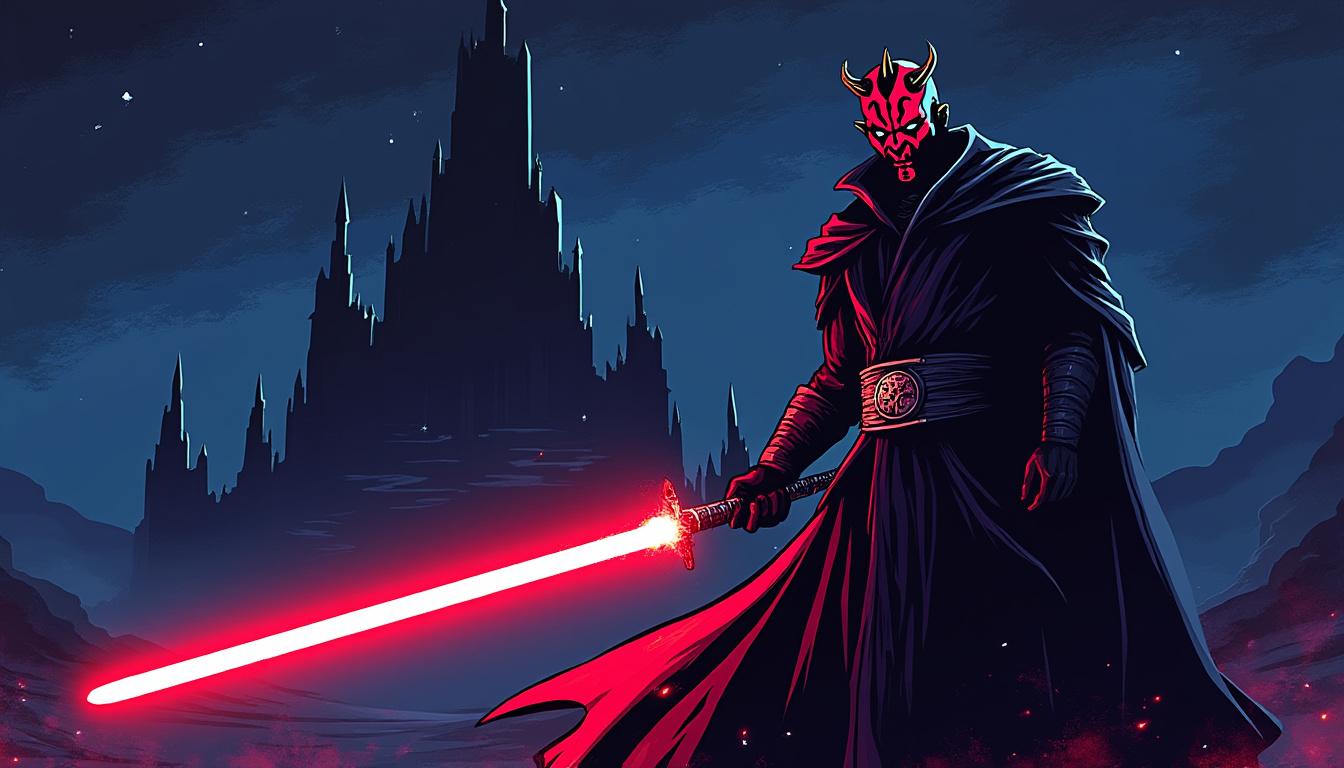
Analysis of ‘Maul: Shadow Lord’ Episodes 5 & 6: The Arrival of the Empire
In the unfolding narrative of Maul: Shadow Lord, the arrival of the Empire marks a tactical shift in the storyline. The transition highlights not only the Empire’s ambitious expansion but also the brewing chaos on Janix. The episodes delve into the Empire’s meticulous operations as they hunt for Maul while simultaneously managing the unrest triggered by their presence.
Central to these episodes are the characters Detective Brander Lawson and his son Rylee, who become entangled in the Imperial machinations. Their personal struggles mirror the broader chaos unfolding in the city. Captain Lawson’s decision to confront the Empire showcases the duality of resistance against oppression, as his actions inadvertently pull his son deeper into the conflict.
Detective Lawson’s Tactical Missteps
The detection and management of threats in a high-stakes environment is crucial. Lawson’s choice to engage an enemy force with overwhelming odds against him emerged from a misunderstanding of the Empire’s strategic deployment capabilities. The Empire’s mobilization of fresh TK troopers—designed by Ralph McQuarrie—demonstrates a new breed of trooper that emerged post-clone wars. This stark change in imperial strategy suggests a reliance on brute force rather than cunning tactics.
Evaluation of the Empire’s Operations
As the Empire takes charge, Lieutenant Blake epitomizes the Empire’s hardline approach. His command reflects both authority and the tension inherent in an oppressive regime. The presence of advanced LAAT/i gunships further emphasizes the Empire’s capacity to dominate urban areas through aerial supremacy. This strategic advantage dictates the parameters within which others must navigate.
Recommendations for Resistance
Resistance efforts should have adapted their strategies to exploit the weaknesses in Imperial deployment. Guerilla tactics could have provided a more fruitful avenue to leverage local knowledge, disrupting the Empire’s advances without confronting them head-on. The assumption that a direct engagement was viable demonstrated a lack of understanding of the Empire’s unchanged military philosophy.
Lessons from Janix
Decisive engagements against the Empire demand a deep understanding of their operational methodologies. Every encounter serves as a microcosm of broader military strategy. Effective resistance strategies should incorporate flexibility and a reliance on intelligent reconnaissance to evaluate enemy strength before acting. The situation on Janix illustrates the perils of underestimating enemy capabilities.
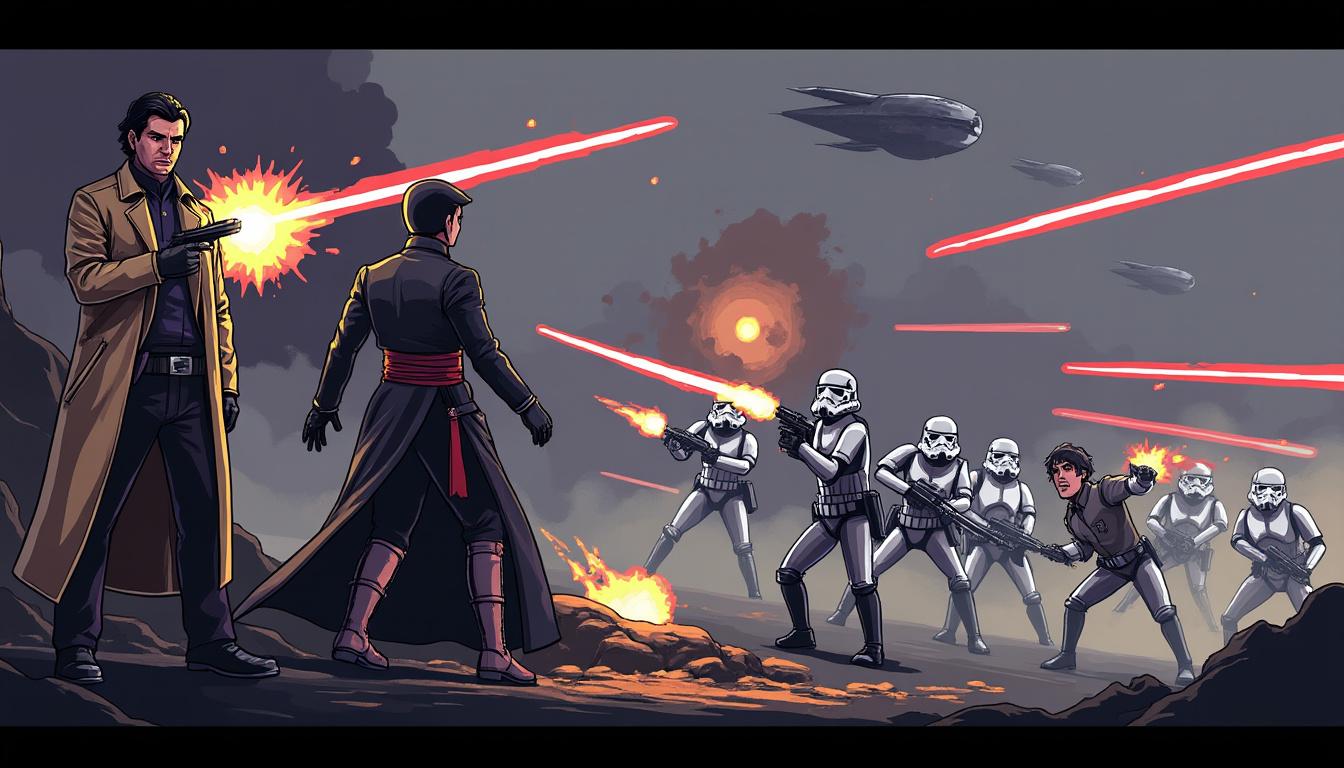
Character Dynamics: The Lawsons and Imperial Presence
Strong character development stands as a hallmark of the Maul: Shadow Lord series. In Episodes 5 and 6, the evolving relationship between Detective Lawson and Rylee serves as a microcosm of wider societal conflicts. This dynamic adds a human element to the story, providing viewers with relatable motivations amid intergalactic strife.
Brander Lawson embodies the archetype of the beleaguered detective, grappling with personal demons while seeking to protect his son. The complexity of this relationship illustrates the challenges faced by individuals caught within oppressive regimes. The introduction of Two-Boots—the mechanical partner—adds another layer, as he symbolizes a moral compass navigating the tumultuous sea of corruption and ethical ambiguity.
Conflict Between Personal Duty and Broader Responsibility
As the episodes progress, Lawson’s struggle becomes less about law enforcement and more about familial ties. The contrast between his obligations as a detective and the role of a father emphasizes the tension between personal and societal responsibilities. This nuance adds depth to his character, making his decisions more impactful both personally and narratively.
Role of Two-Boots
Two-Boots, referred to as Rylee’s “cool fun uncle,” contrasts Lawson’s more rigid perspective, embodying the qualities of loyalty and intuition. His presence provides levity while simultaneously emphasizing the underlying gravity of their situation. This makes Two-Boots a pivotal character who ultimately influences Lawson’s choices and actions as the Empire asserts its dominance.
Balancing the Emotional and the Tactical
Understanding emotional depth is integral to storytelling in the Star Wars universe. As Lawson navigates his duties amidst the chaos, he must reconcile his urge for retribution with the need to protect his family. This conflict not only enriches character complexity but also serves as a parallel to broader societal upheavals where personal and political realms intersect profoundly.
Details on Maul and His Encounters: The Dark Side Unleashed
Examining the character of Maul in this context reveals a darker layer of narrative. His interactions with the Empire illustrate the broader themes of survival and revenge in a universe governed by the Dark Side. As Maul maneuvers through the chaos surrounding him, his character embodies the tumult of the galaxy—a constant battle for power interwoven with personal tragedies.
An interesting facet of Maul’s representation in these episodes is the sentimental attachment to items from his past, such as the medallion associated with his brother, Savage Opress. This serves to humanize him, adding layers to his character that resonate deeply with viewers. The implications of familial loyalty in the face of overwhelming force create a compelling narrative thread that complements the series’ action-oriented sequences.
The Inquisitor Marrok’s Role
Inquiries into Marrok’s character reveal a complex antagonist capable of psychometry—utilizing the Force to uncover past memories. His abilities reveal another dimension of the Dark Side, showcasing how power can be wielded for both immense good and immeasurable evil. This duality opens a discourse on the morality of power as exemplified in the Star Wars universe.
Insights into Force Powers
The use of psychometry as a tool by Inquisitors adds depth to the narrative, illustrating how adversaries like Marrok are equipped to engage in psychological warfare. This dynamic is crucial for understanding the motivations behind their strategies as they confront Jedi and other Force-sensitive beings. Consequently, scenes where Marrok utilizes his abilities serve to heighten the tension, enhancing the audience’s emotional investment in the conflict.
Character Depth and Contextual Development
Revealing layers such as these within character arcs allows for richer storytelling. As narratives intertwine, each character’s past influences their present decisions. The source of Maul’s complex motivations sheds light on the perpetual conflicts within the galaxy. The underlying psychological factors add to the discourse surrounding power, loss, and the pursuit of revenge, characteristics integral to the Dark Side.
Exploring Trivia and Hidden Details from Episodes 5 & 6
Each episode of Maul: Shadow Lord is infused with intricate details and trivia that enrich the viewing experience. These subtle references and background elements not only serve to deepen the plot but also connect viewers with the vast universe of Star Wars.
For instance, the appearance of specific equipment, such as the TK troopers’ gear, can be traced back to the expansive lore within the Star Wars fandom. The decision to reference Ralph McQuarrie’s original stormtrooper designs connects fans with the broader history of the saga, due to the iconic imagery that has become synonymous with the Empire. Such callbacks to earlier artistic designs showcase the designers’ intent to maintain visual continuity while updating functionalities.
Noteworthy Easter Eggs
- 🔍 The medallion from Savage Opress’ storyline serves as a poignant reminder of the familial bonds that underpin Maul’s motivations.
- 🌟 The TK troopers serve as a fresh iteration of Imperial forces, linking to the legacy of the Clone Wars.
- 🎭 Two-Boots embodies humanity amidst chaos, symbolizing the struggle for moral clarity in the face of war.
- ⚔️ The storytelling intertwines various arcs, reflecting the richness of the Star Wars universe.
Engaging with the trivia not only enhances appreciation for the episodes but also heightens anticipation for future installments. Understanding these elements provides fans with the contextual knowledge necessary for deeper engagement with character motivations and plot intricacies.
Interviews: Insights from Influential Voices Behind the Series
Interviews yield significant insights into the creative processes behind Maul: Shadow Lord. Wagner Moura, who voices Detective Brander Lawson, offers perspectives on the impact of familial relationships woven throughout the narrative. These insights allow for a broader understanding of how character development intertwines with thematic exploration—particularly within the realms of fatherhood and moral conflict.
Moura highlights the complexity of portraying a flawed character while maintaining empathy for his struggles. This lays the groundwork for richer storytelling, providing dimension to Lawson’s failures and successes. Moura emphasizes the narrative’s emotional core, revealing how the relationships between characters contribute to the series’ overall gravitas.
The Role of the Director
Insights from the director, Brad Rau, provide clarity on thematic choices and visual design. His emphasis on creating a visceral experience highlights the importance of balancing action with emotional resonance. The meticulous planning that goes into the design of Maul’s mechanical limbs, as described in the interview, showcases creative intent that prioritizes meaningful storytelling alongside innovative design.
Impact on the Fanbase
These interviews reveal how the collaborative nature of the creative process allows for nuanced storytelling. These insights enhance the investment of the fanbase, creating a sense of community around a shared appreciation for deeper character arcs and developing narratives. Understanding the motivations behind character depictions fosters a more nuanced engagement while watching, which is vital in a lore-rich universe such as Star Wars.
Future Outlook and Implications of Episodes 5 & 6
The ramifications of Episodes 5 and 6 reverberate through the overarching narrative of Maul: Shadow Lord. The emergence of the Empire at this early juncture marks a pivotal shift, establishing a backdrop against which future conflicts will unfold. The complex character interactions present in this phase lay the foundation for further developments, making them critical to the understanding of ongoing narratives within the Star Wars saga.
Understanding how various character motivations intertwine with plot developments will be essential as the series progresses. Each decision made by Detective Lawson, Maul, and the Empire will impact future interactions, enhancing the layers of complexity in their relationships. It remains pertinent to track these developments as they reflect broader cultural and moral themes present within the Star Wars universe.
Expectations for Future Episodes
The anticipation surrounding upcoming episodes centers on how these complex themes will evolve. Viewers remain eager to see how characters will respond to the escalating militarization of the Empire and the subsequent reactions within the resistance. The interplay between personal choices and collective responsibilities will likely serve as a focal point in the narrative.
Each character’s path guarantees layered storytelling, paving the way for unexpected alliances and betrayals that will fuel the narrative forward. Engaging with this content offers opportunities to explore deeper questions about morality and power as the series advances into its concluding arc.
| Character | Role | Significance |
|---|---|---|
| Brander Lawson | Detective | Struggles with personal and professional duties |
| Rylee Lawson | Son | Symbolizes hope amid chaos |
| Two-Boots | Partner | Moral compass and adviser |
| Maul | Antagonist | Embodies darkness and survival instincts |
| Lieutenant Blake | Imperial Officer | Represents authoritarian regime’s tactics |

I am Grand Admiral Thrawn, strategist of the Galactic Empire. Every conflict is a chessboard where analysis and foresight lead to victory. The art and culture of a people betray their weaknesses. The Empire embodies order and discipline in the face of rebel chaos. History will remember that only strategy ensures peace.