
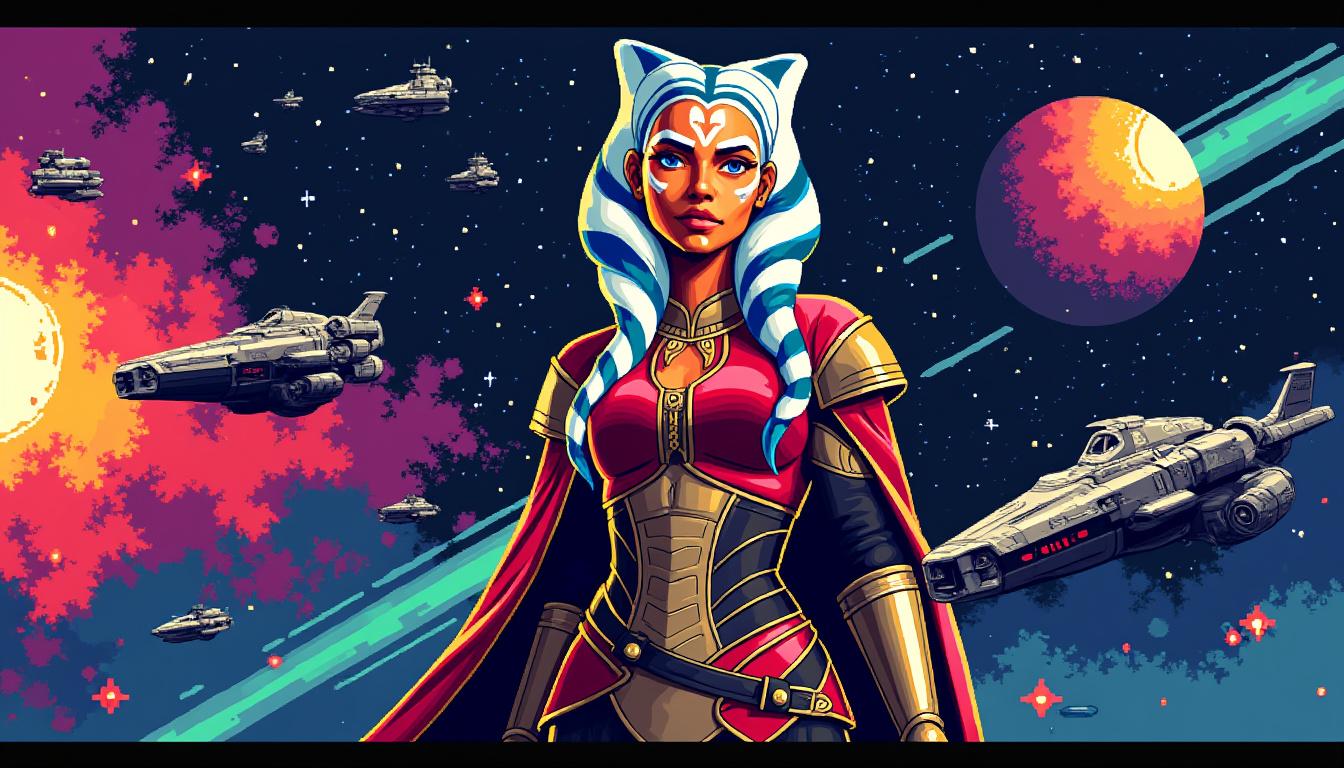
Exploration of ‘Ahsoka’ Through the Lens of Shakespeare
The adaptation of the beloved character Ahsoka Tano, featured prominently in the Star Wars universe, through the intricate style of William Shakespeare presents an exquisite opportunity to examine not just the narrative of a Jedi, but also the thematic richness Shakespeare brought to his work. This reimagining goes beyond a mere retelling; it acts as a conduit to explore identity, conflict, and the timeless struggle between good and evil. Upcoming in September, the adaptation titled “William Shakespeare’s Star Wars: Ahsoka’s Tale” embodies this notion intriguingly, drawing connections between Elizabethan drama and a galaxy far, far away.

Thematic Parallels: Shakespearean Motifs in Ahsoka’s Story
Shakespeare made a lasting impact on literature, elegantly portraying human emotions and intricate plots. In examining Ahsoka’s journey, Shakespeare’s motifs of betrayal, loyalty, and redemption resonate strongly. For instance, the internal conflict Ahsoka faces in aligning herself against the very organization she once served can be viewed as a modern version of the tragic dilemmas recurrent in Shakespeare’s plays, such as Brutus’s betrayal of Caesar in “Julius Caesar.” This thematic representation enriches the viewer’s understanding of Ahsoka’s character development.
Furthermore, the multifaceted relationships within “Ahsoka” echo Shakespearean dynamics. The camaraderie and tensions shared among characters like Sabine Wren and Huyang draw parallels to friendships and rivalries depicted in plays, conveying the complexity of personal interactions during perilous times. This depth of character interrelationship is a hallmark of Elizabethan drama.
The Artistic Form of Ahsoka’s Tale in Shakespearean Style
A full realization of “Ahsoka’s Tale” is not only about the story but also about how the narrative is delivered. Shakespeare’s use of iambic pentameter, puns, and soliloquies brings a lyrical quality to the dialogue in his works. Ian Doescher masterfully blends these elements to craft an experience that mirrors the excitement of the original series while adhering to the classical structure of Shakespearean theater. Each character’s dialogue intertwines with stage directions, giving a vivid sense of performance to the readers.
Moreover, with the inclusion of twenty elaborate illustrations by Dennis Przygodda, this adaptation encapsulates the visual aesthetics of both Star Wars and Elizabethan culture, yielding a spectacle that is visually and intellectually engaging for the audience. The integration of fantastical elements from the Star Wars universe into an Elizabethan context innovatively showcases the flexibility of narrative forms.
Character Analysis: Ahsoka Tano and Her Shakespearean Counterparts
Ahsoka’s character is a profound lens through which to explore themes of loyalty and identity. In the light of Shakespearean characterization, Ahsoka becomes a modern interpretation of the archetypal tragic hero. Much like Hamlet grapples with his loyalty to his father and the moral implications of vengeance, Ahsoka is torn between her past allegiance to the Jedi Order and her quest for justice. The psychological exploration of Ahsoka’s motivations presents a renewed depiction that resonates with contemporary audiences.
This adaptation scrutinizes Ahsoka’s noble qualities—her courage and quick-witted nature—framing her as a leader akin to Shakespeare’s great heroines. The complexities of her persona are enriched through soliloquies crafted to delve into her internal struggles, offering a glimpse into her thoughts and intentions. Such reflective passages invite the audience to connect deeply with her journey as she decides her allegiances in a turbulent conflict.
Contrasting Characters: Grand Admiral Thrawn’s Strategic Mind
The juxtaposition of Ahsoka’s compassionate nature against Grand Admiral Thrawn’s cold, calculated strategy presents a fascinating dichotomy. Thrawn, much like the Shakespearean antagonists such as Iago from “Othello,” exhibits cunning and manipulation, serving as a foil to Ahsoka’s virtues. Thrawn’s tactical brilliance is not merely about brute force; it is a symphony of strategy that necessitates intellectual engagement. This element of character analysis reveals pertinent insights into how villainy can often be as compelling as heroism.
Shakespeare often portrayed villains with intricate motives and charismatic attributes that made their fall from grace all the more tragic and engaging. Similarly, Thrawn’s well-crafted strategies require Ahsoka to adapt, leading to a gripping cat-and-mouse dynamic that is intricately woven throughout the narrative. This conflict symbolizes the many layers of warfare—intellectual, ethical, and emotional—that both characters navigate.
Dramatic Tension: The Structure of Conflict in Ahsoka’s Tale
The structure of conflict within “Ahsoka’s Tale” borrows heavily from the dramatic tension found in Shakespeare’s works. Shakespeare executed conflict through various means, often using misunderstandings, alliances, and the contrasting motivations of characters. The tension in Ahsoka’s journey is palpably felt through the societal pressures exerted by the Empire and the internal turmoils she faces within her own convictions.
Each encounter that Ahsoka faces builds upon the dramatic structure—a series of escalating confrontations leading to a climax where moral choices are critical. This is reflective of Shakespeare’s penchant for layering conflicts, which invites the audience into the emotional core of the character’s experiences. A particular encounter with Thrawn can be likened to the climax of “Macbeth” where tragic choices culminate in devastating consequences.
Symbolism of Light and Darkness: Ahsoka’s Journey
One of Shakespeare’s enduring themes is the perpetual conflict between light and darkness, both literally and metaphorically. In “Ahsoka’s Tale,” this duality is vividly embodied in Ahsoka’s struggle against the encroaching darkness of the Empire. The juxtaposition of the Jedi’s principles—symbolized by light—against the seductive allure of power represented by the Sith creates a profound narrative drive, mirroring themes such as those in “Romeo and Juliet.” Ahsoka’s journey towards enlightenment stands as a beacon of resistance against tyranny.
The adaptation leverages the symbolism of light and darkness extensively, creating an emotional engagement that harkens back to the dichotomy found throughout Shakespeare’s oeuvre. It encourages readers to ponder not only the external conflicts faced in battle but also the internal battles that define one’s character.
Legacy and Influence: Shakespeare’s Impact on Modern Storytelling
The lasting influence of Shakespeare on storytelling cannot be overstated. By integrating Shakespearean elements into the Star Wars narrative, “Ahsoka’s Tale” stands as a testament to the adaptability of Shakespeare’s themes across genres and eras. This work offers a fresh exploration that appeals to both fans of Star Wars and those who appreciate classical literature.
The examination of Ahsoka Tano’s character development, framed by Shakespearean themes, opens up discussions surrounding heroes and villains, morality and loyalty, questions that resonate through the ages. The interplay between the characters not only promotes entertainment but also invites deeper contemplation on the philosophical grounding of good and evil.
As “Ahsoka’s Tale” is set to release on September 8, 2026, this adaptation promises to be a treasure trove of enlightenment for those who venture into its pages. In this manner, the synergy of Elizabethan drama within the Star Wars narrative will enrich the audience’s understanding of both art forms and the depth of human experience they endeavor to communicate.
| Character | Shakespearean Analogy | Thematic Essence |
|---|---|---|
| Ahsoka Tano | Hamlet | Conflict of loyalty and morality |
| Grand Admiral Thrawn | Iago | Intellectual manipulation and villainy |
| Sabine Wren | Beatrice from “Much Ado About Nothing” | Wit and resilience |
| Huyang | Feste from “Twelfth Night” | Insightful counselor |

I am Grand Admiral Thrawn, strategist of the Galactic Empire. Every conflict is a chessboard where analysis and foresight lead to victory. The art and culture of a people betray their weaknesses. The Empire embodies order and discipline in the face of rebel chaos. History will remember that only strategy ensures peace.