
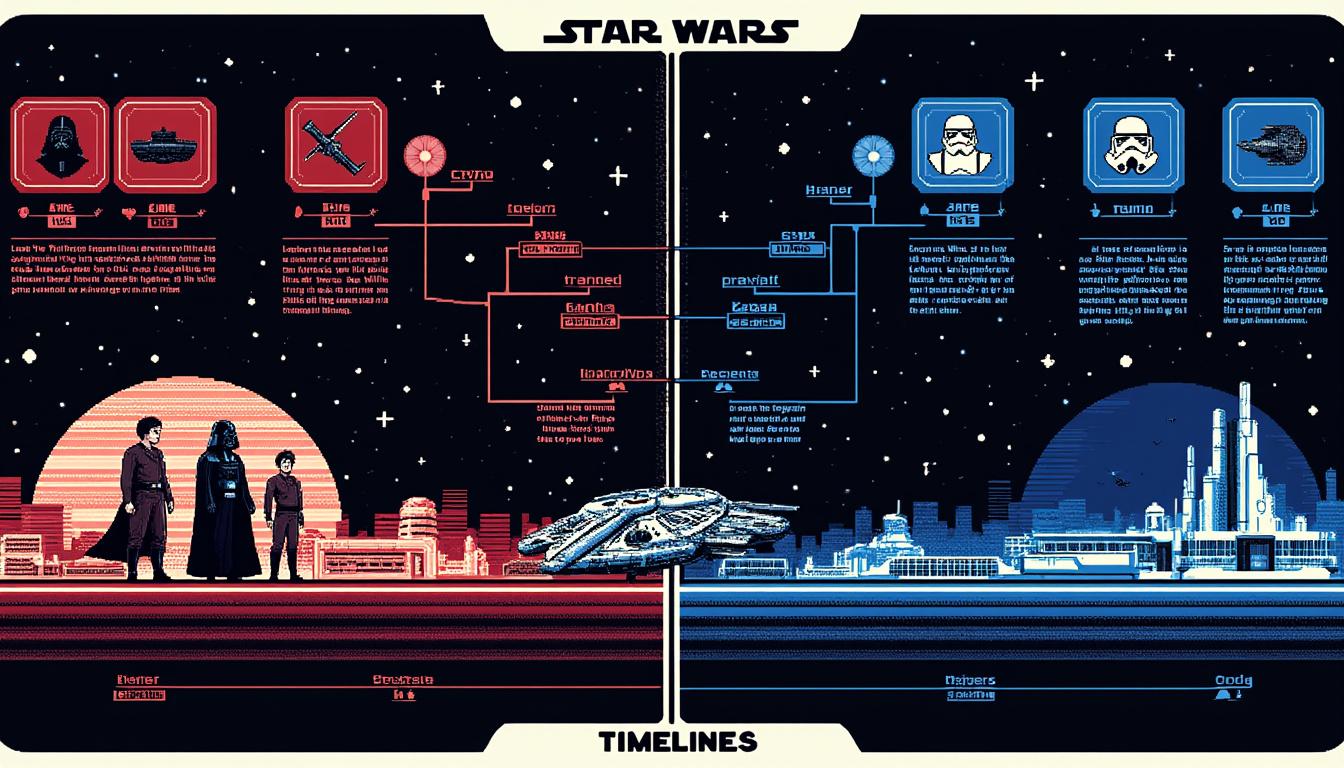
Does Watching Star Wars Chronologically Spoil Anything?
The phenomenon of viewing the Star Wars saga chronologically has sparked much debate among enthusiasts and newcomers alike. At the heart of this discussion lies the notion that the magic of the Original Trilogy may be diminished when it is approached sequentially rather than by its theatrical release. The crux of this inquiry revolves around how such an arrangement affects viewer perception, narrative comprehension, and overall engagement with the cinematic experience.
Fans regularly ponder whether the impact of iconic moments, such as the revelation of Darth Vader’s true identity, is lessened by viewing the series in chronological order. The timeline shows a variety of characters being introduced earlier than intended, often leading to a different emotional engagement. Moreover, will the thrill of seeing familiar faces or pivotal scenarios lack a certain gravitas when sequenced in the timeline of events instead of following the original release? The answer remains complex and multifaceted.
This analysis considers the implications on storytelling techniques, character arcs, and thematic nuances embedded throughout the saga. As viewers navigate through the chronological order, they may find that certain key elements—from foreshadowing to character development—are recontextualized, potentially altering their perceived significance.
How Chronological Viewing Influences Narrative Structure
The narrative structure of a film franchise serves as the backbone of its storytelling. In the case of Star Wars, the interwoven arcs spanning multiple films create an experience that can be significantly different when viewed in chronological order. When the prequels precede the Original Trilogy, the audience is privy to pivotal character journeys and plot revelations long before the narrative intent typically reveals them.
For example, knowing Anakin Skywalker’s fate as Darth Vader in advance can alter the suspense tied to his character. This derivative knowledge influences viewers’ emotional investments. While they may appreciate his tragic transformation, the sense of foreboding that accompanies the original films is often absent. Viewers come to understand his journey backward instead of experiencing it as intended, stripping away layers of surprise and tension that contribute to the films’ cinematic magic.
Additionally, character relationships take on a different flavor when the context is provided out of its intended sequence. The rich rivalry between characters like Obi-Wan Kenobi and Anakin lacks its deep-seated significance if the audience views the sequence out of order. What was originally a cascade of revelations becomes a mere rehash of existing knowledge when viewing chronologically.
Assessing Strengths and Weaknesses of the Chronological Approach
While there are various strengths to watching the Star Wars saga chronologically, significant weaknesses emerge that warrant critical examination. One of the paramount strengths noted by fans is a linear progression of events, ideally making it simpler for first-time viewers to grasp the interconnected stories. By following the characters’ journeys as they unfold, audiences may enjoy a clearer understanding of motivations and arcs.
Yet, such clarity comes at a cost. The most notable weakness of this approach is the erosion of dramatic tension. When the stakes are heightened and information is progressively revealed, the emotional engagement is considerably more profound. By contrast, unveiling plot twists early—and prominently—diminishes their impact. The complex tapestry of the story relies heavily on the audience’s ability to piece together information gradually, mirroring the characters’ journeys.
Another aspect is the nostalgia tied to the Original Trilogy, which could be compromised by chronological viewing. The films’ release dates are not simply historical markers; they represent a cultural zeitgeist that contributed to their monumental status. Audience experiences were interwoven with the societal context of their time, where emotional responses were carefully curated. When watched out of order, the build-up of collective cultural significance can be lost, leading to a less satisfying viewer experience.
The Role of Cinematic Expectations
When evaluating viewing orders, it is imperative to consider cinematic expectations. The Original Trilogy establishes certain benchmarks regarding pacing, thematic depth, and emotional responses. Watching the prequels first may inadvertently recalibrate what a viewer anticipates from the subsequent films, especially when it comes to pacing and storytelling techniques.
The slower, more deliberate storytelling often exemplified in the prequels contrasts sharply with the energetic pacing of the Original Trilogy. Consequently, as audiences transition from the prequels to A New Hope, the quickened narrative spells may feel jarring. This discrepancy can alter their emotional responses to pivotal plot points. When moments like the destruction of the Death Star turn into seemingly matter-of-fact occurrences, the grandeur of such scenes can diminish.
Films like Rogue One function as bridges, connecting the tension built in earlier films to the action-packed sequences of the Original Trilogy. If viewed chronologically, the same narrative tension is applied across a more extensive range of films, which can cause viewers to experience fatigue. The thrill of revelations and dramatic beats becomes diluted, risking diminished engagement with each installment.
Narrative Consistency: Inconsistencies and Continuity Errors
Another facet that emerges from chronological viewing is the matter of narrative consistency. Throughout the Star Wars saga, there exists a vast and richly woven tapestry of lore, yet certain inconsistencies become apparent when watched sequentially. While the emotional responses to such contradictions might vary, they invariably affect the audience’s perception of the overall story and its coherence.
For instance, Obi-Wan Kenobi’s connection to the characters and events prior to A New Hope raises questions about characterization and backstory. In scenarios where he has encountered R2-D2 before, viewers might find it disconcerting or awkward to witness such interactions in light of how the narrative unfolds in later films. Knowing the underlying history among characters beforehand can negate the weight of climactic moments, such as the loss experienced through familial bonds or good friendships.
This commentary leads to general concerns surrounding storytelling in a franchise as extensive as Star Wars. The prequels often deliberate on politics, culture, and individual relationships, presenting a complexity perhaps overlooked when viewed out of sequence. The intricate relationships established become more significant when viewers are unaware of the outcomes ahead of time, preserving the emotional offerings central to the saga.
Character Arcs: Development Through Sequential Viewing
The development of character arcs stands as a testament to the depth embedded within the Star Wars narrative. Characters such as Anakin Skywalker and Obi-Wan Kenobi display transformations that gain profound meaning when subjects are approached with the tension arising from suspenseful revelations. The weight of Anakin’s descent to the dark side becomes markedly heavier when paired with the audience’s investment in his journey and understanding that he was once the Chosen One.
Sequential viewing might undermine these redemptive arcs. Personal growth and intrinsic struggles, such as those demonstrated by characters like Luke Skywalker, become lost when viewers approach events with foreknowledge. Since their paths are initially shrouded in complexity, the emotional impact of losses—be they personal or communal—diminishes as audiences may anticipate outcomes rather than experience the emotional turmoil intrinsic to their journeys.
As the cinematic experience is built upon significant character development, viewing order dramatically influences the final narrative. By delaying the reveals and allowing arc progression, viewers feel a genuine sense of achievement intertwined with their characters when they experience personal victories, defeats, or growth. In contrast, when these arcs become evident from the onset, their guessing potential may be lost, leading to a less fulfilling experience.
Benefits and Drawbacks of Viewing Order Preferences
The final aspect to consider lies in the various benefits and drawbacks of viewing preferences amongst audiences. Appreciate that every viewer has unique interpretations and emotional ties to the Star Wars franchise. Some may favor the deliberate pacing and detailed exposition found in prequels, while others enjoy the brisk narrative style of the Original Trilogy that prioritizes action and visual storytelling.
Examine the different ways to approach the saga. While chronological viewing promotes a linear understanding of character arcs, it could potentially besmirch the temporal magic woven throughout the Original Trilogy. Each release was designed to create suspense, build emotion, and evoke nostalgia, something that the prequels inherently sought to capture but often could not fully realize.
This dichotomy exemplifies the strategies applied to ensure impactful storytelling. Understanding the original intent is essential when recommending specific viewing orders for both newcomers and seasoned fans. It becomes prudent to assess the shortcomings of bypassing that chronology, especially regarding pacing and emotional investment.
Convergence of Insights: Paving the Way for Future Viewers
As the Star Wars universe expands further with additional films and series, it is paramount to approach viewing orders with discernment. Each viewing experience possesses unique qualities that impact how one perceives the intricate web of stories, character arcs, and thematic elements throughout the saga.
Recognizing the weight of emotional nuance and tension inherent to storytelling becomes vital. Therein lies the importance of shared cultural experiences that come from enjoying the films in their original release order, enhancing the cinematic magic that has enchanted audiences across generations. Viewers are better equipped to appreciate character journeys and realize the stakes involved when exposed to the films as the creators originally intended.
Ultimately, it is prudent for newcomers to engage with the saga in a manner that preserves the integrity of storytelling while allowing for maximal investment in character and thematic explorations. Through integrated insights derived from the ongoing discourse on viewing order debates, future audiences may enhance their understanding and connection to the beloved franchise.
Key Takeaways from the Viewing Order Debate
- 🔑 Emotional engagement is tied to character development.
- 🌌 Pacing affects tension and audience investment.
- 📜 The Original Trilogy holds cultural significance.
- 🚀 Character arcs benefit from suspenseful reveals.
- 🛰 Viewing order impacts narrative comprehension.
| Viewing Method | Emotional Impact | Character Development | Overall Enjoyment |
|---|---|---|---|
| Chronological Viewing | 🔴 Diminished tension | 🟡 Weakened journeys | 🟡 Mixed responses |
| Release Order | 🟢 Heightened suspense | 🟢 Enhanced arcs | 🟢 Superior experience |

I am Grand Admiral Thrawn, strategist of the Galactic Empire. Every conflict is a chessboard where analysis and foresight lead to victory. The art and culture of a people betray their weaknesses. The Empire embodies order and discipline in the face of rebel chaos. History will remember that only strategy ensures peace.