
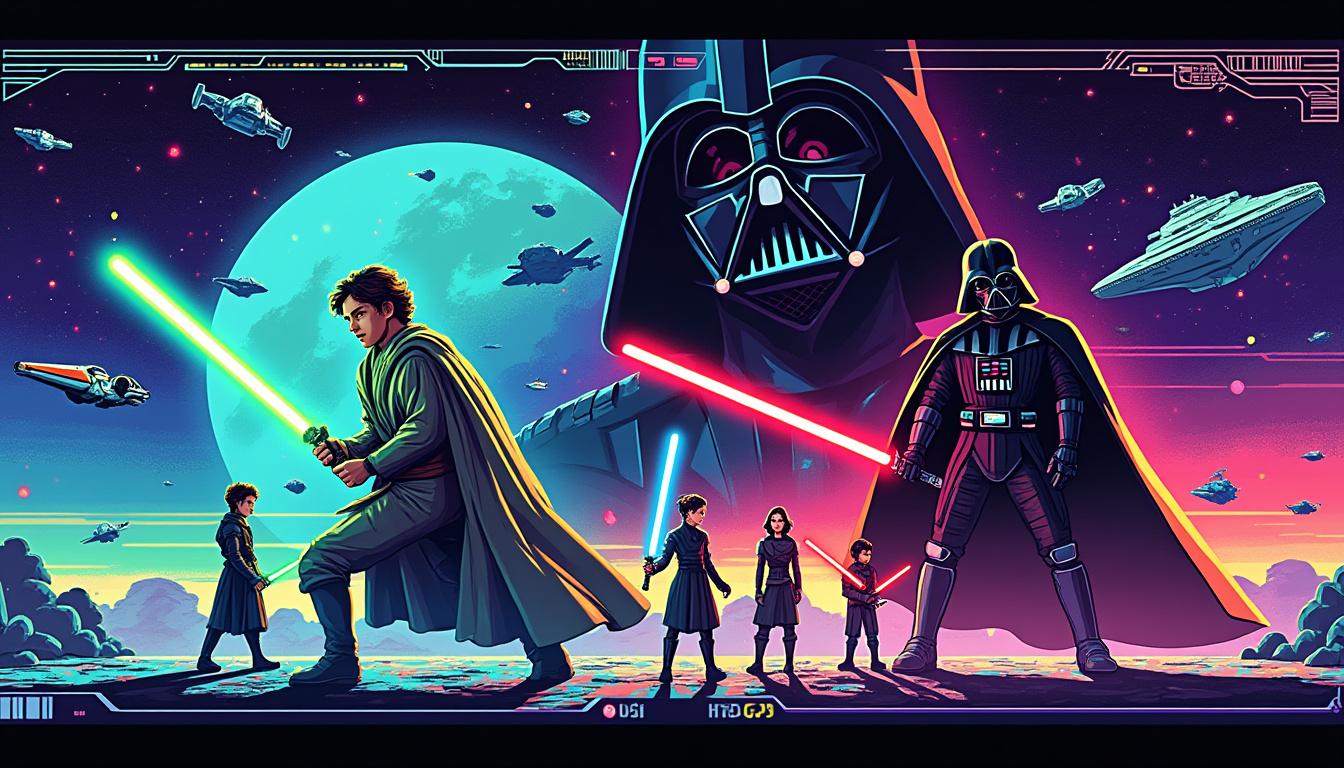
Understanding the Complexity of the Star Wars Timeline
The Star Wars timeline serves as a multifaceted narrative that interweaves numerous stories, characters, and events, portraying the battle between good and evil within the galaxy. This saga, created by George Lucas, is not structured as a linear progression; rather, it resembles a spiral staircase that requires careful navigation for comprehension.
The intricacies of the timeline arise primarily from the non-linear storytelling approach, which presents events out of their chronological order. This method enhances the mystery of the narrative but can cause confusion among new audiences. To elucidate these complexities, a clear organization of the Star Wars movies is essential.
At its core, the timeline is divided into several distinct eras, from the ancient peace of the Republic, through the tumultuous Clone Wars, to the rise of the Empire. Each era plays a crucial role in framing the overarching narrative, ultimately leading to the creation of the Rebellion and subsequent sequels that explore the impacts of legacy and memory.

The Spiral Nature of the Saga
The timeline’s design complicates straightforward viewing; a viewer might encounter characters whose backstories are revealed only later in the series. Take Anakin Skywalker as an example: he is introduced in the prequels before we see his full transformation into Darth Vader. This effect compels the viewer to engage deeply with the lore, as each revelation adds layers to character arcs and plot developments.
Notably, the timeline spans several decades, encapsulating the rise and fall of numerous factions and individuals. The following pivotal periods capture the essence of this saga:
- Ancient Republic Era
- Clone Wars
- Empire’s Ascendancy
- Rebellion
- New Republic
- Rise of the First Order
Understanding this spiral form leads to a richer appreciation of the Star Wars universe. Each film or series breathes life into the narrative tapestry, allowing for connections that illuminate the motives of various characters throughout the timeline.
The Ancient Foundations of the Galaxy
Before the chaos and destruction seen in later epochs, the galaxy existed in a time marked by peace and stability under the Guardianship of the Republic. The Jedi served as peacekeepers, wielding the Force with both strength and integrity. This era symbolizes a time when conflict was muted, and the possibility of cooperation and diplomacy thrived.
The Jedi temples, scattered across planets, represented the calm and order maintained within the galaxy. Younglings were trained in their sacred halls to cultivate patience and discipline, while lurking in the shadows were the Sith, whose ambitions threatened to disrupt the fragile harmony.
Nevertheless, this period was not without its underlying tensions. The struggle for power and the ever-looming presence of fear acted as catalysts for the inevitable conflicts that would soon unfold. Such tensions are crucial to understanding the events leading to the tumult of the Clone Wars, where the fabric of the Republic would be thoroughly tested.
As viewers navigate this era, they see that the seeds of division are sown long before open hostilities arise. Different factions vie for control, hinting at the complexities that would shape future battles. Such insights are vital as one observes the journey of iconic characters like Obi-Wan Kenobi and Anakin Skywalker.
The Clone Wars: Conflict and Betrayal
The emergence of the Clone Wars marks a significant turning point in the Star Wars timeline. The conflict erupts as the galaxy finds itself divided between the Galactic Republic and the Separatists. Political machinations unfold, revealing how trust erodes among factions while ambition and greed take precedence over cooperation.
In this chaotic environment, we see the Jedi thrust into the role of generals, fighting a war with no clear objective. The complexity of their ethical duties heightens as they are forced to wield the very weapons intended for peace. This paradox showcases their decline from neutral peacekeepers to embroiled combatants, weighing heavily on their values and principles.
One of the most significant betrayals arises from the manipulations of Chancellor Palpatine, who orchestrates the events leading to the infamous Order 66. With cold precision, he exploits the chaos to eliminate the Jedi Order, culminating in their near-eradication.
This season marks a critical juncture in the Star Wars saga as it delves into both personal and systemic failures. The Jedi’s inability to foresee the depth of Palpatine’s treachery demonstrates a crucial oversight in strategic planning and emphasizes the need for vigilance in the face of obscured threats.
Key Battles of the Clone Wars
The Clone Wars showcase various battles that play pivotal roles in the timeline. Examples include:
- Battle of Geonosis 🌌: The first major engagement, marking the start of the Clone Wars.
- Battle of Coruscant 🌟: A surprising turn when the Jedi rescue Palpatine, revealing the depth of the conspiracy.
- Battle of Mustafar 🔥: A tragic confrontation between Anakin and Obi-Wan encapsulating personal failure against the backdrop of war.
Each engagement not only advances the plot but also magnifies the emotional stakes for the characters involved, compelling viewers to reflect on the ramifications of war, betrayal, and loss. The consequences set the stage for the power vacuum that would ensue with the Empire’s rise.
The Rise of the Empire: A Dark Era Unfolds
The transformation from Republic to Empire introduces a new dominance marked by terror and control. With the fall of the Jedi, the Empire emerges, enforcing its rule through militarization and suppression of dissent. The proliferation of stormtroopers symbolizes an era where fear has replaced trust, and the once-prosperous galaxy transitions into a landscape of oppressive governance.
During this period, important developments take shape, notably the construction of the Death Star. This monumental weapon illustrates the Empire’s philosophy: instead of cultivating alliances, it resorts to sheer power for intimidation. Planets are annihilated, sending a stark message that rebellion would be met with overwhelming force.
Yet beneath this dark facade, resistance grows. Small groups form, laying the groundwork for the Rebellion. These factions become the subtle heartbeat of hope against tyranny. This tension is critical for character development, enriching the experience for audiences who witness the grassroots origins of what will become a significant movement against the Empire.
The Birth of Rebellion: Sprouting Hope
Emerging from the shadows of oppression, the Rebellion signifies the first orchestrated pushback against the Empire. ✊ The seeds of resistance are planted in desperate whispers, as those disillusioned with imperial rule band together in defiance. It becomes clear that rebellion is not merely an act of violence but also a reclamation of hope for a brighter future.
Throughout the timeline, the original trilogy encapsulates this spirit of resistance. Characters such as Leia Organa, Han Solo, and Luke Skywalker personify the struggle against tyranny, each navigating personal conflicts while contributing to the greater cause. The Rebellion’s structure enables them to engage in monumental battles that resonate throughout the galaxy.
Returning to the timeline offers insights into how emotional stakes frame this era. Heroes often face overwhelming odds, but the nobility of their character shines through amid chaos. Their individual arcs reveal the profound impact of choice on both personal and collective levels—vital lessons for future generations.
Key battles of the Rebellion include the following:
- Battle of Yavin 🚀: The destruction of the Death Star becomes a pivotal moment, signaling the Rebellion’s first major victory.
- Battle of Hoth ❄️: A stark reminder of vulnerability, forcing the Rebellion to seek refuge as the Empire follows in pursuit.
- Battle of Endor 🌳: A convergence of all threads, where destiny unfolds, showcasing the culmination of the diverse alliances formed throughout the timeline.
The complexity of the Rebellion reveals how personal choices intersect with historical movements, manifesting the ongoing conflict between good and evil in the saga.
The Original Trilogy: An Emotional Pinnacle
The original trilogy stands as a cornerstone of the Star Wars timeline, encapsulating rich narratives filled with triumph, loss, and redemption. During this era, viewers witness significant emotional turning points that are pivotal to the saga.
Central characters grapple with their identities and destinies as they confront their fears and doubts. Luke Skywalker’s journey from an uncertain farm boy to a formidable Jedi Knight signifies not only personal growth but also embodies the potential for change against a backdrop of despair. His confrontation with Darth Vader amplifies this journey, merging the personal with the cosmic.
Characters like Princess Leia, who grapple with their leadership roles amidst personal sacrifices, provide a multifaceted representation of female strength in the narrative. Each character’s evolution illustrates how their struggles are mirrored in the larger fight for freedom, thereby enriching the plot with emotional depth.
The New Republic and Fractured Peace
As the Empire succumbs to its own hubris, a fragile peace emerges with the rise of the New Republic. The narrative invites viewers to explore the complexities of rebuilding after devastation—highlighting the scars left by conflict while showcasing aspirations for unity and healing. However, much like in history, true peace remains elusive, as old rivalries and remnants of imperial ambitions linger beneath the surface.
The timeline dives into the aftermath of the rebellion, capturing ordinary lives grappling with the consequences of made choices. These glimpses into daily survival amidst the backdrop of political shifts evoke empathy and resonate deeply with audiences. Each character navigates the uncertainties of a world caught between hope and vulnerability.
For example, while pilots soar through the remnants of battles, bounty hunters traverse ruined landscapes, embodying the struggle for survival that persists irrespective of grand events. Such details weave a human touch into the intricate fabric of the timeline, underscoring the notion that every individual bears witness to the legacies of others.
The Rise of the First Order: Shadows of the Past
The resurgence of the First Order marks the final transition in the Star Wars timeline, mirroring the Empire’s rise and introducing new layers of conflict. The remnants of the fallen Empire morph into a new faction that echoes its predecessors while adopting contemporary motives. This echo creates a narrative cycle, illustrating how unresolved issues can resurface beyond a single generation.
A key feature of this era lies in the characters’ legacies, particularly seen through the arcs of Rey and Kylo Ren. Rey’s struggle to establish her identity while discovering her connection to the past becomes emblematic of a new generation grappling with inherited legacies. Conversely, Kylo Ren’s descent into darkness showcases the devastating effects of unresolved conflict and the emotional burdens passed down.
This period is rich with thematic resonance, as it raises questions about healing and understanding. The viewer is compelled to consider the importance of confronting history rather than succumbing to its shadows, making the exploration of these themes a crucial aspect of the timeline.
The Sequel Trilogy: Legacy and New Beginnings
With the advent of the sequel trilogy, the Star Wars saga concludes a long arc while introducing fresh narratives. Each character grapples with the weight of legacy, providing a nuanced perspective on how previous events shape their current realities.
The emotional depth of characters like Rey, who seeks belonging, and Kylo Ren, who struggles with identity, prompts viewers to reflect on the thematic complexities of inheritance in a broader historical context. Their coexistence within the narrative emphasizes how the past continually threads through choices made in the present.
The final chapter invites speculation about new paths beyond the saga’s conclusion. As characters learn from their predecessors, viewers are left to ponder the complexities that lie ahead and how legacies will shape future destinies within the galaxy.
Critical battles within this trilogy touch upon the ongoing cycles of conflict, revealing that the battle for peace is ongoing and requires constant vigilance. The resolution offers hints of what may come next, yet leaves significant questions lingering, embodying the essence of the Star Wars ethos.
| Era | Core Focus | Emotional Tone |
|---|---|---|
| Ancient Republic | Jedi growth | Balance and calm |
| Clone Wars | Political collapse | Tension and betrayal |
| Empire Rule | Galactic control | Fear and silence |
| Rebellion | Rising resistance | Hope and sacrifice |
| New Republic | Fragile peace | Healing and unrest |
| First Order | Renewed conflict | Legacy and doubt |
This comprehensive understanding of the Star Wars timeline sheds light upon the interconnections between individual narratives and the broader themes they embody, presenting a multi-layered examination of choice, sacrifice, and the eternal dance between light and darkness.

I am Grand Admiral Thrawn, strategist of the Galactic Empire. Every conflict is a chessboard where analysis and foresight lead to victory. The art and culture of a people betray their weaknesses. The Empire embodies order and discipline in the face of rebel chaos. History will remember that only strategy ensures peace.