

Understanding the Narrative Structure of Han Solo: Hunt for the Falcon #5
The final issue of Han Solo: Hunt for the Falcon stands as a reflective capstone on an otherwise intriguing saga. The narrative’s structure is pivotal, as it shapes the reader’s journey through Han Solo’s thoughts and actions, especially as he confronts his past. The storytelling reveals both strength and weaknesses, encapsulated in a confounding climax that leaves many expectations unfulfilled.
Issue #5 picks up at a moment of tension, following the abrupt conclusion of Issue #4, where Han and Chewbacca ostensibly close in on the Millennium Falcon within Unkar Plutt’s expansive camp on Jakku. The setup is promising, filled with the possibility of a climactic resolution that ties up the series’ loose ends. Instead, what unfolds is a narrative that emphasizes Han’s internal struggle over the external quest for the Falcon.
As characters are further developed, the artistry of Ramon Rosanas serves to heighten these moments, bringing emotional depth to Han’s reflections. Readers witness Han’s journey, marked by introspection and regret, which reflects on his relationships with Leia and Chewie. Despite the compelling character arcs presented throughout the series, the storytelling falters at this critical juncture, offering neither resolution nor a satisfactory conclusion to the overarching plot.
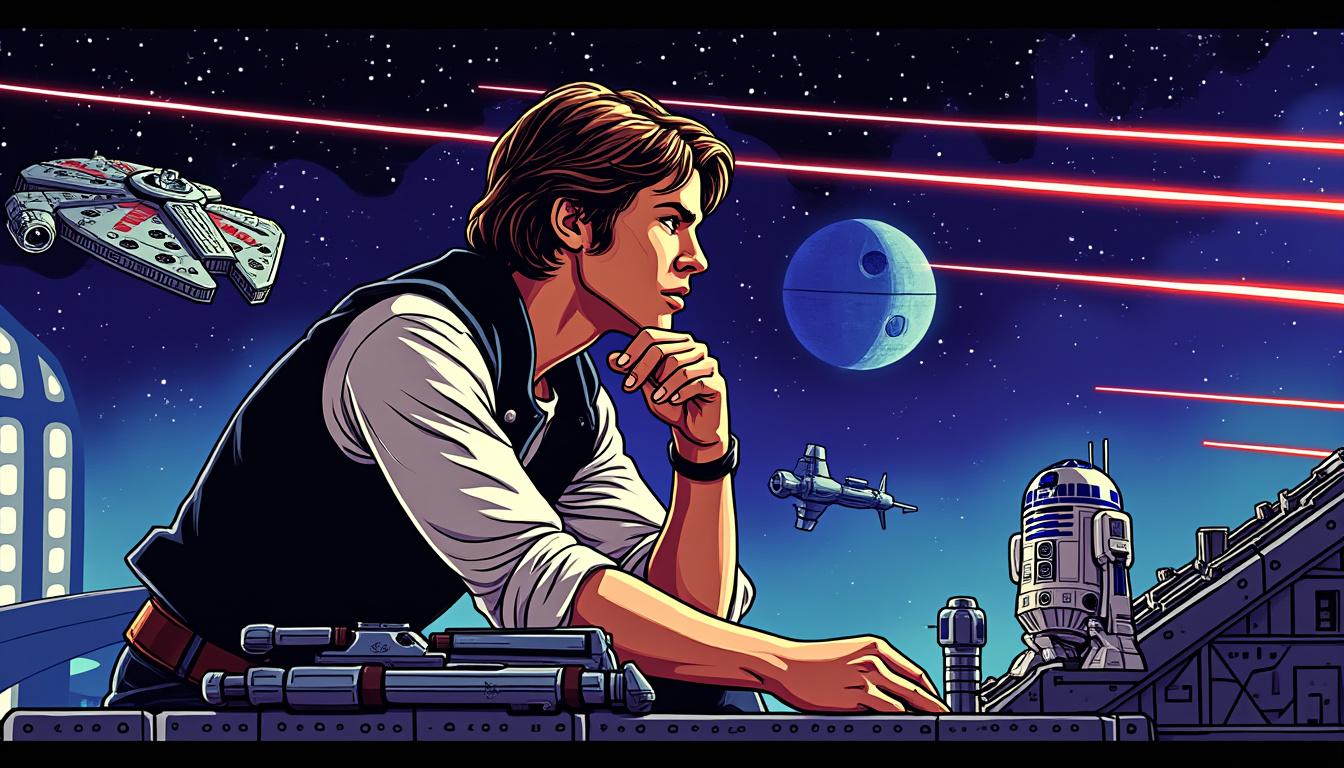
Thematic Exploration: Revisiting Han Solo’s Identity
The central themes in Hunt for the Falcon resonate with Han Solo’s ongoing struggle with identity. The finale emphasizes the tension between his legacy as a smuggler and the consequences of his choices formed years before. The emotional weight of the series lies in Han’s realization of what the Millennium Falcon represents—not merely a ship, but a connection to family and a way to escape his past. This theme is poignantly illustrated when Han reminisces about the Falcon and the life he’s led aboard it.
Emphasizing this theme is Han’s dream sequence within the issue, showcasing an idealized life with his family, rescuing them from the Empire—an echo of better times, full of vibrancy and hope. This moment encapsulates Han’s desire to reconnect with his past and family, sharply contrasting the darker realities he faces. However, this idealization crumbles as he wakes up back in captivity, reinforcing a significant point: no matter how much he longs for that past, the current circumstances bind him in chains.
This duality of identity—between who Han wishes to be and who he currently is—adds a layer of complexity to the narrative. Readers may recognize hints of a longing for reconciliation with Leia and Ben, further illustrating the chasm between past aspirations and present realities. The theme speaks not only to Han’s character but also poses a broader question about the nature of legacy in the galaxy far, far away.
Character Development and Dynamics in Issue #5
Character development throughout Hunt for the Falcon has offered readers a nuanced view of Han, Chewbacca, and Leia. Issue #5, however, presents a critical examination of these relationships, particularly focusing on Han’s interactions with both Chewie and Unkar Plutt. It becomes evident that Han’s journey was also a means of exploring his relationships and the ramifications of his choices.
Han’s relationship with Chewbacca remains central to this exploration. Initially, the duo is at odds, reflective of their shared history and present misunderstandings. Han’s insistence on finding the Falcon appears to overshadow his allegiance to Chewie, leading to moments of tension. Despite the brief reconciliatory threads, the series concludes before these arcs can fully resolve, leaving the reader with an awareness of the profound disconnect between Han’s desires and Chewbacca’s loyalty.
Unkar Plutt, serving as an antagonist, sharply contrasts Han’s character throughout the story. This confrontation brings to light the choices Han has made that continue to haunt him. Here, a critical flaw emerges—rather than developing a coherent villainous arc, Plutt substitutes for narrative tension without providing depth. The missed opportunity to explore Unkar’s motivations means that the final battle feels less climactic and more like a prologue, lacking the resonance one might expect.
Plot Inconsistencies and Missed Opportunities in the Finale
As the plot reaches its climax, a series of inconsistencies muddy the waters of the narrative. One significant area of concern arises in how characters are utilized and evolve through the story. The inclusion of Ducain, for instance, serves as a placeholder for tension yet fails to contribute meaningfully to the broader narrative goals. While the series suggests that Ducain holds relevance to Han’s quest, the lack of continuity regarding his character shifts reveals a missed opportunity to interweave a more cohesive storyline.
The closure leaves readers contemplating various narrative threads, many of which remain unresolved. Rather than discovering the Falcon, Han’s journey leads him back to unresolved relationships, predominantly with Chewie. Han’s ultimate decision to abandon the quest for the Falcon in favor of reconciling with his family feels rushed and poorly executed, detracting from the buildup established in prior issues. This leads to a denouement that feels unearned, undermining any meaningful resolution.
The structure of the closing moments also raises questions about what Han’s quest means for his character development. Are readers meant to believe that Han’s yearning is for the Falcon, or is it for the meaning and identity it once embodied? The finale blurs this line, leaving the reader chaining the elements that should inform a satisfying conclusion instead of answering the questions raised throughout the series. A clear recapitulation of intent may have solidified the entire narrative arc.
Artistic Achievement in Character Representation
Ramon Rosanas’ artistry throughout Hunt for the Falcon has been one of the series’ highlights. The illustrations compound the emotional weight of the narrative, conveying sentiments that may not always be directly stated in dialogue. Rosanas excels at capturing not only the physical appearances of iconic characters but also their emotional states and complexities. This talent elevates key scenes, particularly illustrated through Han’s dream sequences and moments of realization.
In the scenes that depict Han’s internal struggle, Rosanas employs a color palette that conveys feelings of nostalgia and bittersweetness. Subtle emotional cues are well-rendered through the expressions on the characters’ faces, indicative of their relationships. This attention to detail adds a significant layer to the reading experience, drawing readers deeper into Han’s journey and reflecting the complexity of his character.
Artistic choices further enhance the storytelling, particularly in zoomed-in panels that emphasize intimate moments, drawing audiences into the character’s psyche. Rosanas guarantees that the vibrancy of the Star Wars universe shines through, even amidst the darker themes of this series. The artwork serves as a crucial element, allowing readers to navigate the complexities of the story visually while enriching the overall narrative.
Reader Engagement: Analyzing Audience Reception
Audience reception of Hunt for the Falcon has been mixed, particularly following the release of Issue #5. The promising premise gave rise to expectations that the final issue would provide clarity and resolution. Instead, a common refrain among readers is one of dissatisfaction regarding the storyline’s conclusions and character arcs. This discrepancy raises questions about narrative expectations in a galaxy so storied as Star Wars.
Critically, the lack of closure on character relationships strikes a nerve with long-time fans of Han Solo. Readers were eager to witness a culmination of the internal and external conflicts that have defined his character through the years. Many expressed that the finale did not honor the character’s legacy, instead tying him into a convoluted thread with little grounding.
Furthermore, the character dynamics, particularly between Han and Chewie, have drawn particular attention. As the series sought to explore the depth of their bond, readers have noted that the abrupt conclusion falls flat, missing out on the compelling narrative potential that such a relationship offers. Can a reinterpretation of the series’ intent salvage the reputation of these beloved characters and deliver a truly impactful story? These questions linger in the minds of the audience.
Future Possibilities: What Lies Ahead for Han Solo?
As Han Solo: Hunt for the Falcon concludes, many speculate on the future of Han’s character within this expanding universe. The series has laid a foundation ripe for further exploration, yet the closing notes echo uncertainty regarding Han’s direction moving forward. Given the thematic complexities presented, is it plausible the series may be reinvigorated, or will this chapter simply remain a footnote in a storied legacy?
Future developments could delve into the unresolved threads left in the wake of this finale. The emergence of Kylo Ren as a critical element in Han’s past suggests potential layers yet to be revealed. Likewise, the remnants of Han’s relationship with Leia still hold possibilities for captivating narratives. Speculations abound regarding how these arcs might tie back into their established stances as beloved characters.
Additionally, the reception could indicate a desire for better narrative cohesion within the comic era of Star Wars. Should future stories take heed of the lessons delineated in this finale, there exists potential for a more refined exploration of character relationships, legacy, and identity. These elements lend themselves to deeper connections with audiences, ensuring a bright future for Han Solo and his companions in this expansive saga.
Table of Key Elements in Han Solo: Hunt for the Falcon #5
| Element | Description | Significance |
|---|---|---|
| Han Solo | A complex character faced with reconciliation and identity | Illustrates the emotional weight of legacy in Star Wars |
| Chewbacca | Han’s loyal companion, central to the theme of friendship | Drives the narrative of personal connection |
| Unkar Plutt | Antagonistic figure without depth | Calls attention to narrative inconsistencies |
| Ducain | Underdeveloped character pivotal to plot confusion | Muddles the narrative and weakens plot credibility |
| Artistic Representation | Illustrates nuanced character emotions and relationships | Enhances engagement through visual storytelling |
| Thematic Elements | Explores identity, legacy, and reconciliation | Provides substance to the narrative |
In summary, the series leaves much to be desired in terms of resolutions and character arcs. The potential for future exploration remains, but it is contingent upon reflecting on the lessons learned from this installment. Han Solo’s narrative continues to resonate, illustrating a galaxy that thrives on conflict, introspection, and the quest for belonging.

I am Grand Admiral Thrawn, strategist of the Galactic Empire. Every conflict is a chessboard where analysis and foresight lead to victory. The art and culture of a people betray their weaknesses. The Empire embodies order and discipline in the face of rebel chaos. History will remember that only strategy ensures peace.