
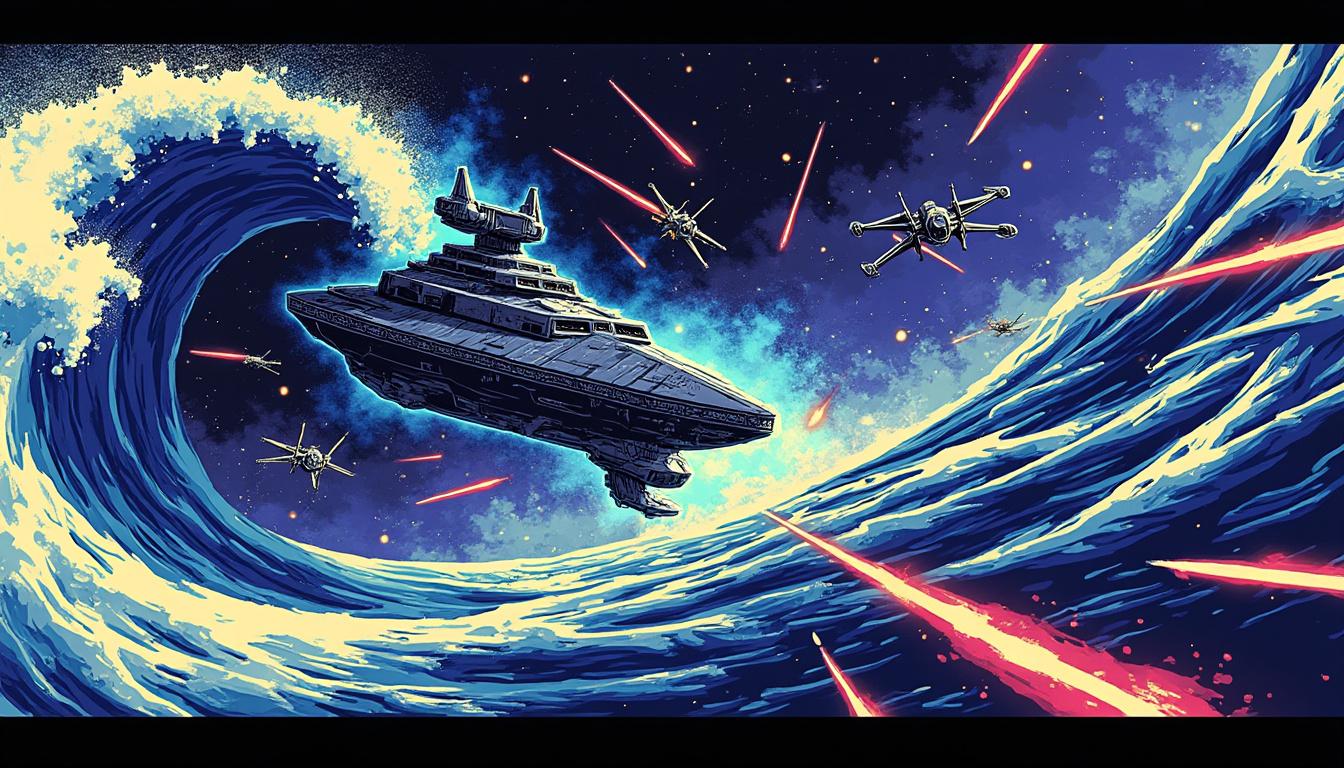
Overview of Hyperspace Stories: Tides of Terror #3
The third issue of Hyperspace Stories: Tides of Terror presents readers with an intense setting aboard the Axil Research Station, an underwater facility on the ocean planet Tordus. As described in various reviews, the plot follows Jedi Master Kit Fisto and his Padawan Nahdar as they confront both environmental disasters and potential sabotage. The issue’s opening features a dramatic scene where the protagonists must outrun a wall of water, already hinting at strong visual potential throughout the storyline.
However, while the visual presentation of the comic may initially impress, it quickly becomes clear that beneath the surface, the storyline is fragile and lacks depth. The characters engage in witty exchanges and thrilling escapades, yet these moments do little to provide substantial character development or meaningful narrative progression. The initial excitement is soon overshadowed by narrative shortcomings.

For individuals familiar with the Star Wars universe, the action sequences are visually captivating. The tension builds as Kit Fisto displays his abilities, fighting sea monsters while attempting to save the research facility from total destruction. The pacing is rapid and adrenaline-filled, which contrasts sharply against the underwhelming plot development. As the issue unfolds, readers may begin to question whether the vivid illustrations can compensate for the lack of engaging storytelling.
Character Dynamics and Development
Characterization is a critical component of storytelling, especially in a narrative focused on the Star Wars universe. In this issue, Kit Fisto’s personality shines brightly, showcasing his heroic nature and casual demeanor. The camaraderie between Kit and Nahdar injects energy into the narrative, providing moments of light-heartedness amidst the chaos. Interestingly, while the interactions between these characters are enjoyable, they fail to delve into their backstories or emotional stakes, leaving readers craving a deeper exploration.
- 🔹 Kit Fisto: The courageous Jedi Master, known for his aquatic expertise.
- 🔹 Nahdar: His eager Padawan, looking to prove his abilities.
- 🔹 Samrit Gnell: The antagonist, who lacks a compelling motivation for his actions.
Readers may observe that the character of Samrit Gnell—khown to be a minor figure advocating for the station—has not been sufficiently developed. This absence of a significant backstory makes it difficult to fully invest in his role as a villain. In comparison, character motivations need to be compelling to create a sense of conflict. Gnell’s actions ultimately feel arbitrary, weakening the plot’s overall tension.
| Character | Role | Characterization Depth |
|---|---|---|
| Kit Fisto | Jedi Master | Developed, heroic |
| Nahdar | Padawan | Underdeveloped, potential |
| Samrit Gnell | Antagonist | Minimal, lacks motivation |
The relationship dynamics between these main characters offer glimpses of what could have been a more profound exploration of their motivations and conflicts. However, due to the lack of focus, readers may remain detached from their fates. The potential for captivating character arcs exists, but the script fails to seize the opportunity, ultimately diminishing their relevance within the overarching plot.
Visual Presentation vs. Storyline Integrity
The visual aesthetics in Tides of Terror #3 represent a high point, providing a striking canvas for the action sequences that unfold. The artwork captures the fluidity of underwater movements and the menacing nature of the sea monsters, creating a sense of urgency that are visually thrilling. This aspect of the issue has often been praised, showcasing the effectiveness of the artistic team in bringing the oceanic environment to life.
In contrast, the narrative remains weak and incoherent, providing a stark dichotomy between visual allure and storytelling depth. The reliance on captivating visuals often leaves readers yearning for a complex narrative. The comic begins with suspense yet falters when the main conflict—a sabotage of the research facility— unveils itself as simplistic. Readers expect a heightened sense of danger based on the premise, yet the actual stakes appear meager.
| Aspect | Strengths | Weaknesses |
|---|---|---|
| Visuals | Dynamic, engaging; captures action well | Overly reliant on visuals |
| Storyline | Initial tension, engaging moments | Lacks depth, fails to leverage conflict |
Ultimately, while the visuals earn commendations, the fragile storyline persists as the issue’s weakness. Without focusing on enriching the narrative, the stunning art may create a temporary illusion of depth but ultimately detracts from a cohesive experience. Both aspects must harmonize to deliver a well-rounded storytelling experience—a factor currently missing in this issue.
Analysis of Plot Mechanics and Conflicts
The plot structure within Hyperspace Stories: Tides of Terror #3 presents a series of conflicts that could set the stage for substantial tension, yet numerous inconsistencies plague the narrative progression. The primary issue revolves around several key elements that contribute to the inconsistent flow of events. Readers learn that Kit and Nahdar must address the sabotage, but significant details regarding the mechanics behind the sabotage lack precision and clarity.
Additionally, the reliance on a barely developed antagonist sporadically removing the central focus on the station’s destruction introduces confusion. As the protagonists make their way through perilous situations, the absence of a sophisticated antagonist creates a scenario where resolutions feel rushed and unearned. With each attempted rescue of crew members, the stakes dwindle due to the predictability of outcome.
- ⚠️ Confusing antagonist motivations
- ⚠️ Lack of clear goal for heroes
- ⚠️ Rushed conflict resolutions
This structural dissonance could have been avoided with strategic planning during the writing process. Readers deserve clarity in understanding both the motivations of characters and their journeys. As plot elements reveal themselves, simultaneous development of character arcs would create anticipation and engagement, thus nurturing a more immersive experience in the Star Wars universe.
Evaluating the Role of Supporting Characters
Supporting characters can significantly shape any narrative, especially in a rich universe like Star Wars. In this issue, companions such as Mace Windu and Shaak Ti appear; however, their roles lack substantial contribution to the main narrative arc. They have the potential to offer distinct perspectives and strategies, which could enrich the plot’s complexity. Yet, they seem relegated to the background while Kit and Nahdar take the primary focus.
Assessing how supporting characters impact events not only provides narrative layers but also supports the growth of main characters. Effective storytelling involves balancing interactions across the board and situating each character in roles that challenge or heighten the stakes for others. With both Windu and Ti absent for much of the central conflict in the story, they become underutilized assets, which stifles overall narrative tension.
| Character | Potential Impact | Actual Contribution |
|---|---|---|
| Mace Windu | Strategic insights | Minimal Presence |
| Shaak Ti | Diplomatic approaches | Lacks involvement |
The missed opportunity to involve these significant figures in the conflict illustrates an overarching issue present in the Hyperspace Stories series. Exciting supporting characters should amplify the action, conflict, and stakes of the story as they engage in meaningful encounters or confrontations. Thus, the storyline ultimately suffers from a lack of dynamic relationships and cooperative strategies spanning across the character spectrum.
Conclusions Drawn from the Issue’s Outcomes
The weaknesses laid bare in Hyperspace Stories: Tides of Terror #3 provide crucial insights for future storytelling within the Star Wars expanded universe. Key elements essential for gripping narrative are present—action, humor, and elaborate visuals. However, these factors cannot redeem the issues arising from a thin and fragile plot. They highlight the balance that must be maintained between impressive visuals and a compelling storyline.
Moving forward, creators must focus on depth in character development and narrative cohesion. Story arcs should be designed to foster engagement by threading multiple character perspectives and establishing meaningful antagonistic elements. Allowing each character to push against one another creates tension and offers avenues for conflict resolution and growth.
- 🌌 Connect backstory with present actions
- 🌌 Diversify character experiences to enhance plot complexity
- 🌌 Clearly establish motivations behind conflicts
These recommendations serve not only to elevate the current state but pave the way for more significant and compelling storytelling across future issues within the Hyperspace Stories series. Ultimately, while visual appeal shines, substance can neither be undermined nor overlooked, for it is this essence that gives rise to memorable narratives in a universe well-known for its rich storytelling legacy.

I am Grand Admiral Thrawn, strategist of the Galactic Empire. Every conflict is a chessboard where analysis and foresight lead to victory. The art and culture of a people betray their weaknesses. The Empire embodies order and discipline in the face of rebel chaos. History will remember that only strategy ensures peace.